Locksmith in Ryckmans Corners, OntarioNew keys foryour place in Ryckmans Corners
Moving into a home in Ryckmans Corners means somebody else's keys are still out there: a former owner, a tenant, a painter, a cousin who once watered the plants. Rekeying every exterior lock to one fresh key settles the question in a single visit, and the same job suits a rental turning over or a shop changing hands. Nearby, we also work in North Glanford.
Moving into a home in Ryckmans Corners means somebody else's keys are still out there: a former owner, a tenant, a painter, a cousin who once watered the plants. Rekeying every exterior lock to one fresh key settles the question in a single visit, and the same job suits a rental turning over or a shop changing hands. Nearby, we also work in North Glanford.
Getting you back inside, gently.
People in Ryckmans Corners should understand what is on their door. So we explain in ordinary words: what grade of hardware you have, where the weak point is, and which change would actually make a difference. You get the reasoning, not just a recommendation, and then the decision is yours. Nobody is pushed into an upgrade they did not ask about.
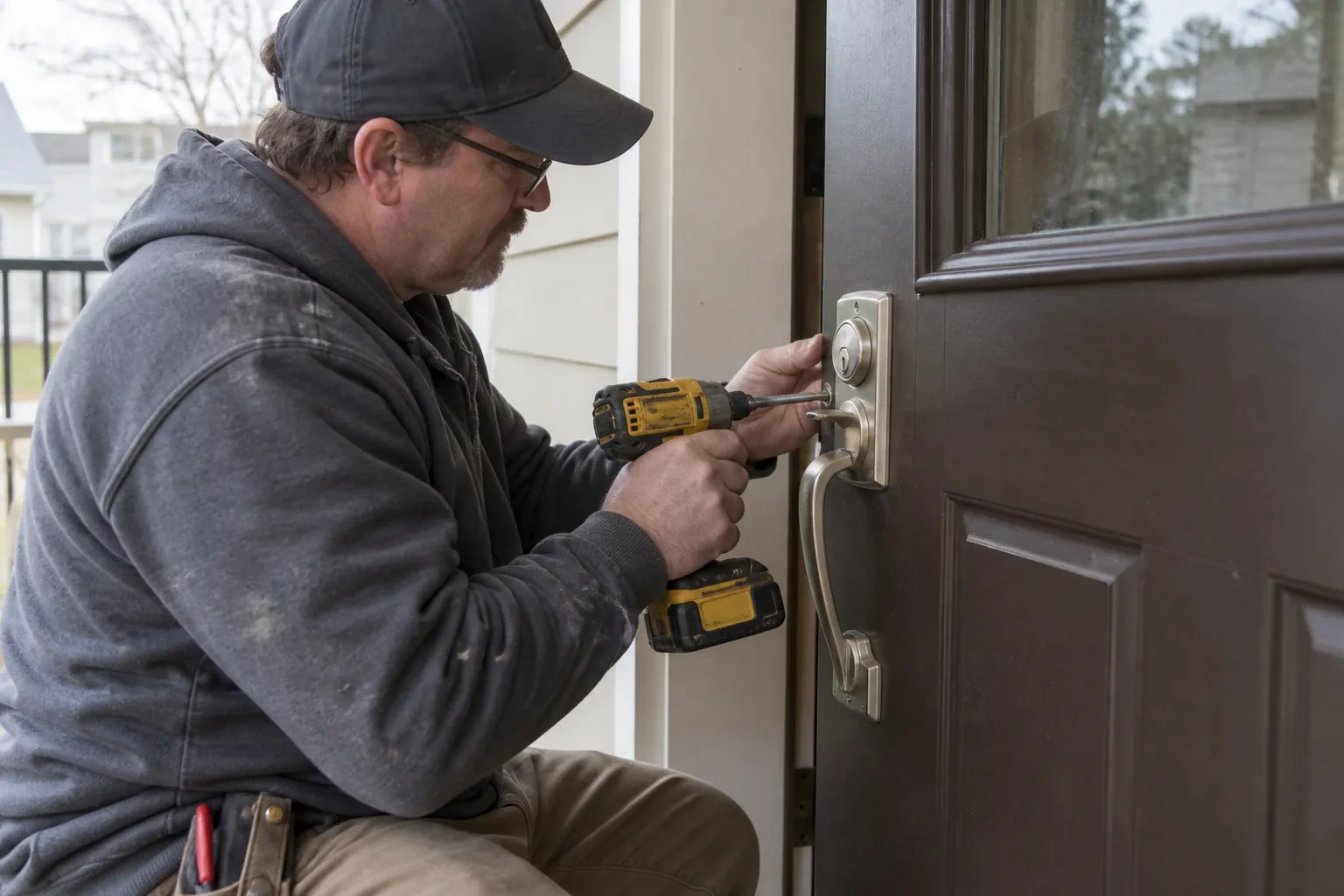
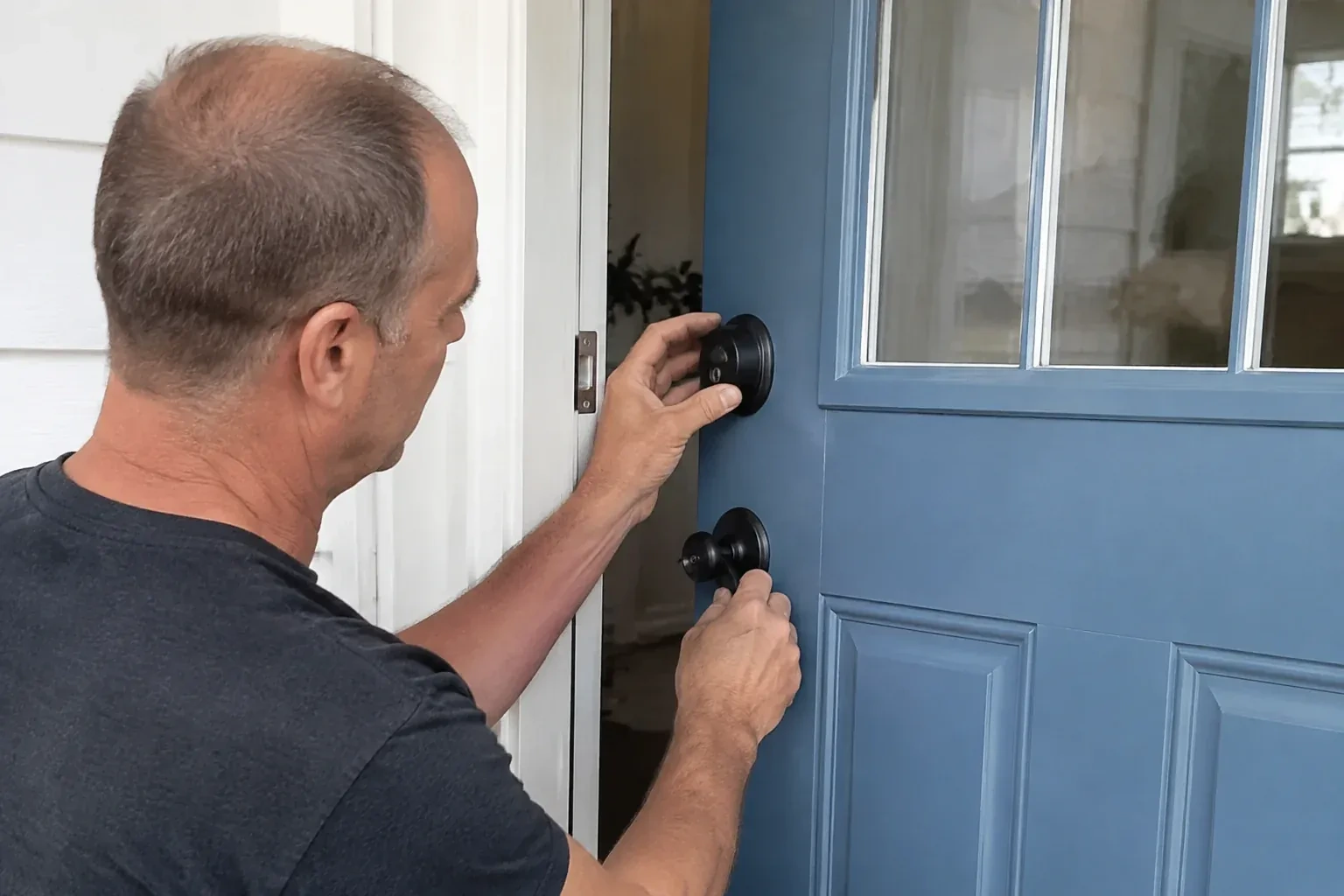
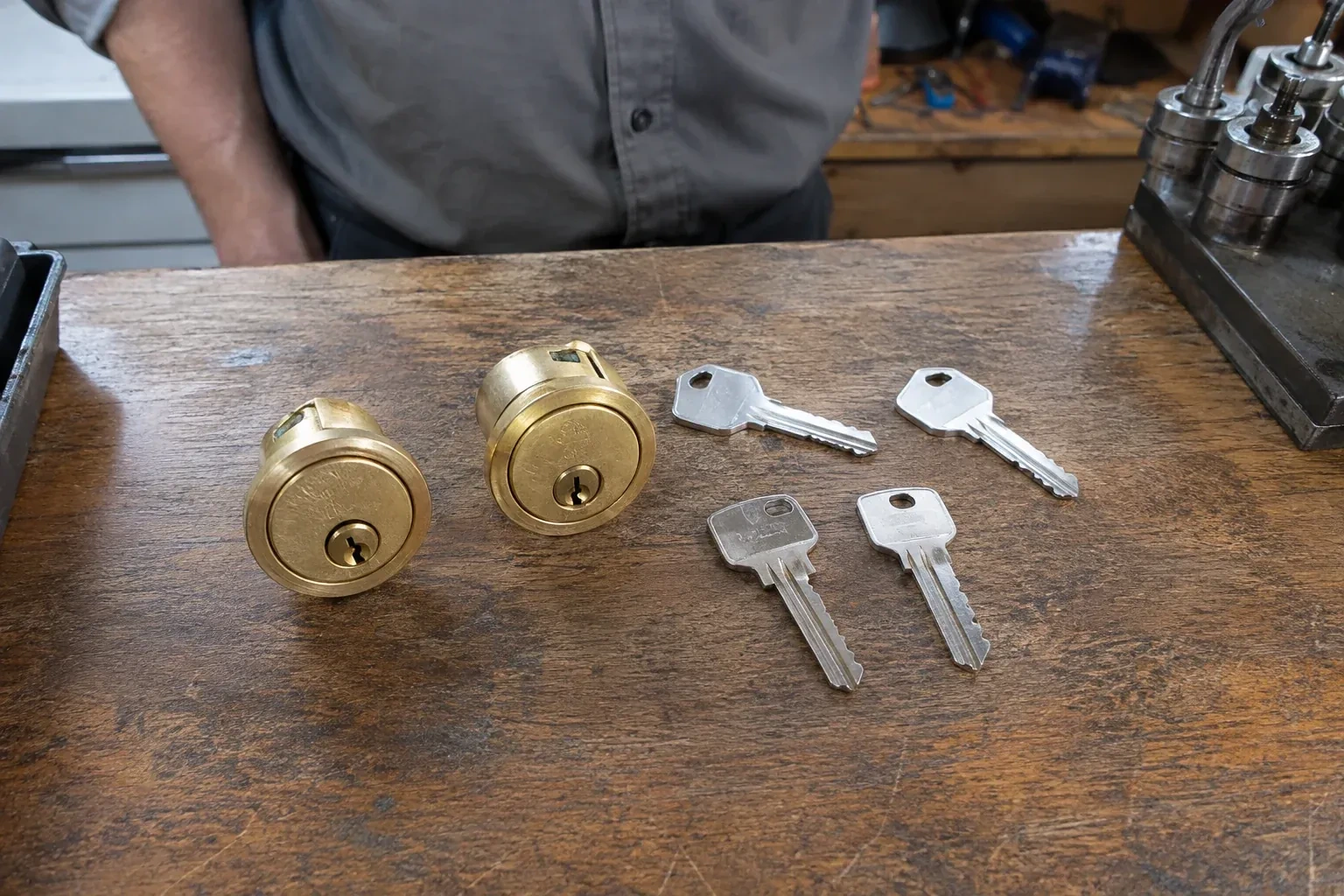
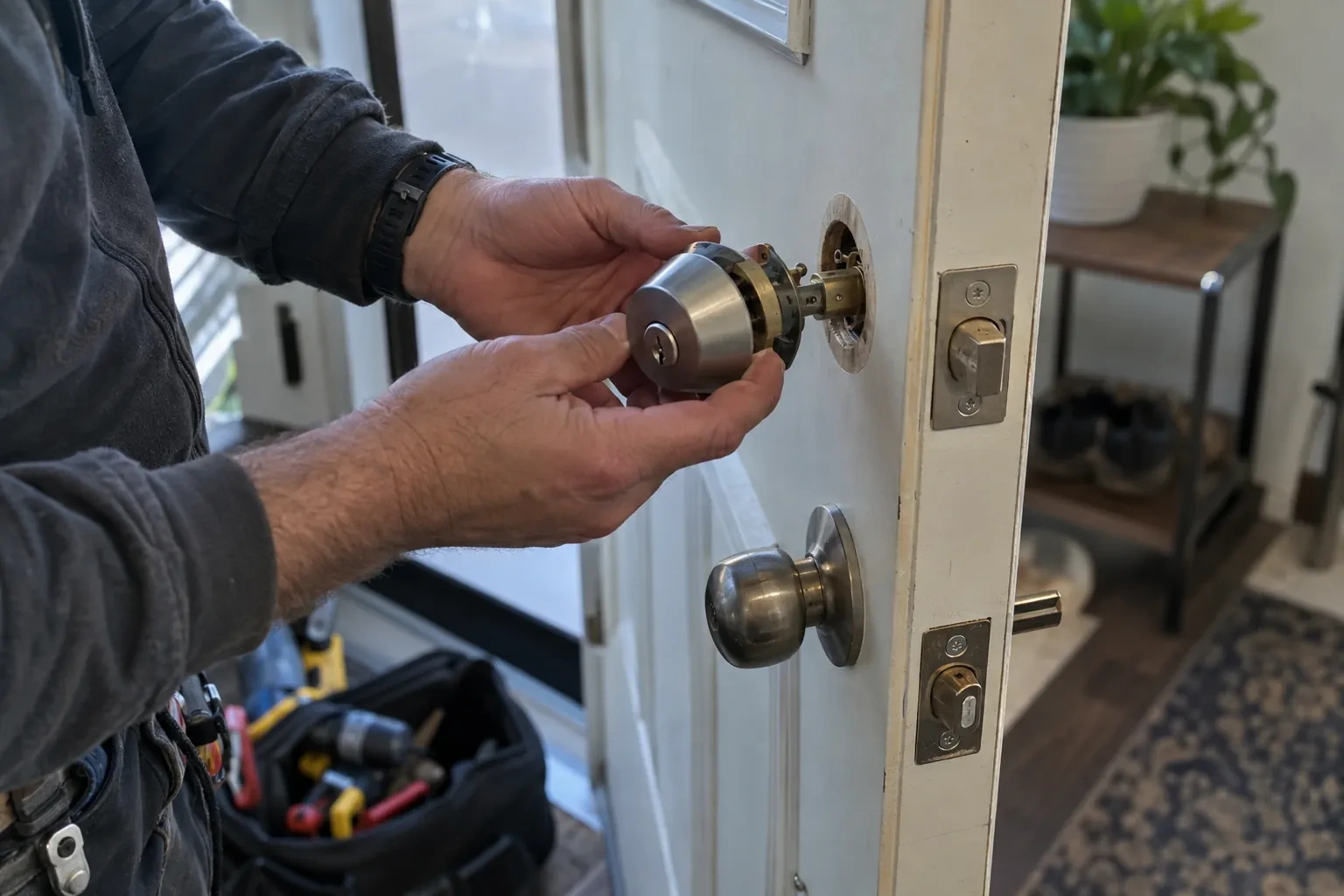
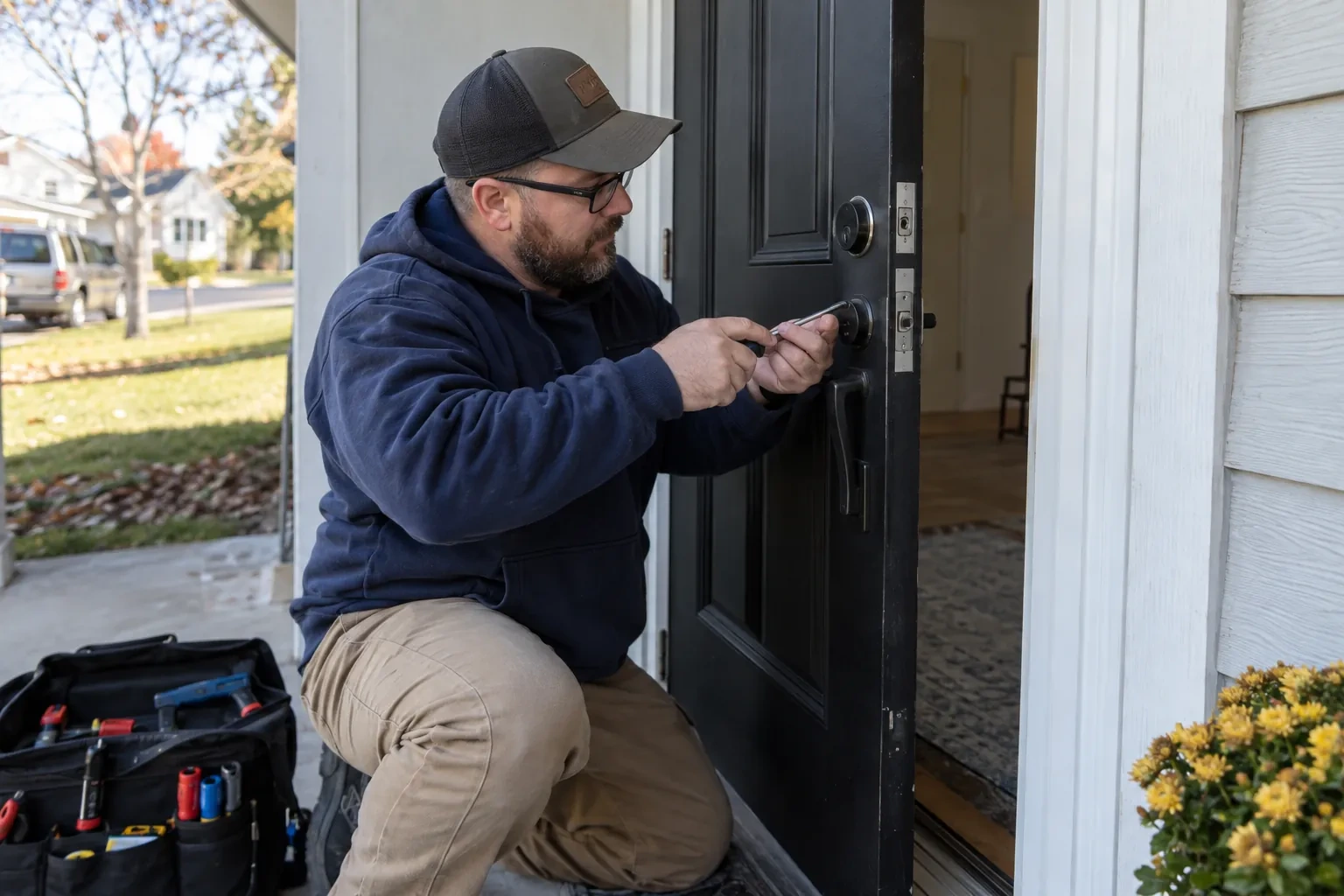
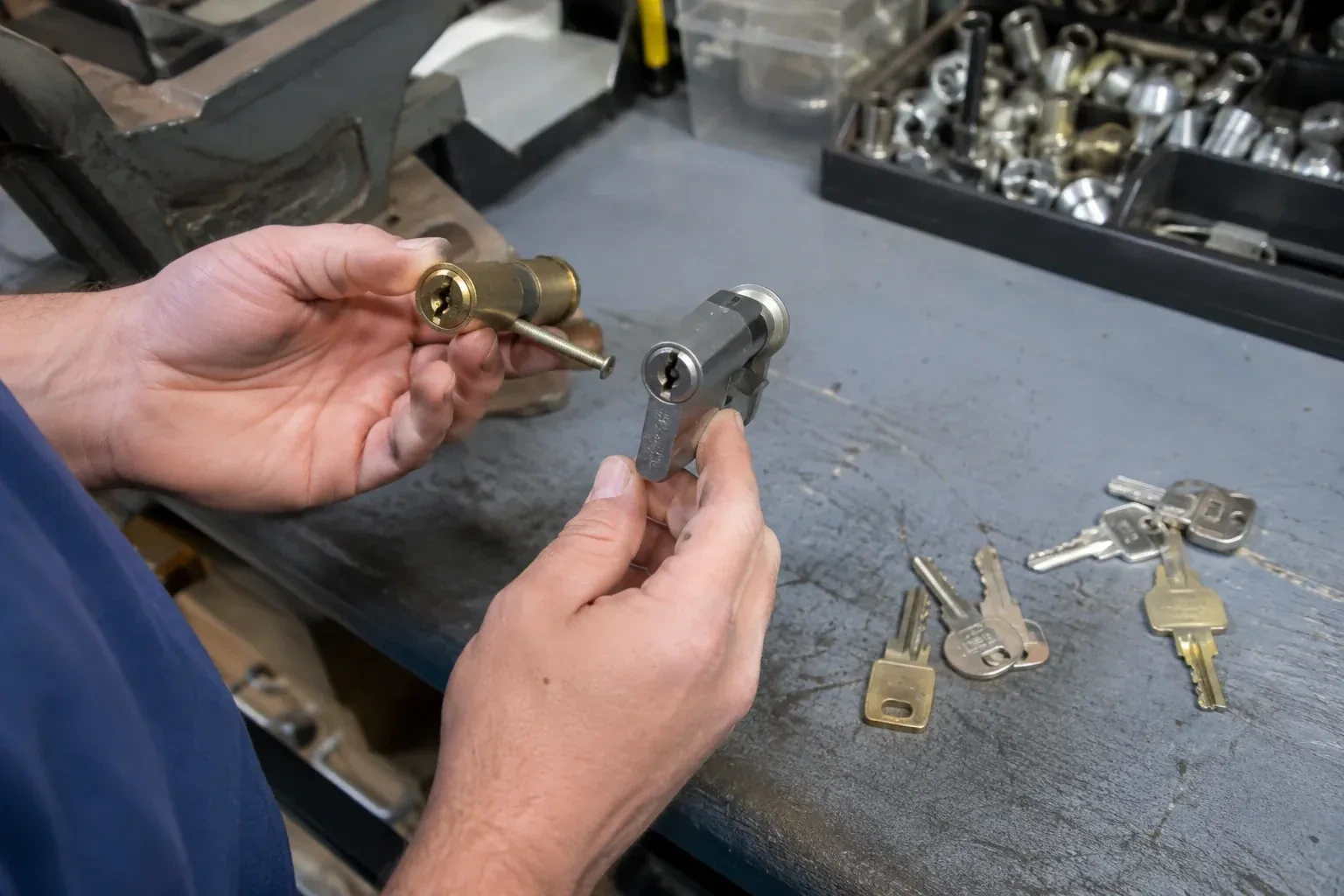
Moving into Ryckmans Corners? Rekeying is the simplest way to be sure that only your keys work. We change the pins in each exterior lock, cut a fresh set and check that every door closes and latches properly while we are there. It is a short visit that removes a long list of unknowns about who else might have had a copy.
33years in business
24/7open every day
You set the pace. We explain, you decide, we work. If you would rather sleep on a bigger change, we do what is needed now and leave the rest for another visit.
The reasoning behind each suggestion. Every recommendation comes with the reason for it, in language that does not require you to know the trade. Ask why as often as you like.
Order restored. Tools packed, dust cleared, doors closed properly. We leave your home or business looking as it did, with the lock problem gone.
The lock services below are the ones people in Ryckmans Corners ask for by name: get me back in, change the locks, rekey the house, put a deadbolt on this door, sort out the shop, open the safe. Each page answers the questions that usually come next, and the technician answers the rest at the door.
About 61% of homes in Hamilton were built in 1980 or earlier, according to the 2021 Census.
Older homes
Old brass keys wear thin, and a key that has bent for years finally lets go in a cold cylinder. In older housing stock this is a regular call, so the locksmith is ready to extract the piece, check the cylinder and cut a new key from the code.
Single-detached houses make up about 56% of homes in Hamilton (2021 Census).
Where houses and attached homes share an area, lockouts are as varied as the doors. A porch, a hallway or a shared vestibule each calls for a slightly different approach, and a locksmith used to all three arrives ready for whichever it is.
Sliding doors, side gates, basement walkouts and garage entries are often the paths of least resistance on a house. High security work is not just about the front door; it is about closing the easy routes so the strong door is not simply bypassed.
The house is fifteen years old and every exterior door still wears the light hardware the builder fitted: a short bolt, a thin strike held by two small screws, and a knob lock that never suited a street entrance.
Police have come and gone, the occurrence number is on a sticky note, and you are standing in a cold hallway looking at a splintered frame, wondering how the house gets locked before everyone tries to sleep.
Business owners usually want two things from us: to know exactly who can open which door, and to stop worrying about it. The services here, from rekeying to full access control, are different ways of getting to that point.
The pharmacy's drop safe has a keypad that finally lost power for good, and the little override key that was supposed to live behind the counter cannot be found anywhere.
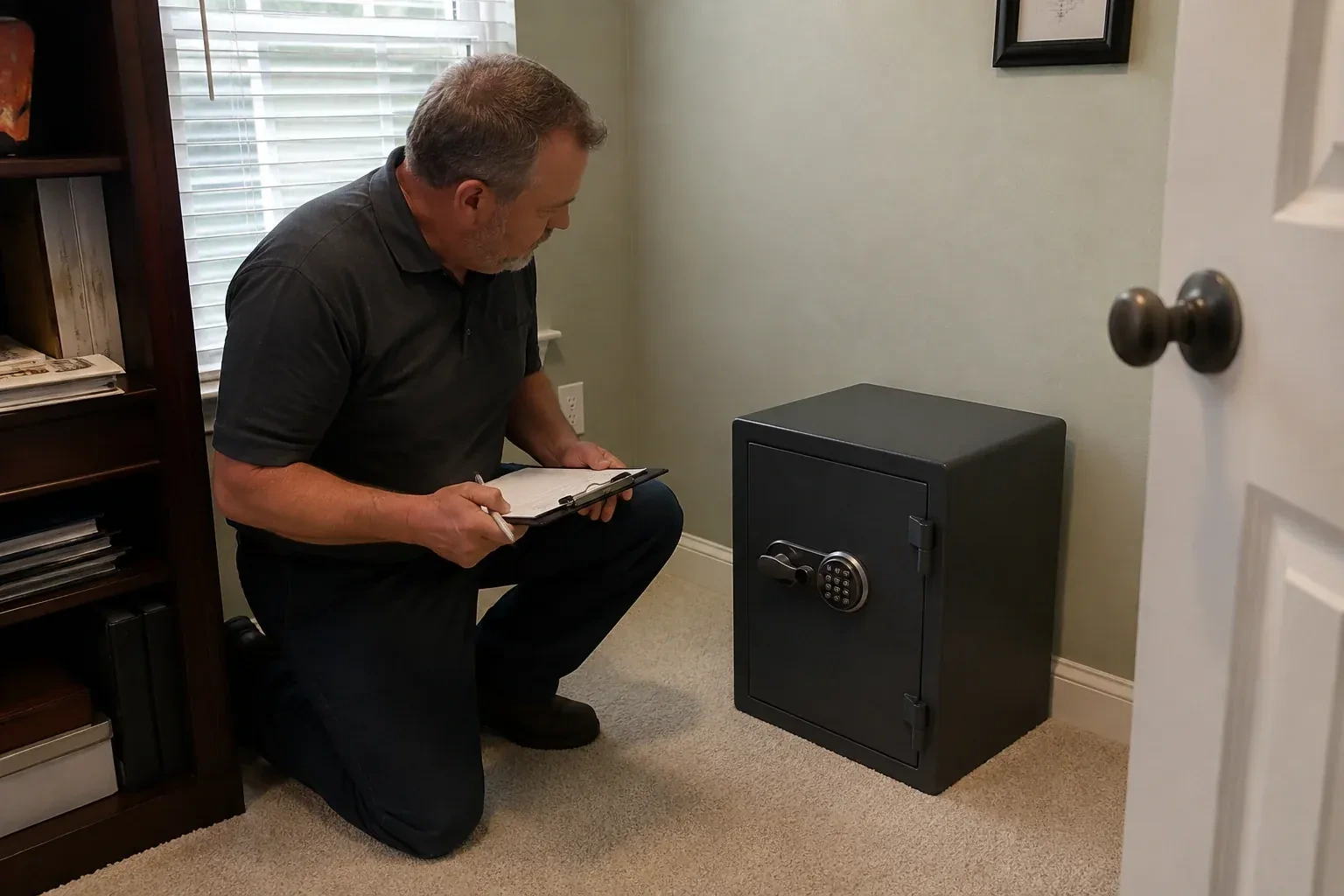
The keypad on the office safe blinks a low-battery warning every morning now, and whoever notices it first quietly hopes someone else deals with it before the batteries finally give out mid-week.
WhySteel-clad and fibreglass doors, the common insulated entry doors in newer subdivisions, take a deadbolt happily as long as they are cut for it properly.
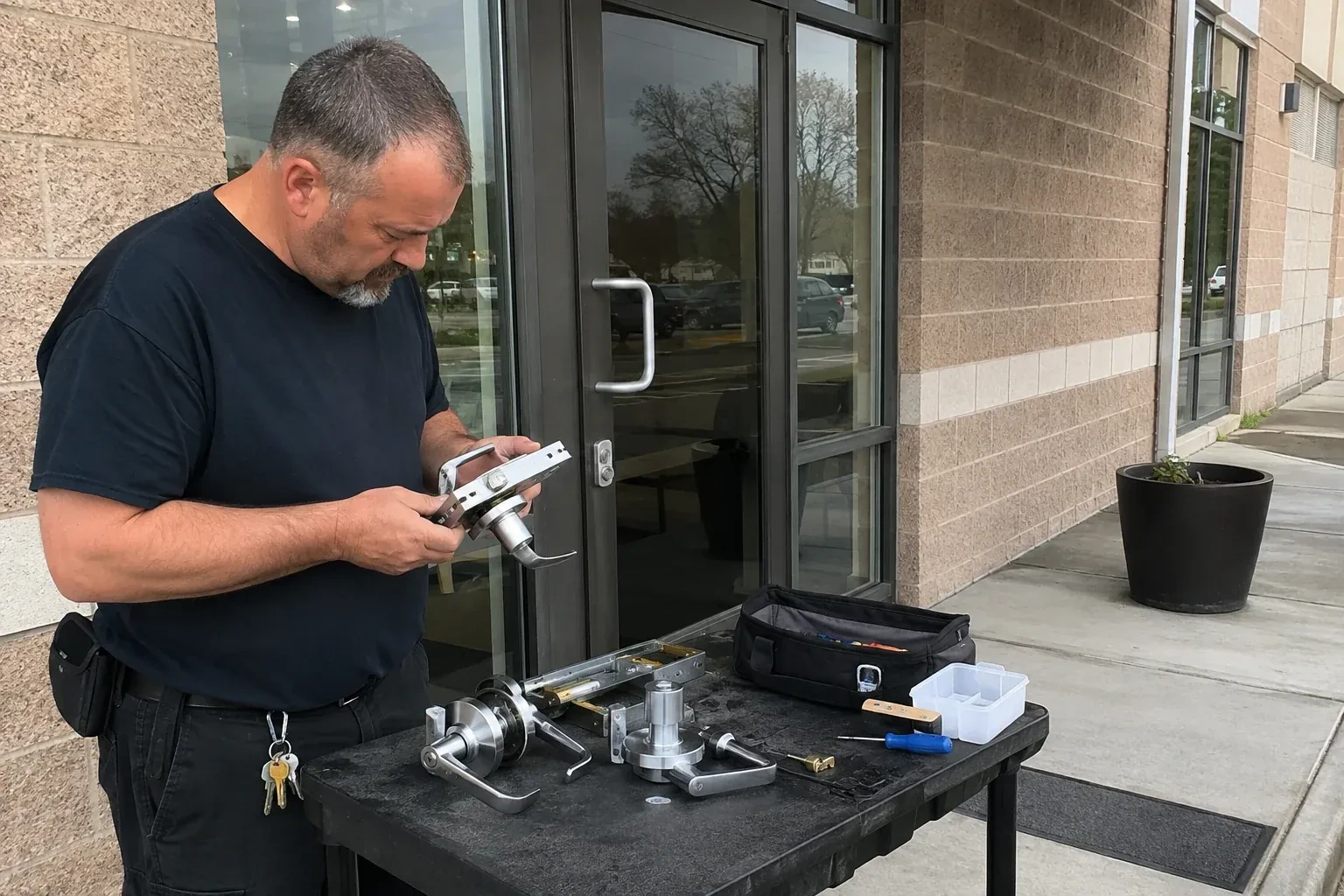
The century home's original mortise lock takes a key the size of a spoon, sticks in humid weather and has worn its strike to a groove.
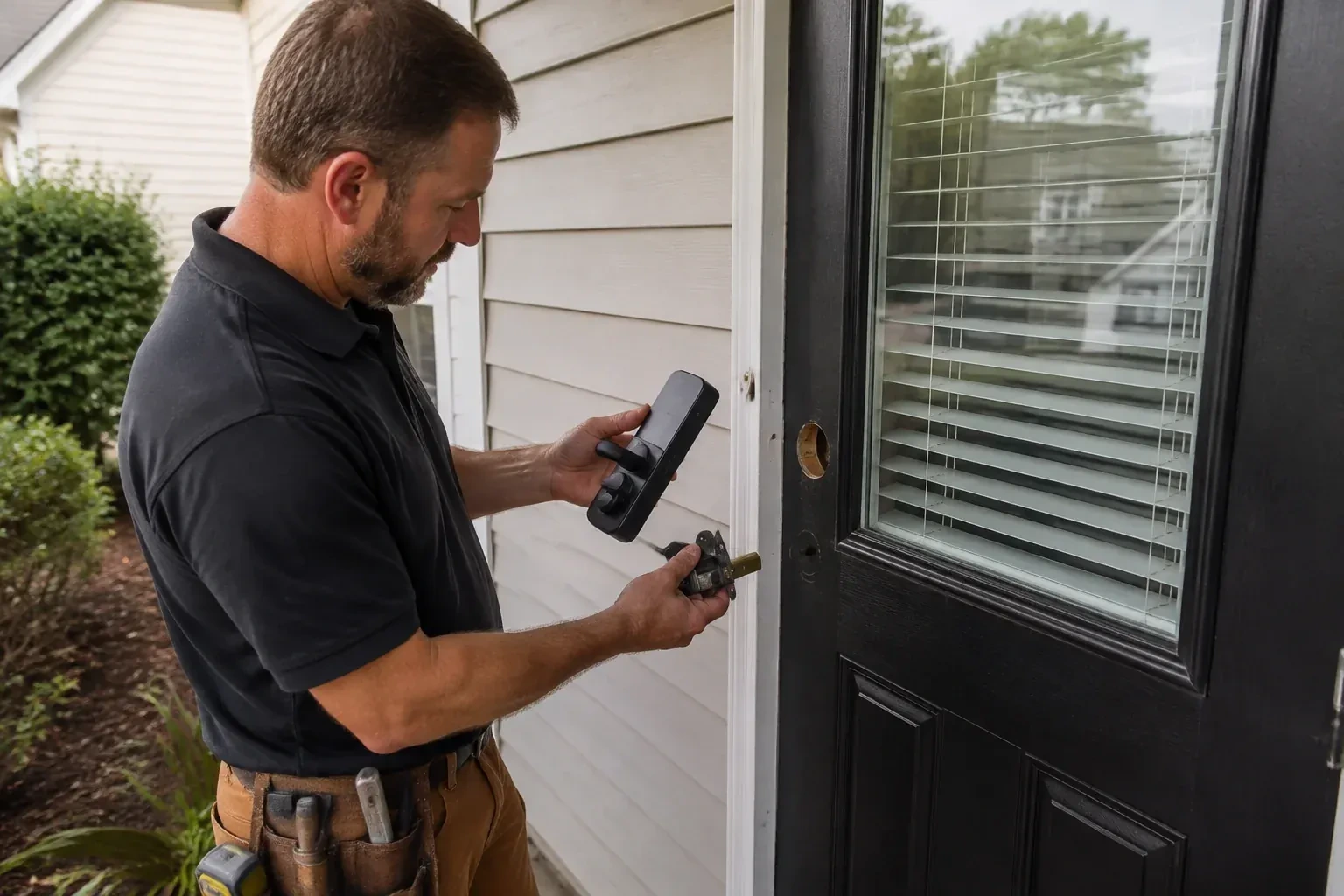
WhySmart lock installation puts an electronic deadbolt or lever on your door that opens with a code, a phone, a fob or a fingerprint, and, on some models, a conventional key too.
The padlock on the side gate has gone stiff every winter for three years running, and this year the key simply will not turn past the first few pins.
WhyA gate or door that will not latch is rarely just a lock problem; more often the hardware is being asked to catch a moving target.
A community group counts the weekend's raffle and bake-sale cash on a kitchen table, then carries it home in a tote bag until the bank opens Monday, because there has never been anywhere safer to leave it.
WhyChanging the locks answers today's question; key control keeps it answered.
After the fit-out, the gym floor now holds more people than the old office space ever did, and the exit door at the back still has the same turn-lock it had when the room held desks.
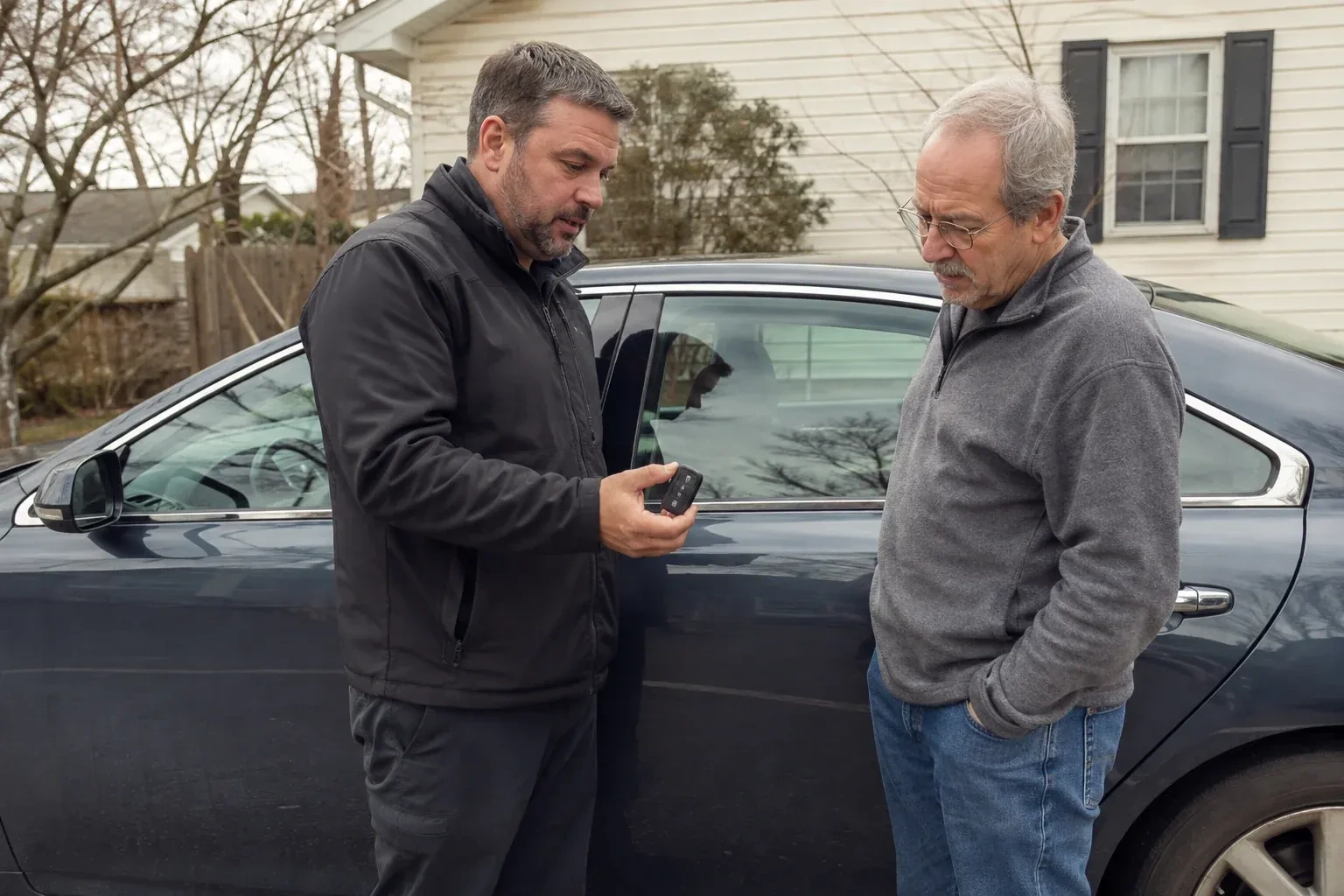
WhyMost car lockouts end with nothing to show that anyone was ever there.
Good days. Start with a turn.
1/9Break-In Damage Lock Repair
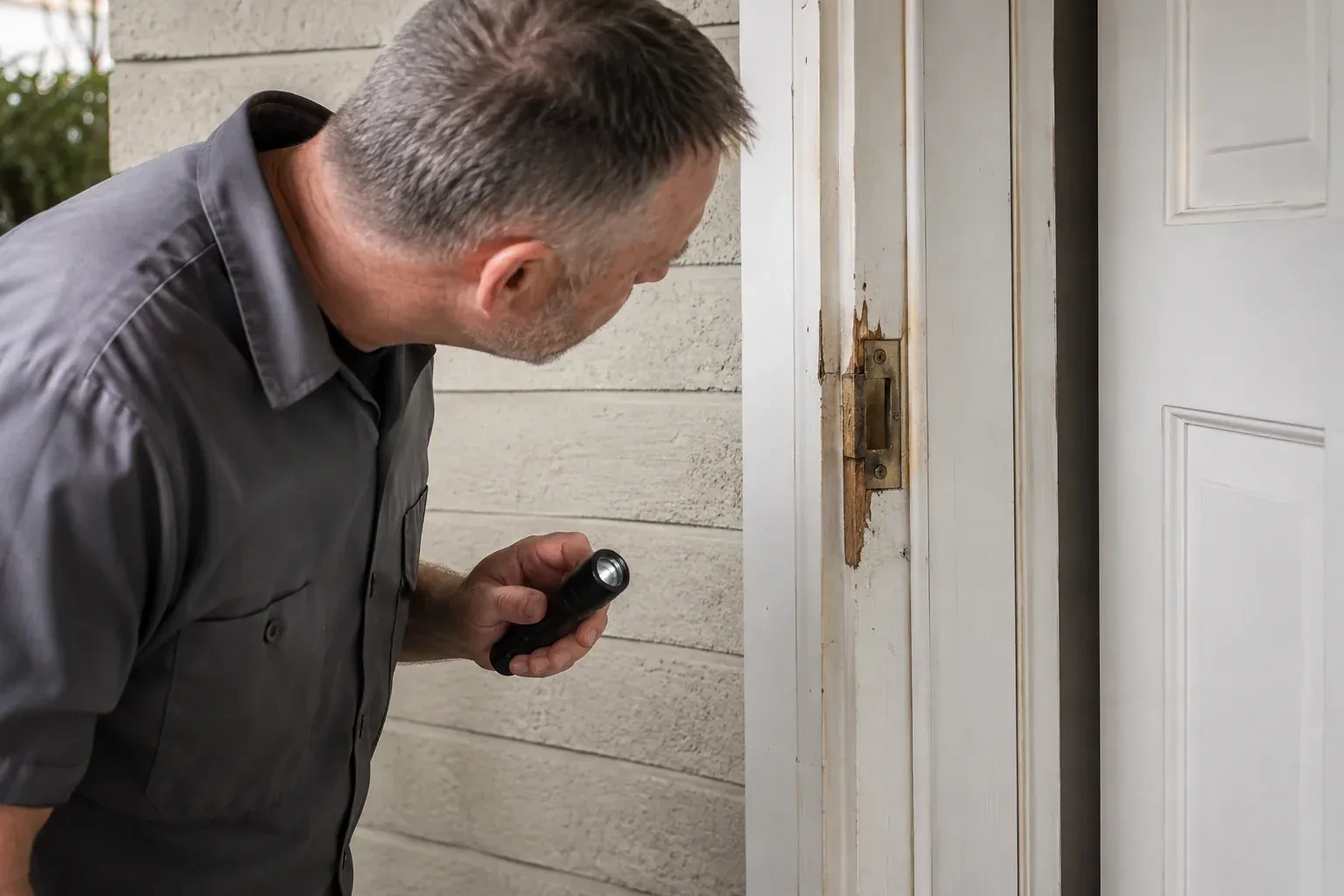
The back door looks closed until you touch it. The edge is crushed where a bar went in, the latch is bent sideways, and the door swings free with a gentle push no matter how you turn the key.
The bolt on the front door is keyed on both sides. Getting out at night means finding the key in the dark, and with a toddler in the house you have decided the inside should turn by hand. You want it done properly, not just swapped.
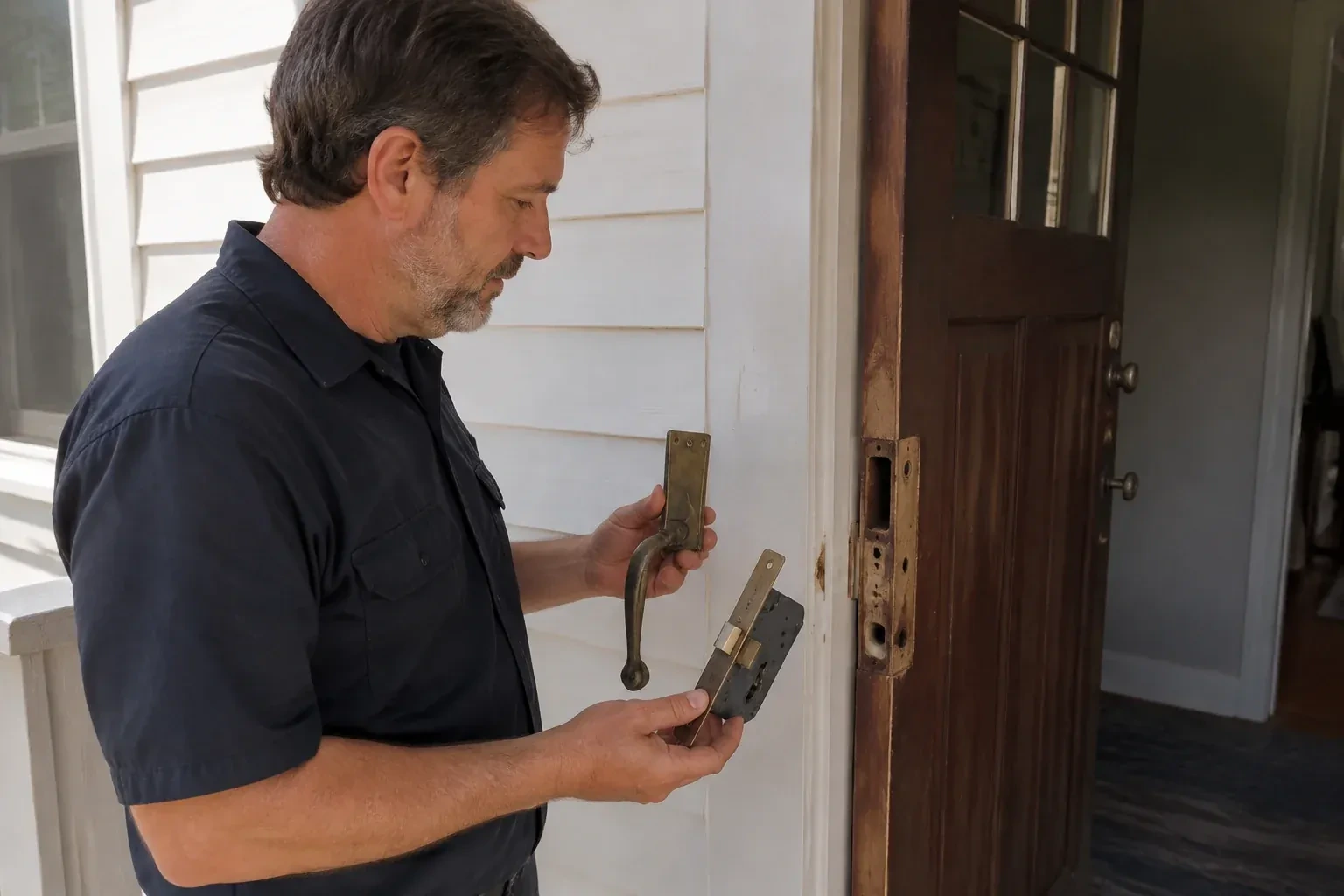
The century home's original mortise lock takes a key the size of a spoon, sticks in humid weather and has worn its strike to a groove. You want a lock that works every day without giving up the old door.
Half the evenings someone asks whether the back door got locked, and nobody is sure. A lock that relocks on its own, shows its state in an app and reports when it was last opened would settle the question.
The padlock on the side gate has gone stiff every winter for three years running, and this year the key simply will not turn past the first few pins. Salt spray off the road and a season of meltwater have left the cylinder pitted and reluctant.
A community group counts the weekend's raffle and bake-sale cash on a kitchen table, then carries it home in a tote bag until the bank opens Monday, because there has never been anywhere safer to leave it.
A key turned up in the parking lot with the shop's name on its fob. It came back to you, which is lucky, but it means keys are leaving the building on rings you have never seen, and the shop's locks have not changed since opening day.
After the fit-out, the gym floor now holds more people than the old office space ever did, and the exit door at the back still has the same turn-lock it had when the room held desks.
It is a January morning, minus twenty with the wind, and the key will not enter the door cylinder. Yesterday's slush ran into the keyhole and froze overnight. The door itself is glued to its rubber seal, and the fob has gone quiet in the cold.
I rent. Who arranges the repair, and can I change the lock myself?
Tell your landlord or property manager as soon as the police have been called; provincial tenancy law makes the landlord responsible for repairs to the unit, and most will arrange the locksmith. A tenant may not change locks without the landlord's agreement, and a landlord who changes them must give the tenant keys, so the visit is coordinated between you. If you arrange securing yourself in an emergency, keep the receipt and the record of what was done for both sides.
How long should the bolt be?
The bolt should extend at least 25 mm into the frame, which is the standard throw for a dwelling's entrance doors and the length most residential deadbolts provide. Part of the bolt stays inside the door for support while the rest sits in the pocket. A hardened steel insert that spins under a saw blade is a common feature worth having on doors that face a street or laneway.
Will a new lock fit the holes already in my door?
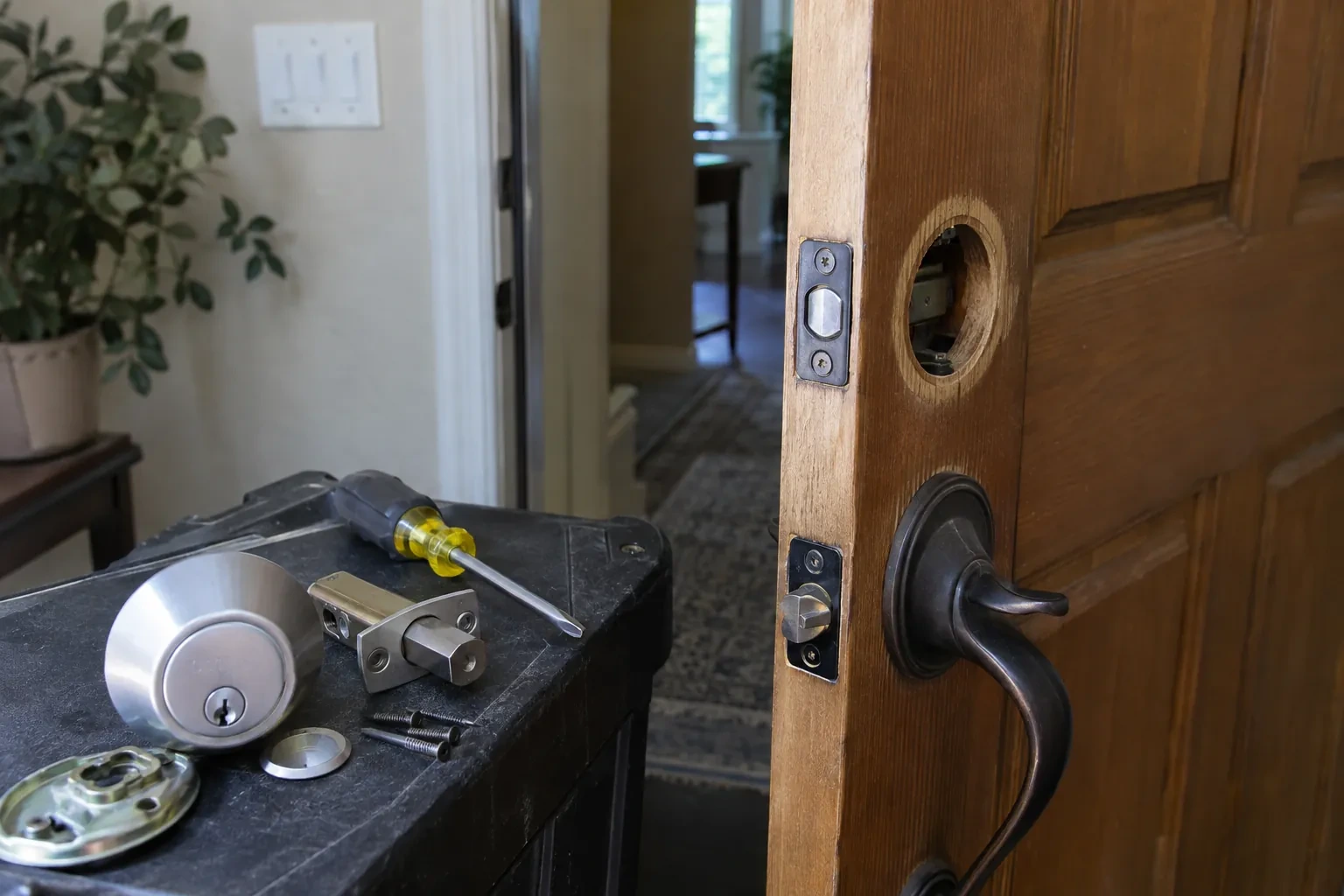
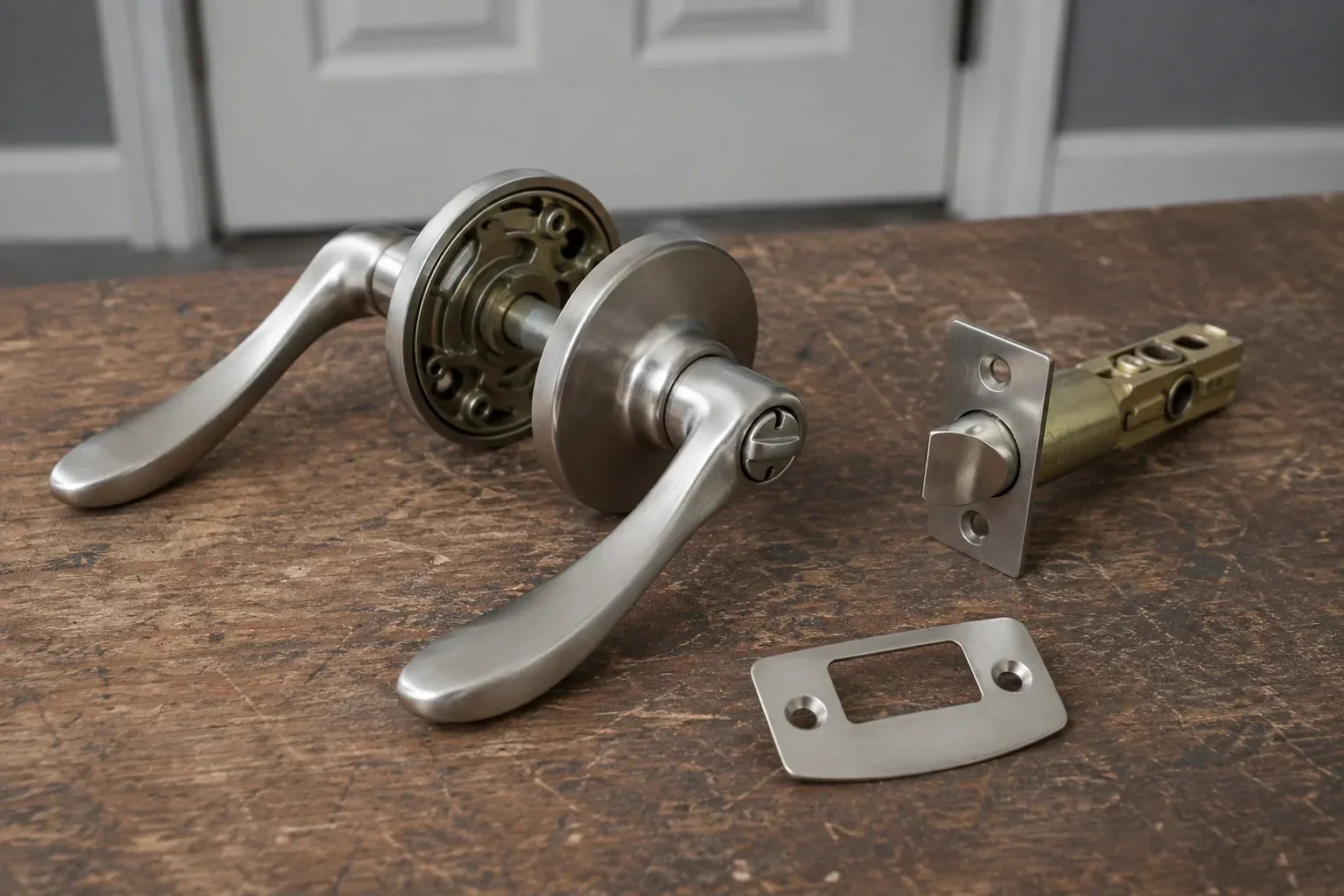
Usually, yes. Most residential doors are prepared to standard sizes, a 54 millimetre cross bore and a backset of 60 or 70 millimetres, and most modern hardware adjusts between those backsets. The locksmith measures before choosing, so the new lock is matched to the door rather than the other way around. Where an older mortise lock or an unusual bore is found, filler plates, extension kits or a carefully jigged new bore bring the door to standard.
Do I need a hub or a bridge?
Only if the model you choose uses one to reach the internet. Some locks have Wi-Fi built into the interior unit and connect straight to your router. Others save battery by using Bluetooth at the door and a small plug-in bridge nearby to relay to the network. Locks designed for a home hub join whatever hub you already run. The locksmith checks signal strength at the door itself and recommends the arrangement that keeps the lock reliably connected.
Does this service cover the gate itself, or only the lock?
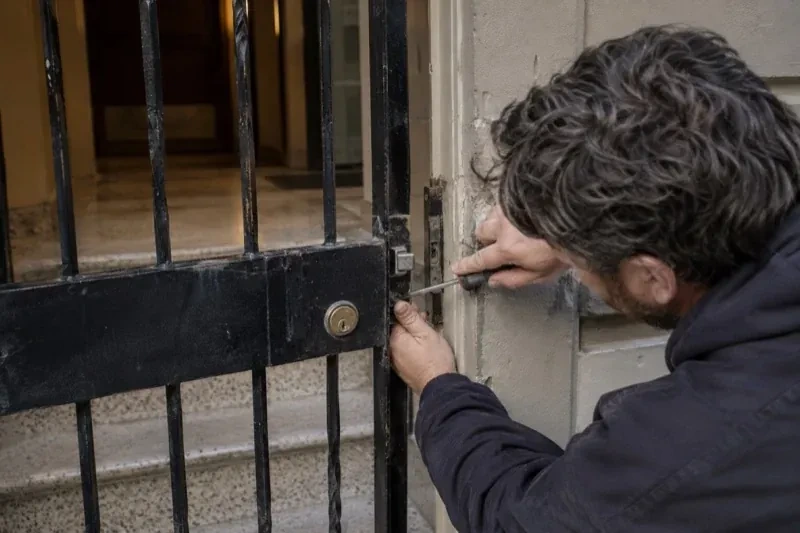
Both, where the two are connected, which on a gate they usually are. A locksmith working on a gate lock also looks at the hinges, the post and the closer, since a lock rarely fails on its own when the real cause is a sagging gate or a post that has shifted. Work that goes beyond hardware the locksmith carries, such as rebuilding a rotted post or a damaged fence panel, is flagged so it can be handled by whoever normally does that kind of repair.
How often does the battery need replacing on an electronic lock?
Most electronic locks give a low-battery warning, usually a beep or flashing light, well before they actually stop working, and replacing the battery within that same week is the safer habit rather than waiting. Depending on how often the safe is opened, a battery commonly lasts somewhere between one and several years, and keeping a spare of the correct type near the safe avoids a search once the warning starts.
What do you do with the old keys?
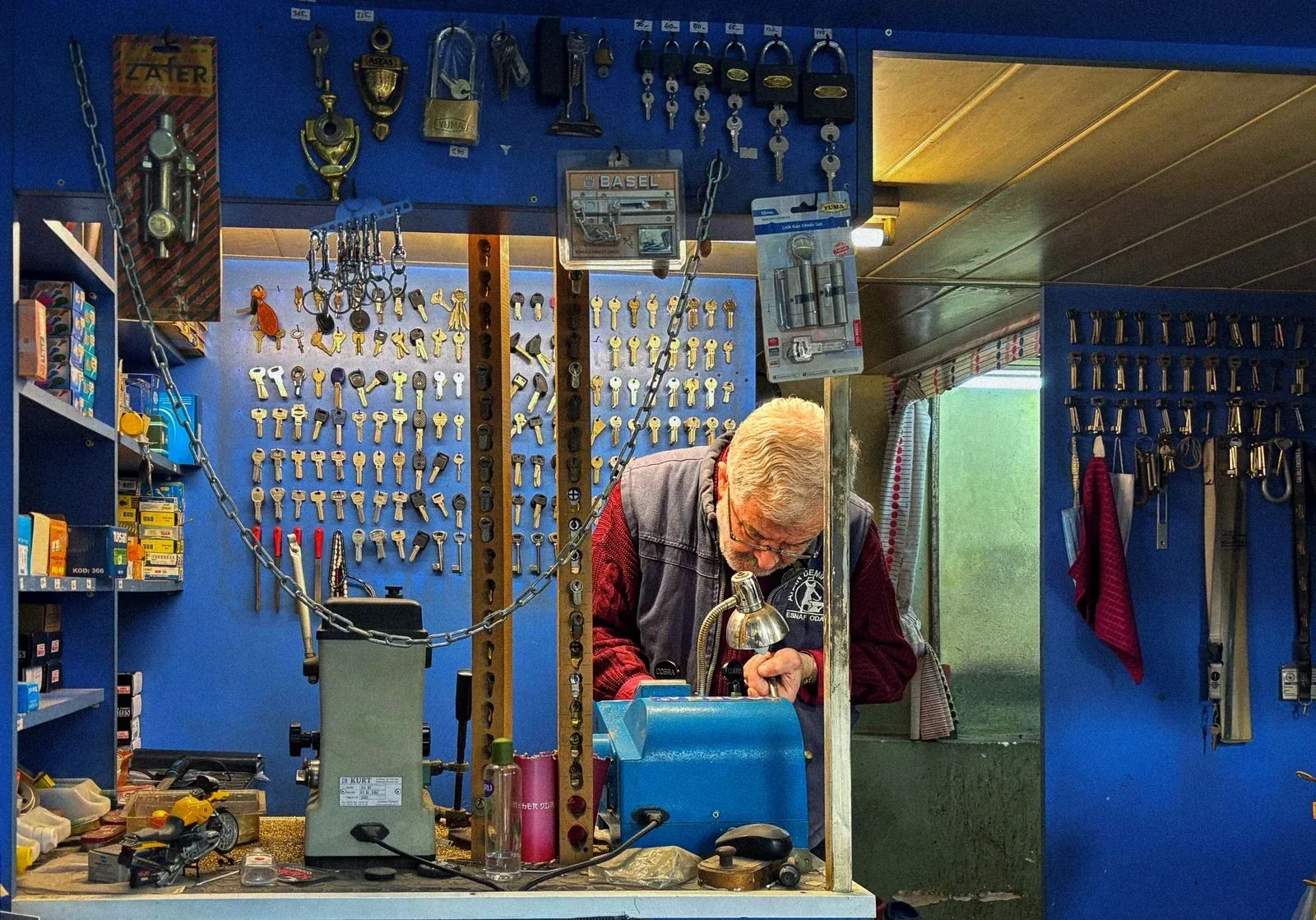
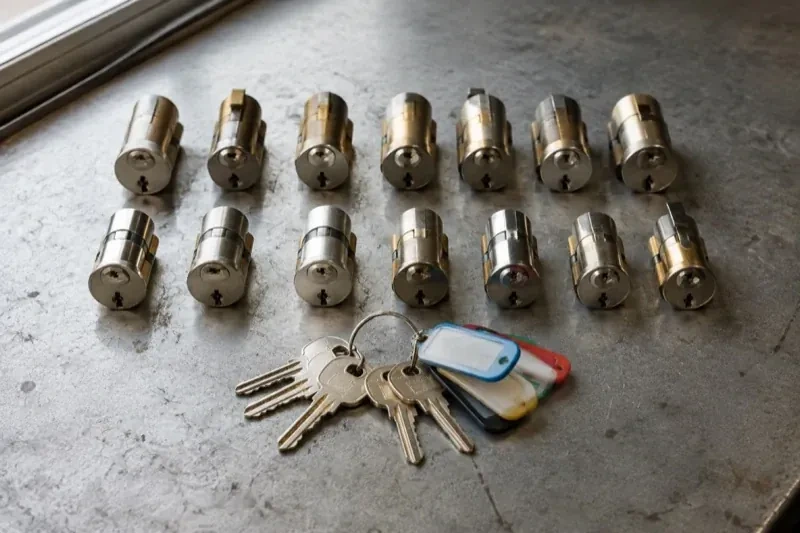
They are gathered, tested at each rekeyed door to confirm they no longer work, and then cut through so they can never be used or copied. You can keep the pieces or the locksmith takes them away. Any old key that still operates a door you chose to leave unchanged is handed back and noted on the chart, so it is clear which keys remain live and which are scrap.
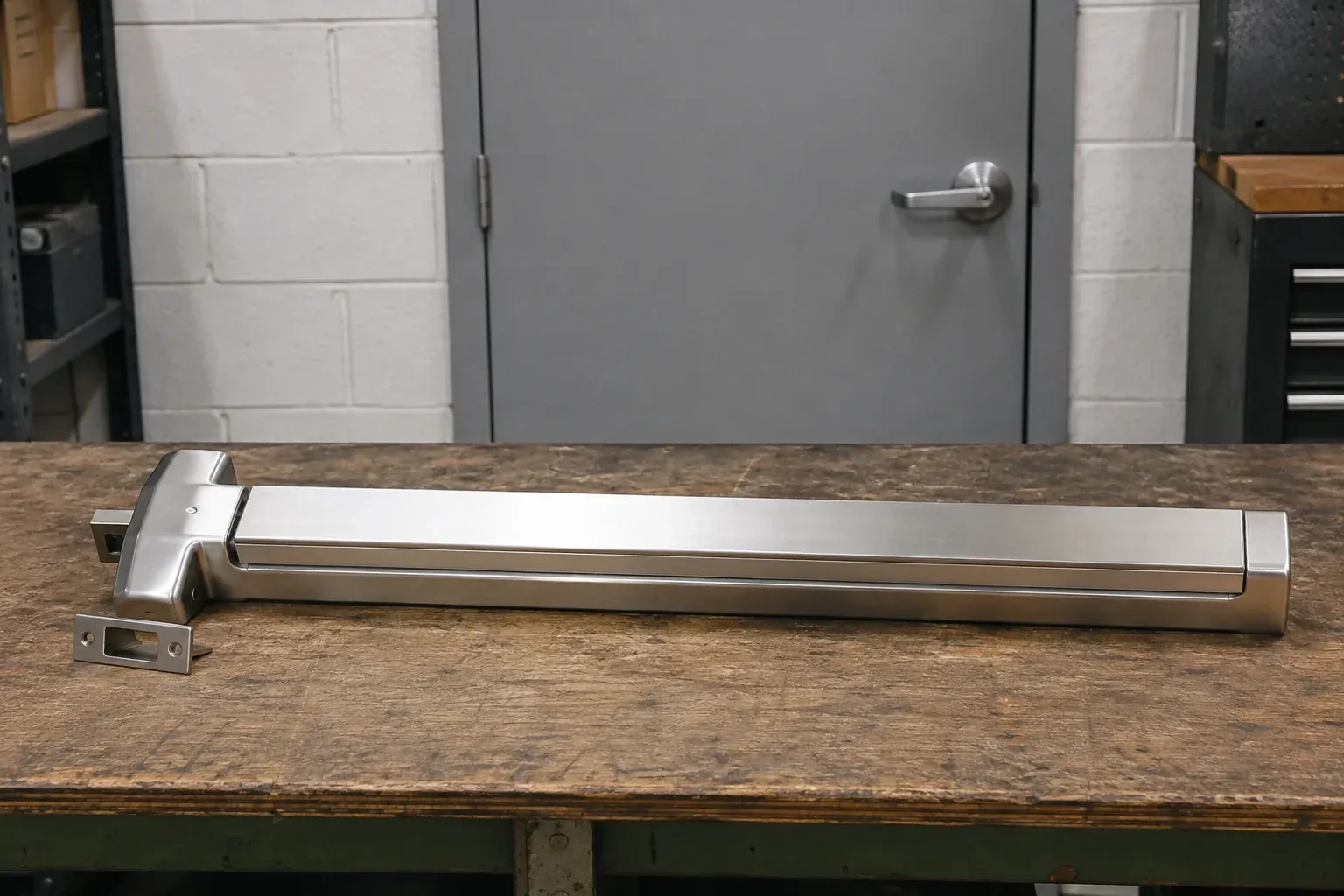
How high should the crossbar or touchpad be mounted?
Exit-device makers publish a mounting range for their own models, and in practice a crossbar or touchpad sits no higher than about 1200 mm above the finished floor. The locksmith sets the hardware inside the maker's range and below that ceiling, allowing for anyone in the space who needs a lower reach, a wheelchair user or a shorter staff member among them.
It is a rental or a company vehicle. Can you open it for me?
Yes, with the paperwork that fits. For a rental, the agreement in your name plus photo identification does the job; the rental company's roadside line may also want a call, and the locksmith can leave a written note of what was done for the return desk. For a company vehicle, a fleet manager or supervisor who can confirm you are assigned to it settles the question, and the same note keeps the fleet's records straight.
Request a visit
People in Ryckmans Corners should understand what is on their door. So we explain in ordinary words: what grade of hardware you have, where the weak point is, and which change would actually make a difference. You get the reasoning, not just a recommendation, and then the decision is yours. Nobody is pushed into an upgrade they did not ask about.