High security · Hamilton
High Security Locks
You jiggle the key a little and the old deadbolt opens even when the cut does not look quite right.
In plain words
Upgrading to high security rarely means new doors or a big disruption. Many high security cylinders retrofit into the existing deadbolt or lever, so the door preparation stays as it is and only the cylinder and keys change. A heavier deadbolt uses the same bore as the old one in most cases. The strike and hinge screws are swapped for long ones that bite into the framing. The visible difference afterwards is small; the practical difference is that the door resists the tools and tricks that defeat ordinary hardware, and that nobody can copy your key without you knowing.
How the visit goesA colleague showed you a video of a lock being opened with a bump key in a few seconds. Then you went home and noticed your own deadbolt is the same style, bought at a hardware store a decade ago.
High Security Locks
How the visit goes
The bolt, the pocket and the strike
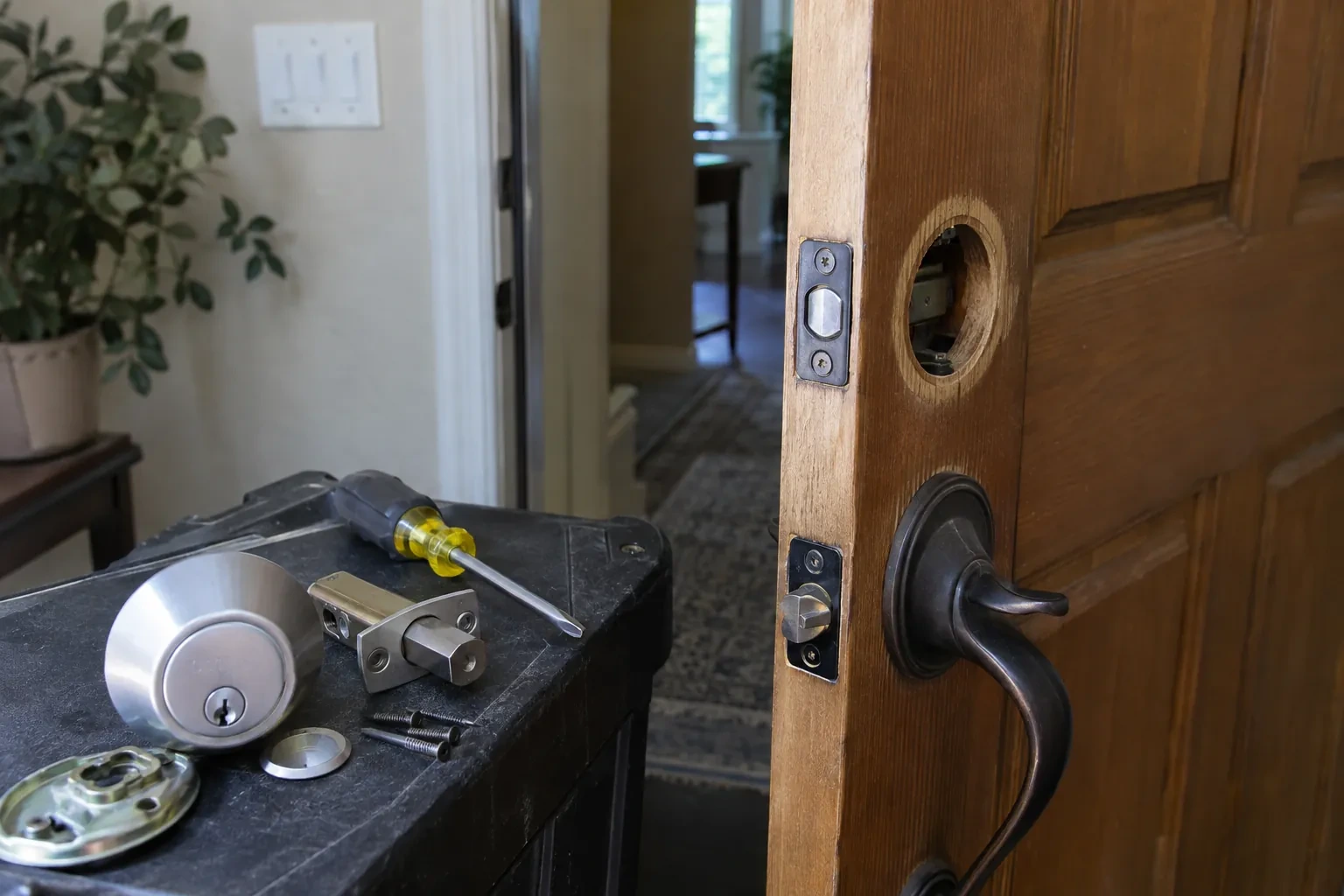
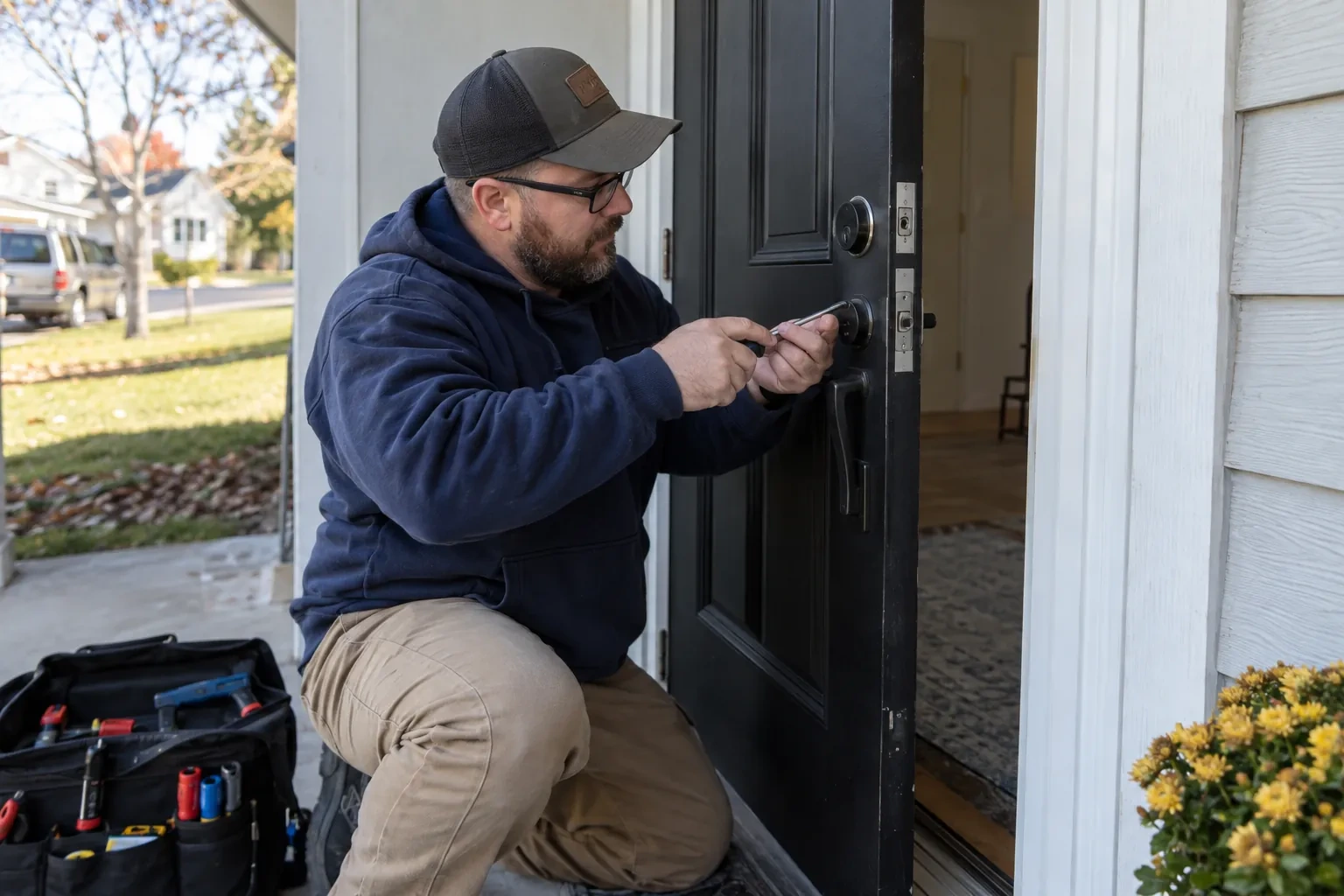
A deadbolt is only as good as how far it reaches and what it reaches into. The locksmith measures the throw of the bolt with the door closed, checks that it fully extends without the door being lifted or pushed, and looks at the pocket it enters in the jamb. A shallow pocket, a stamped strike plate and screws barely longer than a thumbnail are the usual finding on a builder-grade door. Then the frame is examined for splits, soft wood and gaps behind the jamb, since a kick lands on the strike, not on the cylinder.
Fitting a heavier deadbolt
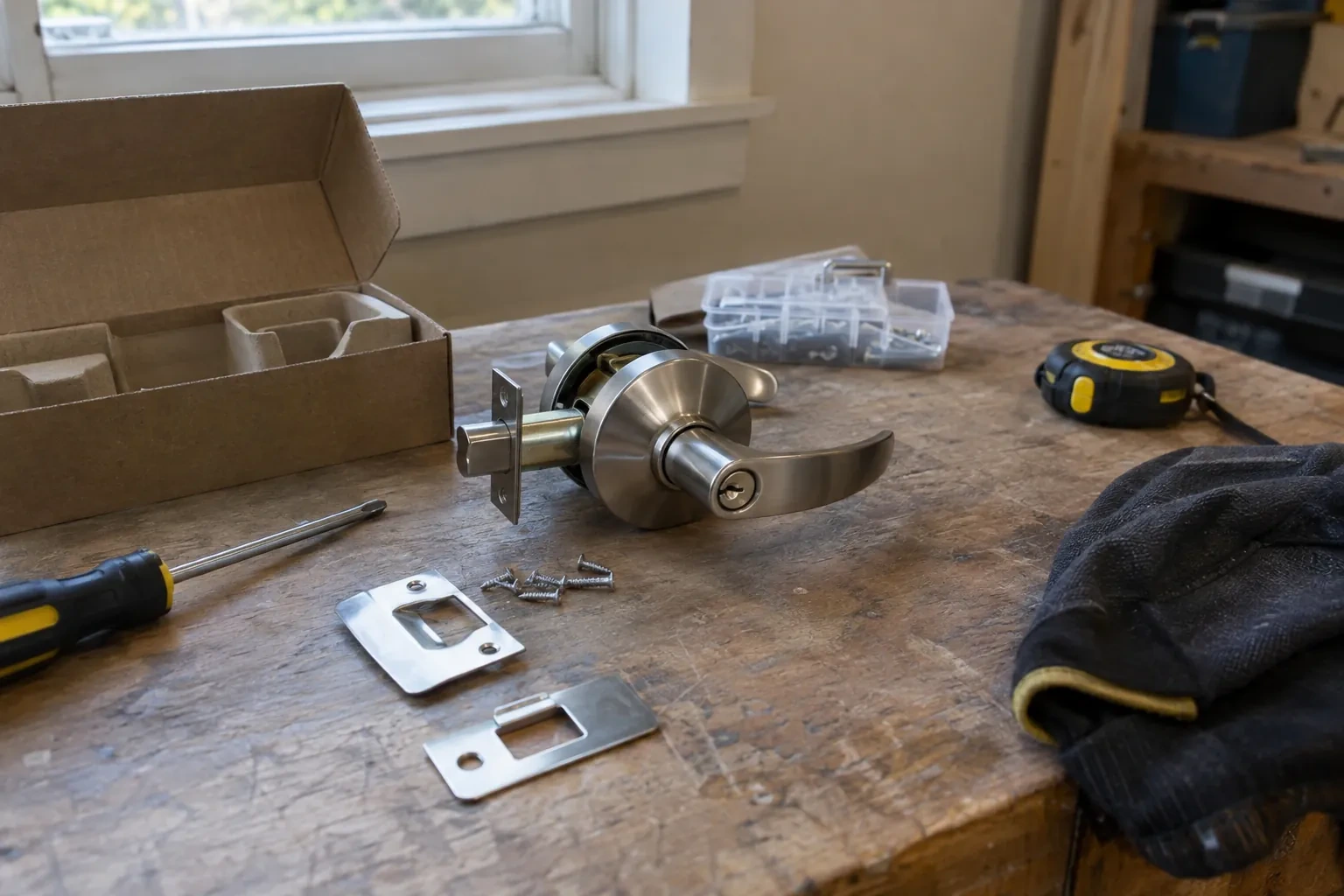
When the existing deadbolt is light or worn, the locksmith fits a graded deadbolt through the same bore where possible. The bolt throws a full inch and carries a hardened steel pin that turns under a saw blade, and the housing keeps part of the bolt supported against a kick. The latch is set in the edge bore with the correct backset, the exterior housing and interior thumb-turn are joined through the door with the long screws, and the final tightening is done by hand so nothing strips. The bolt is then thrown with the door open and closed to confirm it extends completely.
A key plan that survives staff changes
For a business, the handover includes a key schedule showing every cylinder, every key number and who holds it. When someone leaves, their key comes back and is struck off; if it does not come back, you know exactly which doors it opened and can decide whether one cylinder or several should be repinned. Because the keyway is restricted, a departed employee cannot quietly keep a copy. New hires are issued a numbered key against a signature. The plan lives in a folder or spreadsheet, and the locksmith keeps a matching record so the two can be reconciled whenever you like.
High Security Locks
In the van
Patented key blanks
Pinning kit and plug follower
High-security cylinder
Reinforced strike plate
Graded deadbolt with hardened bolt
High Security Locks
What affects the quote
Key control level
A patented keyway with authorisation cards covers most homes. Geographically exclusive keyways and signature-controlled systems for businesses carry registration and administration that show in the quote.
Condition of the door itself
A solid door that hangs true takes hardware straight away. A dropped, swollen or hollow door may need hinge work, shimming or a recommendation to replace the slab before the lock is worth fitting.
Glass near the lock
Sidelights or glazed panels beside the deadbolt may call for a different function or extra hardware to keep the inside turn out of reach, always keeping easy exit in view.
What to have ready
- For a business, who should be allowed to authorise new keys?
- Has the door ever been forced, or has a key been lost or not returned?
- What does the door protect, and what prompted you to think about upgrading now?
High Security Locks: questions
QuestionsCan a high security cylinder be rekeyed later?
Yes. Like any pin tumbler it can be repinned to a new combination by a locksmith who holds the system, so a departed employee's key can be retired without replacing hardware. Some lines use interchangeable cores that swap in moments with a control key, which suits businesses with frequent turnover. Rekeying stays within your registered keyway, so the key control you paid for continues after the change.
What about the glass panel next to my front door?
A sidelight within reach of the inside thumb-turn is the weak point of an otherwise strong door, since a broken pane lets a hand reach the turn. Options include moving the deadbolt further from the glass, a lock function that needs a key inside as well, or a laminated pane. Because everyone must still be able to leave easily, the locksmith talks through the trade-offs and helps you pick the arrangement that suits your household.
Will the new cylinder fit my existing locks?
Usually. High security cylinders are made in the common formats: key-in-knob and lever, rim, mortise and interchangeable core, and many are designed to drop into popular residential and commercial locks. The locksmith identifies your format and confirms fit before ordering. Where a lock is an odd size or in poor shape, a matching lock body is fitted instead, and the door preparation is reused wherever it is standard.