Lockouts · Hamilton
Seized & Jammed Lock Opening
The key slides all the way in, exactly as it has for years, and then refuses to turn in either direction.
In plain words
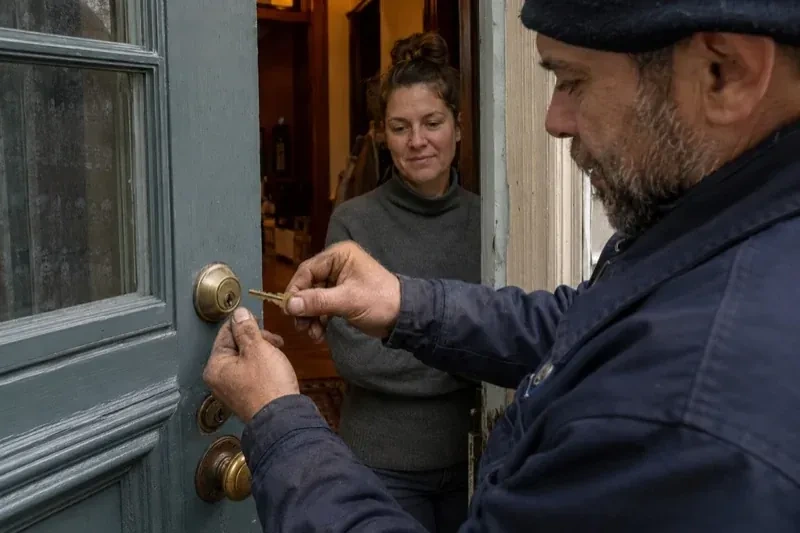
A lock rarely seizes without warning. It asks for a wiggle, then a firmer wiggle, then it needs the door pulled toward you, and one morning it stops. Seized and jammed lock opening deals with that morning, but the same visit deals with the months before it. The locksmith explains why this lock jammed, whether it was grit, weather, a worn key or a door that moved, and leaves you with a lubrication routine, a fresh key cut from code rather than from a tired copy, and a door that closes without a shove. The point is a lock that turns with two fingers and keeps doing so.
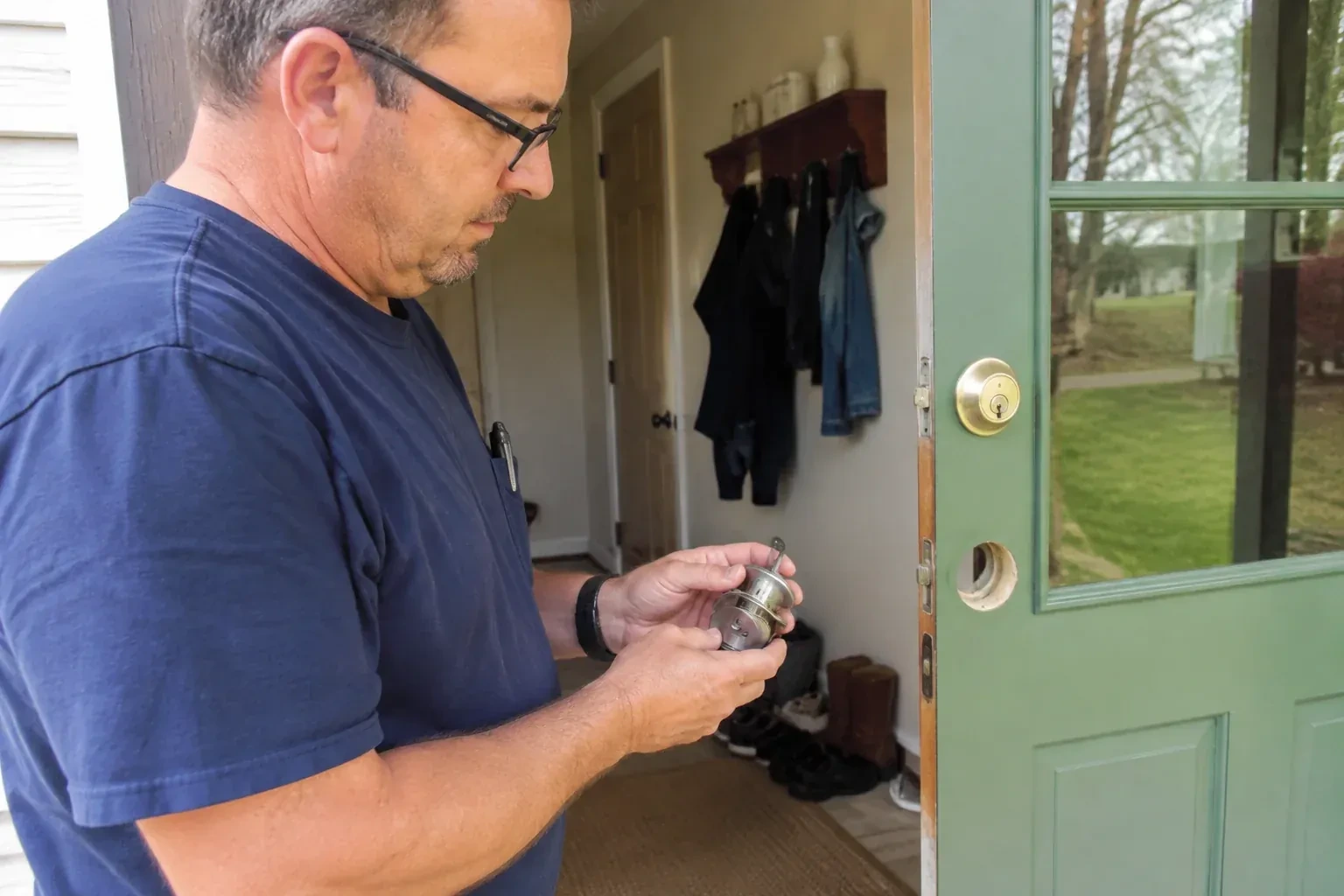
How the visit goesEvery time you pull the key out of the side door it comes away gritty. The lock has been sticky since the salt trucks started running, and today it has gone from sticky to solid, with the bolt still thrown.
Seized & Jammed Lock Opening
How the visit goes
Levers, thumb-turns and mortise cases
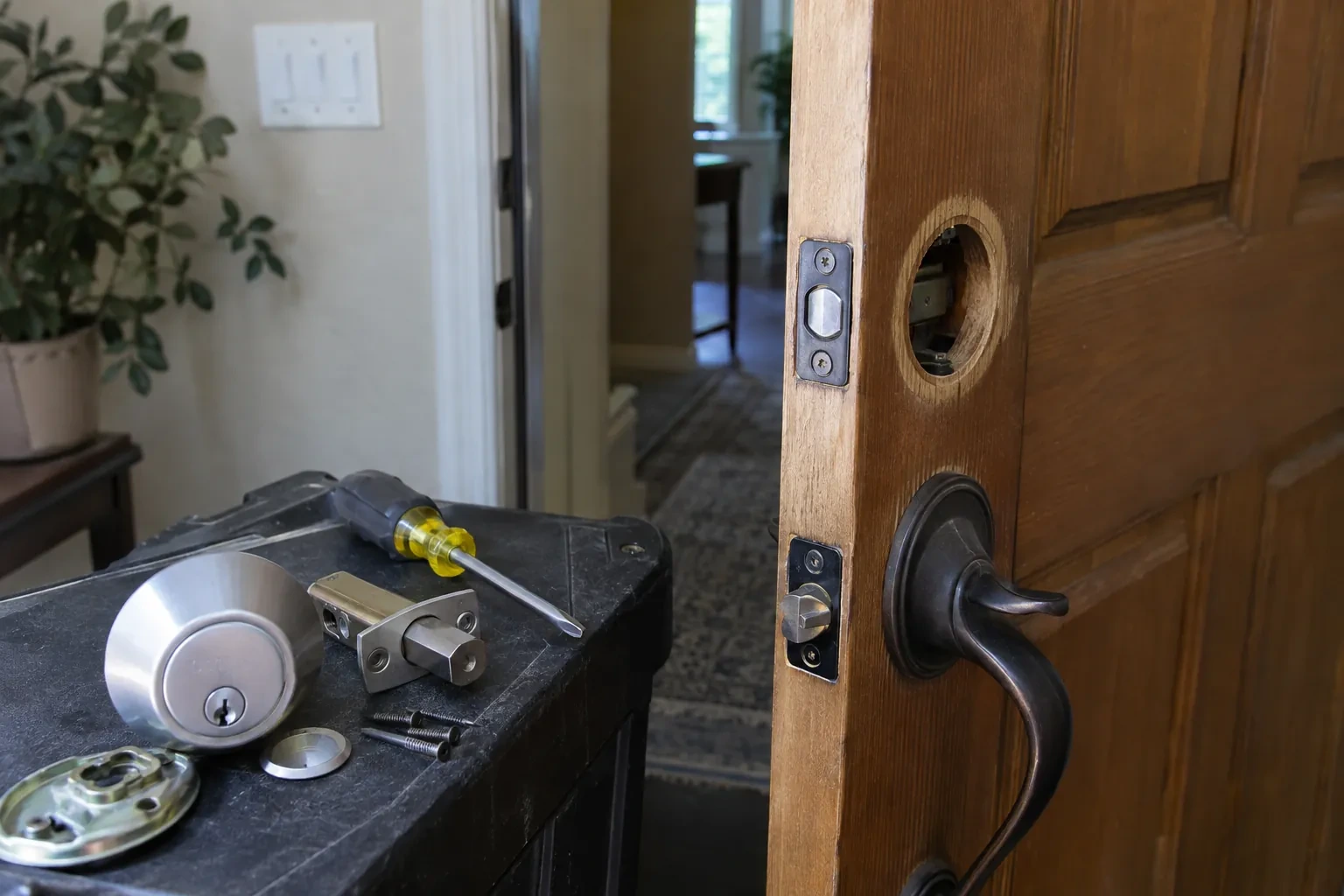
Lever handles and mortise locks add parts that a plain deadbolt does not have, and each can jam on its own. A lever that drops without retracting the latch can have a tired return spring or a worn hub inside the case, though latch engagement, linkage, or the spindle can produce the same symptom. A thumb-turn that will not move can be a bent spindle, a stripped drive or a bolt pinned by the frame. On older houses and commercial doors the mortise case itself may be packed with decades of dust and dried grease. The locksmith works the lever, key and thumb-turn separately and feels where resistance starts, which locates the fault before the case is opened.
Inside a mortise case or lever set
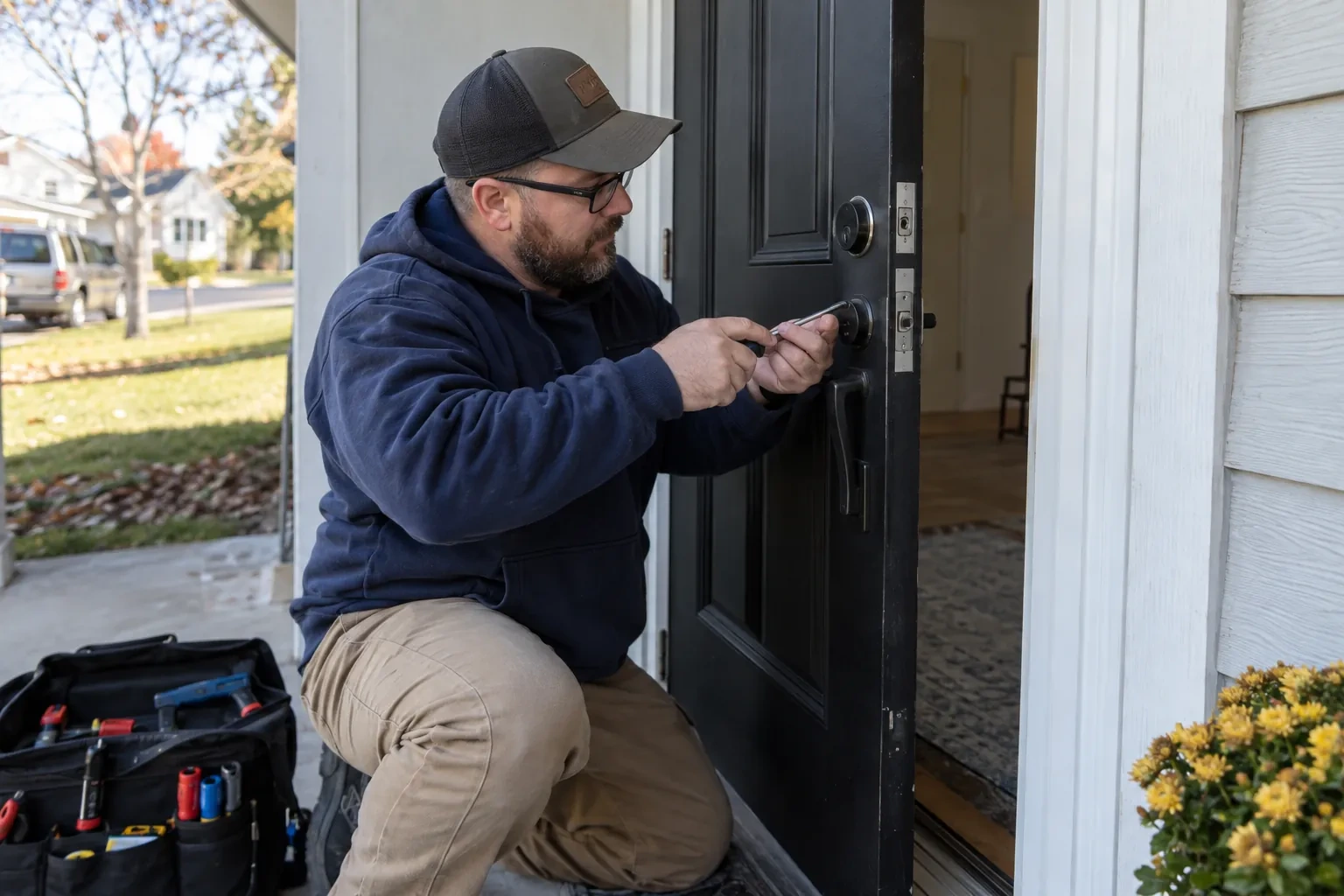
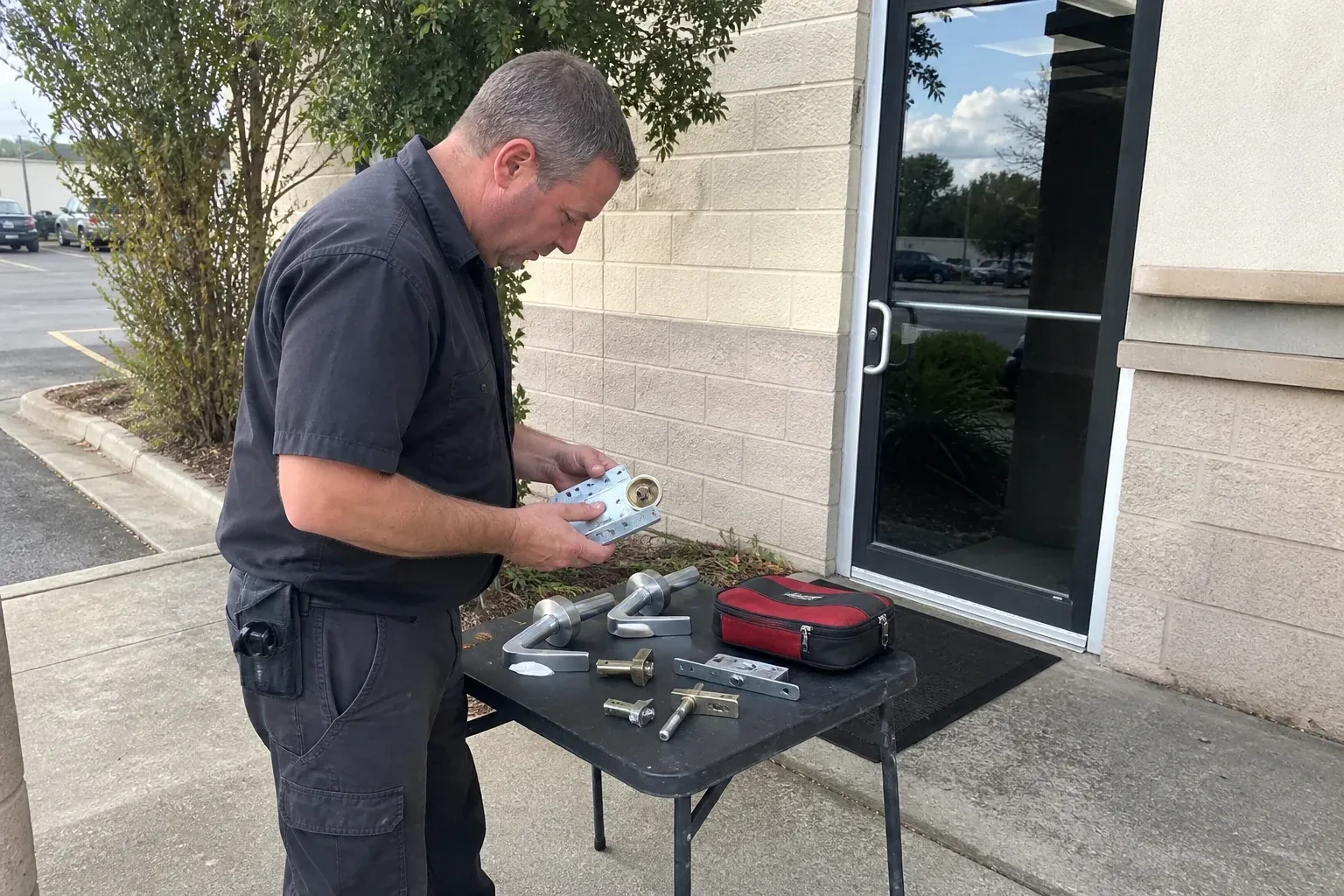
For mortise locks and lever hardware the work moves from the cylinder to the case. The locksmith gets the door open, then removes the trim and draws the case out of the door edge. Inside, a broken lever return spring, a worn hub, a bent spindle or a latch that has lost its spring is replaced with the matching part, and years of dust and hardened grease are cleaned from the contact surfaces before a fresh application of a grease suited to lock mechanisms. The case is reassembled, the spindle and cylinder are refitted, and lever, key and thumb-turn are each tested so the latch and bolt travel fully.
What was done, in writing, with the old parts
You are told plainly which family the jam belonged to and what was done: cylinder cleaned and rebuilt, tailpiece replaced, strike moved, hinges shimmed, mortise spring fitted, or cylinder replaced and keyed to your existing key. Replaced parts are handed over so you can see the wear or the break for yourself. For a rental, tenants and landlords both benefit from that note, since it records that the lock was serviced rather than changed. For an owner it goes in the home file beside the keyway and key code, which makes the next key cut or the next service a shorter conversation.
Seized & Jammed Lock Opening
In the van
Plug follower and repinning kit
Strike plate and hinge shims
Cylinder springs, pins and cap
Dry PTFE or graphite lock lubricant
Penetrating lubricant
Seized & Jammed Lock Opening
What affects the quote
Signs of an earlier struggle
A key snapped in the plug, a twisted cylinder or a bent latch from a screwdriver adds an extraction or a repair to the opening, and the locksmith points that out before quoting it.
Upgrades you choose on the spot
A keyhole cover, a storm door latch, a reinforced strike or a new deadbolt are optional extras some people add while the locksmith is there, each shown as its own line.
Which part is jammed
A bolt pinned by the door, a cylinder clogged with grit and a broken tailpiece are three different jobs with three different amounts of work, and the quote follows the diagnosis rather than the symptom.
What to have ready
- Is the key worn, bent, or a copy made from another copy?
- Do you have a spare or original key you could try?
- Does the lock work if you push, pull or lift the door while turning the key?
Seized & Jammed Lock Opening: questions
QuestionsHow can I tell whether the lock or the door is the problem?
Try the key while gently pushing, pulling and lifting the door. If it frees up in one position, the bolt is being pinched by the frame and the door is the cause. If nothing changes, look at the key: does it go fully in and refuse to turn, or spin freely? The first points to the cylinder, the second to the tailpiece behind it. Tell the locksmith which you found and the right parts come in the van.
Do I have to prove I live or work here?
It is a normal part of the visit and it protects you as much as anyone. Photo identification matching the address is the simplest route; a lease, a bill, a management record or a manager or neighbour who can confirm you works as well. For a business, the key holder or the person on the lease is enough. If the documents are behind the jammed door, the check is completed once you are inside, before the locksmith leaves.
The thumb-turn is stuck from inside and we need that door to get out. What should we do?
Use another exit for now and call. From the inside the fault is usually a bolt pinned by the frame or a bent spindle, both of which the locksmith frees without damage. A main exit door should open from inside without a key or special knowledge, so the repair leaves the door doing exactly that, and if the hardware on it was the wrong type for an exit, a thumb-turn deadbolt is suggested.
Related services
- Business Lockout ServiceA cook stepped into the alley with the recycling and the rear door swung shut behind him.
- Broken Key ExtractionYou were locking up on the way out when the key broke in the lock.
- Break-In Damage Lock RepairPolice have come and gone, the occurrence number is on a sticky note, and you are standing in a cold hallway looking at a splintered frame, wondering how the house gets locked before everyone tries to sleep.