Lockouts · Hamilton
Business Lockout Service
A cook stepped into the alley with the recycling and the rear door swung shut behind him.
In plain words
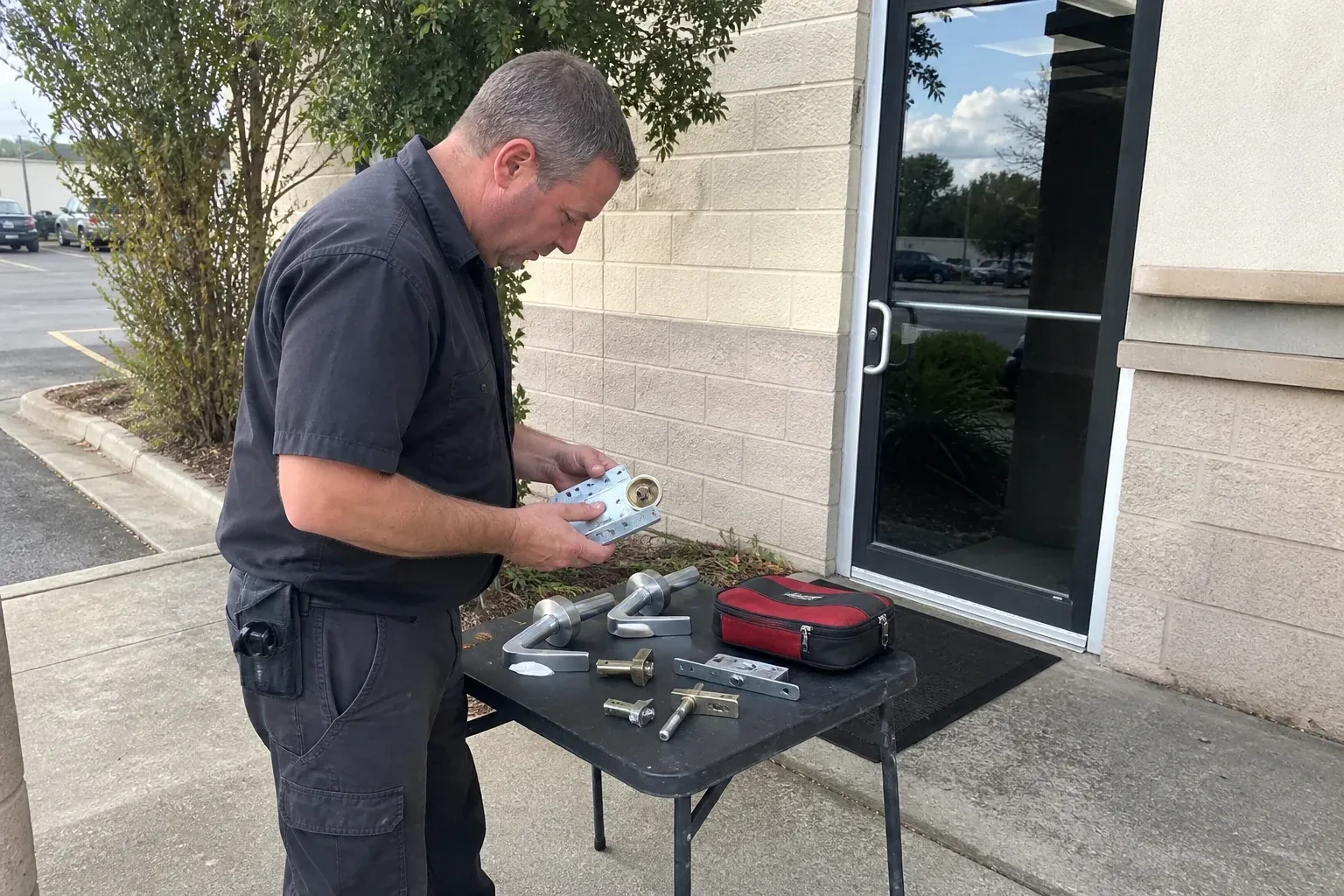
Commercial doors carry hardware that most homes never see, and reading it correctly is the first skill of a business lockout. An aluminium storefront door usually has a narrow mortise cylinder driving a hookbolt deadlock or a paddle-operated deadlatch. An office suite is more likely to have a lever lockset that stays locked from the corridor side, sometimes with a removable core. A rear door may carry an exit device with a keyed trim outside, and a steel door in a plaza often hides a full mortise lockset. Each of these opens differently, and choosing the technique that suits the mechanism is what keeps the hardware intact.
How the visit goesMinus eighteen with a wind, and the exterior cylinder on the shop door has frozen solid overnight after yesterday's slush. The key goes in halfway and stops. The delivery driver is due, the phone is ringing inside, and nobody can reach it.
Business Lockout Service
How the visit goes
How the door hangs and closes
Commercial doors are heavy and busy, so the locksmith reads the door as carefully as the lock. A glass door is checked at its pivots or continuous hinge for drop and play, and at the threshold for scrape marks that show it has sagged. The closer is checked for a slow or stiff sweep that leaves the door short of the strike. The gap along the lock edge tells whether the bolt is entering its pocket square or catching its lip. A hand on the door while the key is turned often reveals that the bolt is bound rather than the cylinder failed, which changes the fix from lock work to lifting and adjusting the door.
Non-destructive first, on every commercial door
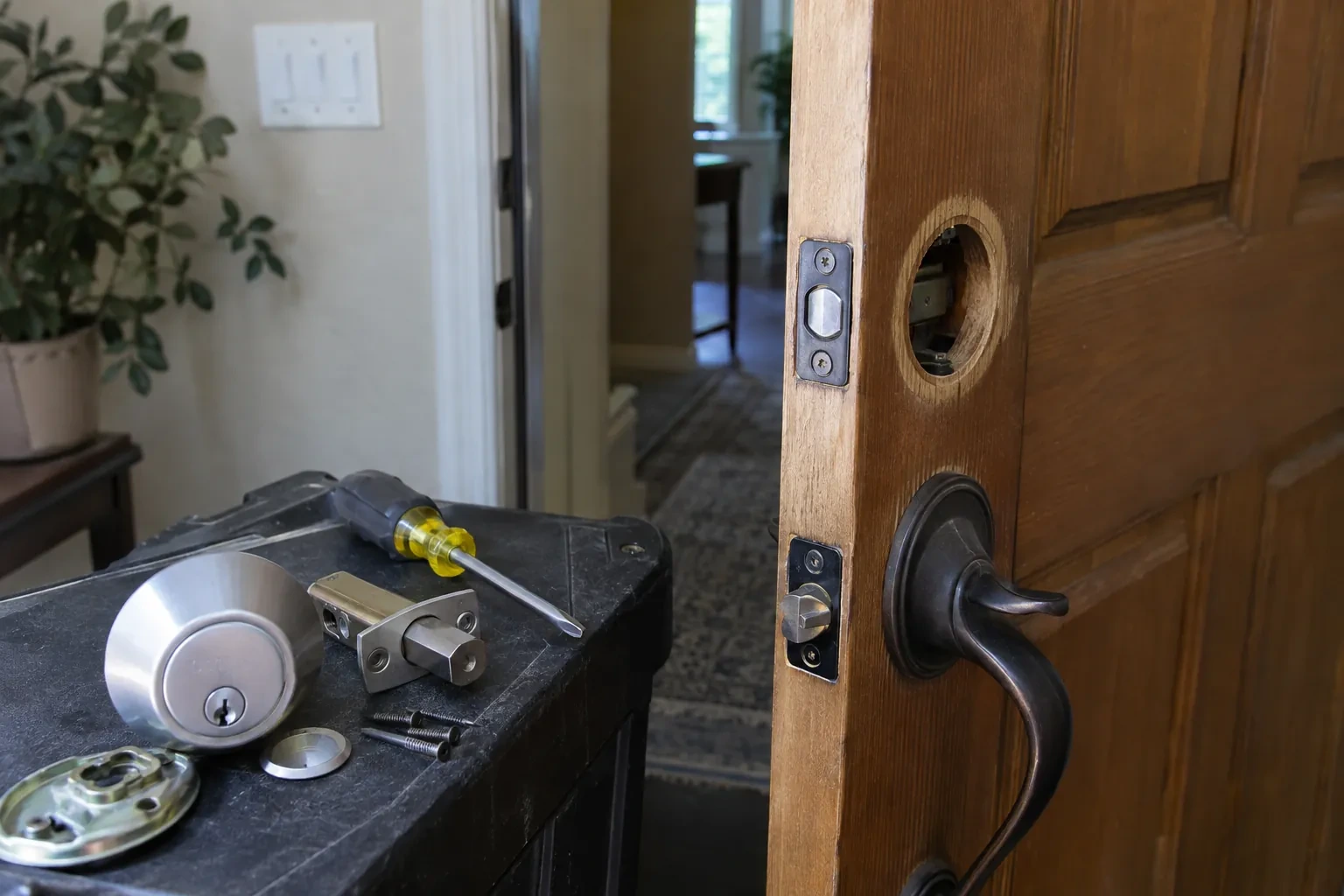
Commercial cylinders are built to a higher standard than most residential ones, but the order of work is the same. The locksmith begins with methods that operate the mechanism as a key would: picking or decoding the mortise or rim cylinder, or pulling a removable core with a control key when the building uses one. Next come bypasses that suit the specific hardware without cutting anything. Drilling sits at the end of the list and is discussed before it begins, aimed only at the cylinder, with a replacement fitted in the same visit. Working in this order keeps the storefront, the trim and the lock body as they were, and the business back on its own keys.
A door that swings, closes and latches properly
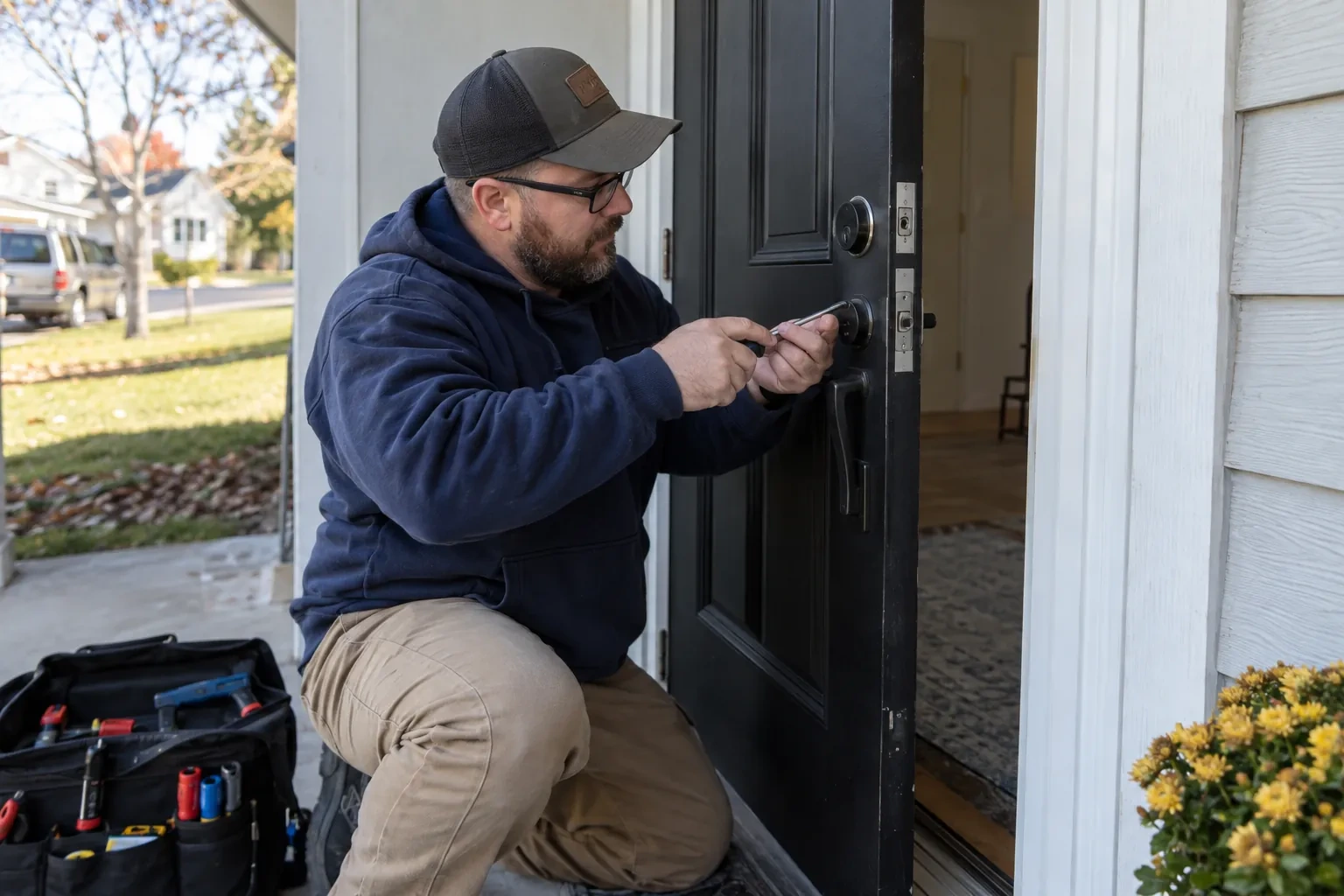
If the lockout began with a dropped door or a tired closer, the door itself is left in better shape than it was found. Pivots or the continuous hinge have been adjusted so the door hangs square, the strike has been dressed or repositioned so the bolt enters cleanly, and the closer's sweep and latching speeds have been reset so the door shuts and catches on its own without slamming. Heavy traffic doors drift again over time, so a glance at the threshold for fresh scrape marks and a listen for the latch catching each evening are worth building into the closing routine. Catching drift early keeps a lock from being blamed for a door.
Business Lockout Service
In the van
Replacement mortise and rim cylinders
Lock de-icer and dry PTFE lubricant
Strikes, pivot shims and closer adjustment tools
Broken key extractors
Storefront deadlock and deadlatch bodies
Business Lockout Service
What affects the quote
Door, pivot and closer adjustment
When the lockout was really a dropped door or a tired closer, lifting the door, adjusting pivots or a continuous hinge, moving the strike and resetting the closer are quoted as their own item beside the opening.
Broken key extraction and cylinder service
Removing a snapped key, cleaning and lubricating the cylinder and replacing a worn cam or tailpiece are added to the opening when that is what caused it, and a new key cut from code follows.
Standard or high-security cylinder
Restricted keyways, security pins and patented cylinders take longer to open and cost more to replace, and their keys are cut from system records rather than copied at a counter.
What to have ready
- Who on site can show identification and a document connecting them to the business?
- Has anyone already tried to force or pry the door?
- Does the door use a card reader, keypad or intercom, and is it showing any lights?
Business Lockout Service: questions
QuestionsThe key snapped off inside the lock. What happens now?
The broken blade is removed with extractors that grip it and draw it out toward the face, then the cylinder is opened normally. Keys rarely break in a healthy lock, so the cylinder is cleaned, the cam behind it checked for stiffness, and a dry lubricant applied. A new key is cut from the code or from the two pieces rather than from a worn spare, since a tired copy is usually what broke.
How many keys should a business have, and who should hold them?
Fewer than most businesses think, and every one of them named. Two people who can open, one of whom can be reached on a day off, cover the door. Cleaners and contractors get a key only if they need one and hand it back when the arrangement ends. Write down who has what, collect keys when people leave, and rekey when one does not come back. Interior keys for the cash office or stockroom follow the same rule on a shorter list.
Can you also deal with the back door, the roll-up shutter and the gate?
Yes. A business lockout covers every opening the premises relies on: the rear service door with its exit device, a roll-up shutter and its padlock, the compound gate, a mailbox in the lobby and interior doors such as the cash office or server closet. Mention each one when you call so the right padlock shackles, cores and cylinders are in the van, and so cylinders that should share a key are handled together.
Related services
- Broken Key ExtractionYou were locking up on the way out when the key broke in the lock.
- Break-In Damage Lock RepairPolice have come and gone, the occurrence number is on a sticky note, and you are standing in a cold hallway looking at a splintered frame, wondering how the house gets locked before everyone tries to sleep.
- Seized & Jammed Lock OpeningThe key slides all the way in, exactly as it has for years, and then refuses to turn in either direction.