Locksmith in Inch Park, OntarioSticking lock?Worn key? Sorted.
A key that needs jiggling, a bolt that only throws when you lift the handle, a cylinder that spins loose in the door. These are small annoyances in Inch Park homes that become lockouts if ignored. We tune, rebuild or swap the part at fault and leave the door working like it did when it was new.
A key that needs jiggling, a bolt that only throws when you lift the handle, a cylinder that spins loose in the door. These are small annoyances in Inch Park homes that become lockouts if ignored. We tune, rebuild or swap the part at fault and leave the door working like it did when it was new.
Getting you back inside, gently.
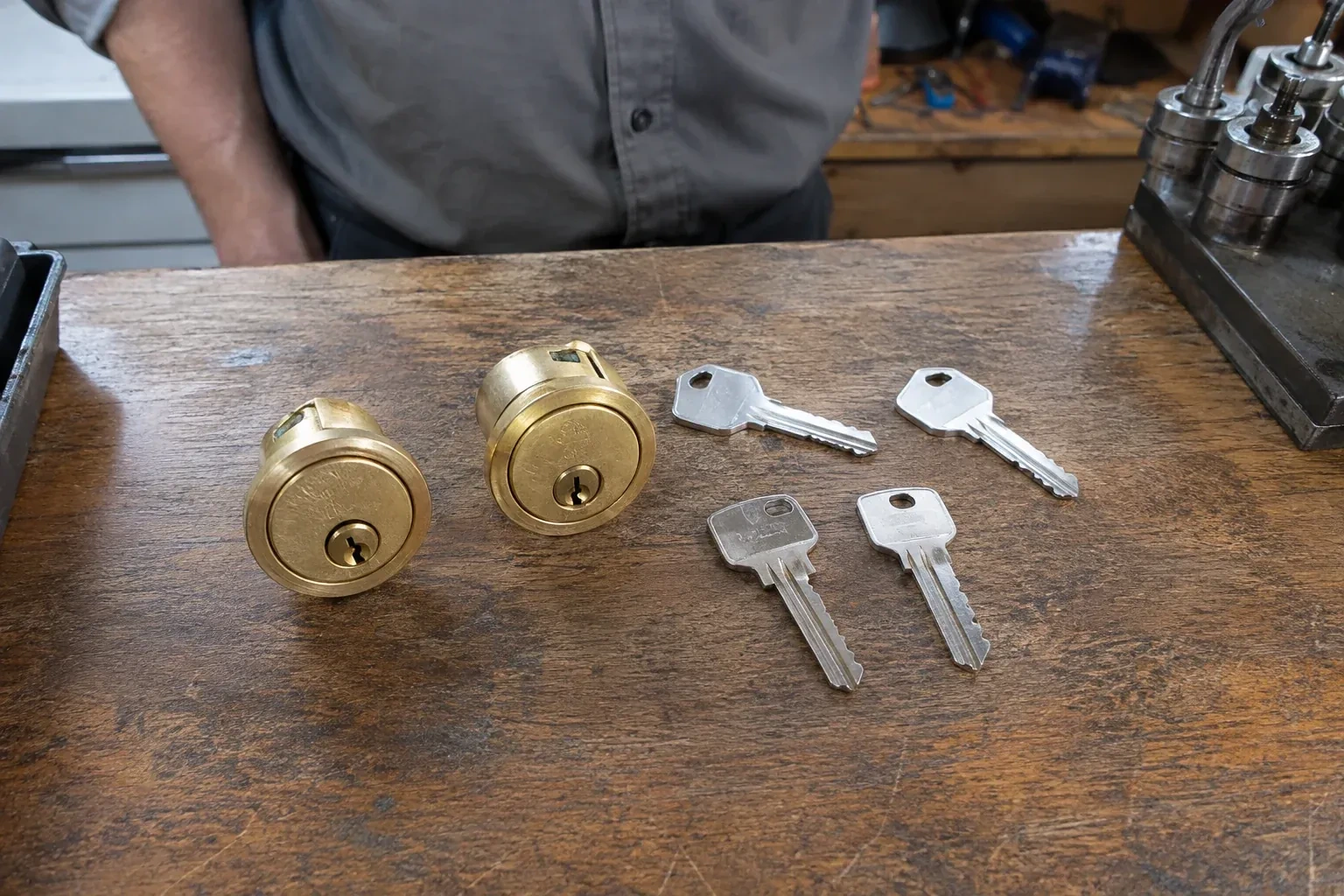
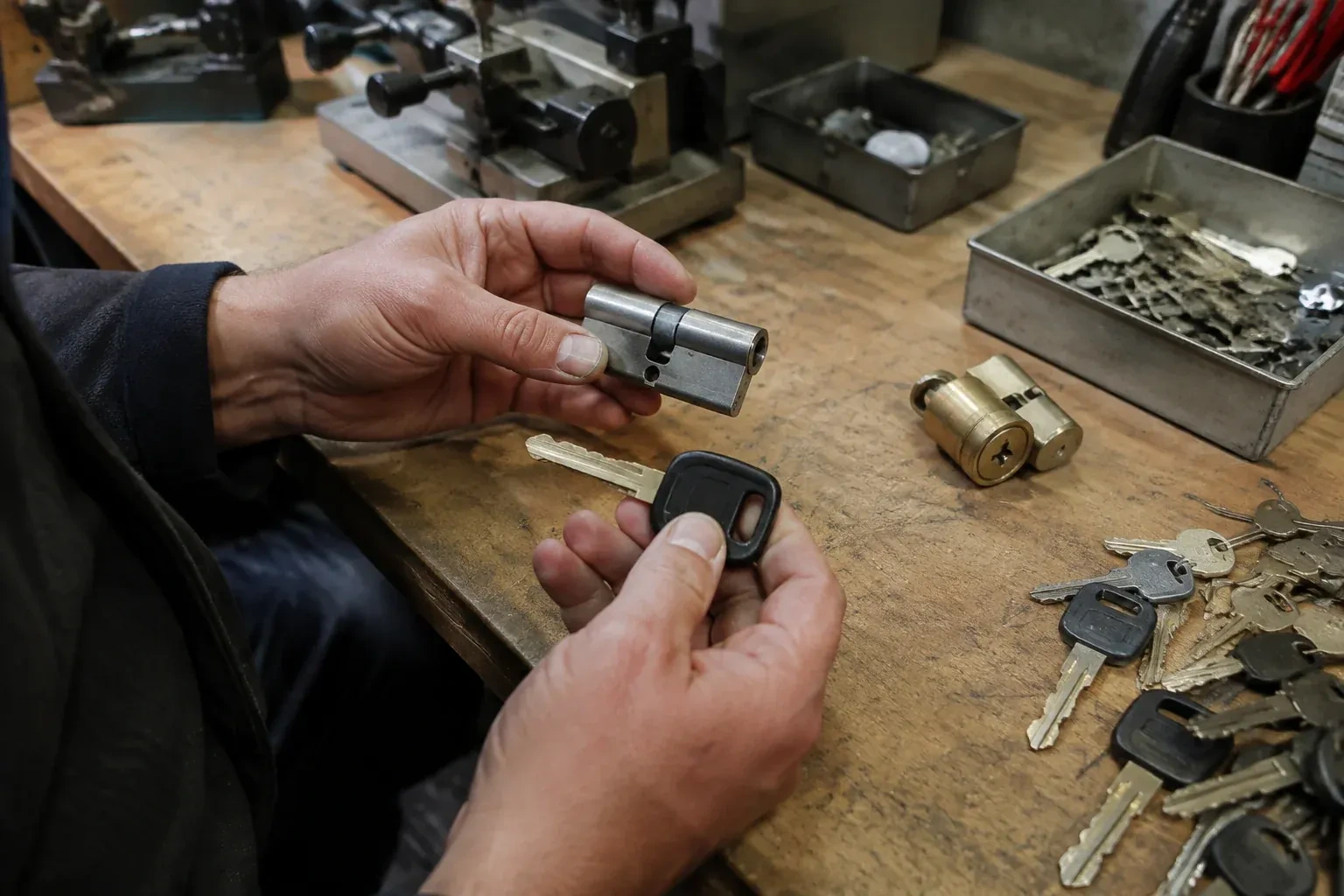
Households in Inch Park often collect locks from different decades that all take different keys. We rekey them to a single key where the hardware allows, replace the one or two that cannot be matched, and set up a spare that lives somewhere sensible. You leave with a lighter ring and a clear idea of which key does what.
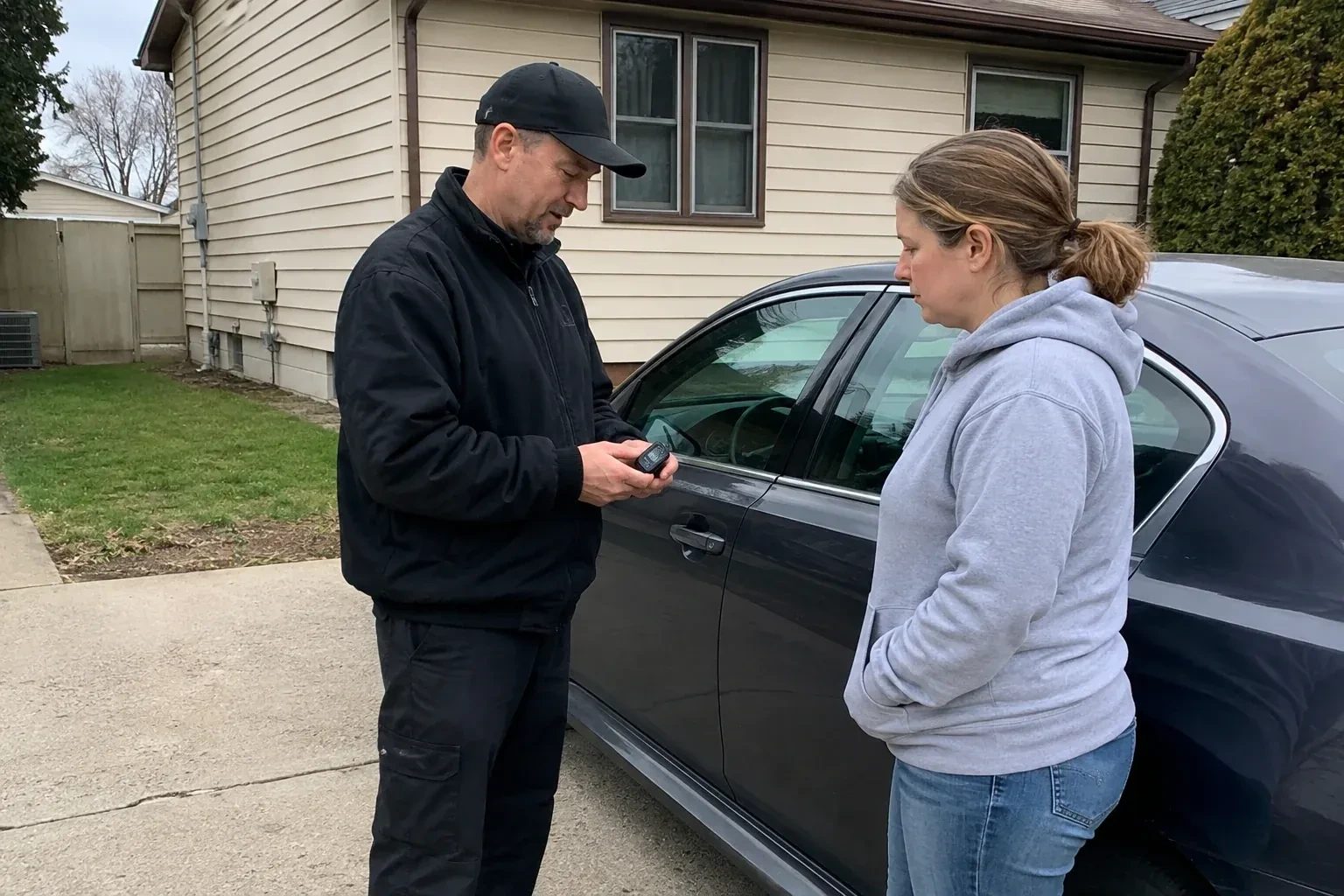
We serve Inch Park from a van stocked for three kinds of door: the front door of a home, the back door of a business and the driver's door of a vehicle. Different tools, one approach. We confirm you are entitled to access, explain the plan, do the work cleanly and test every key and lock before we consider the visit finished.
33years in business
24/7open every day
You set the pace. We explain, you decide, we work. If you would rather sleep on a bigger change, we do what is needed now and leave the rest for another visit.
The reasoning behind each suggestion. Every recommendation comes with the reason for it, in language that does not require you to know the trade. Ask why as often as you like.
Order restored. Tools packed, dust cleared, doors closed properly. We leave your home or business looking as it did, with the lock problem gone.
Below is the full menu of lock and key work available in Inch Park, written for people who are not locksmiths. Each entry says what the service is, when it makes sense, and roughly how a visit unfolds, so you can arrive at the door already knowing what the technician is going to do and why.
About 61% of homes in Hamilton were built in 1980 or earlier, according to the 2021 Census.
Older homes
Older housing means older frames. Wood that has settled for years leaves strikes slightly out of line, so a bolt drags or needs a lift of the handle. A locksmith expects this and brings the shims, longer screws and strike plates to correct it.
Single-detached houses make up about 56% of homes in Hamilton (2021 Census).
Where housing types are mixed, the same lost-key call means different things. In a house, rekey every door on the property. In an apartment, rekey the suite door and check with management about the common entrance. The locksmith asks which it is first.
Sliding doors, side gates, basement walkouts and garage entries are often the paths of least resistance on a house. High security work is not just about the front door; it is about closing the easy routes so the strong door is not simply bypassed.
The house is fifteen years old and every exterior door still wears the light hardware the builder fitted: a short bolt, a thin strike held by two small screws, and a knob lock that never suited a street entrance.
Police have come and gone, the occurrence number is on a sticky note, and you are standing in a cold hallway looking at a splintered frame, wondering how the house gets locked before everyone tries to sleep.
The pharmacy's drop safe has a keypad that finally lost power for good, and the little override key that was supposed to live behind the counter cannot be found anywhere.
The keypad on the office safe blinks a low-battery warning every morning now, and whoever notices it first quietly hopes someone else deals with it before the batteries finally give out mid-week.
Which fix fits?
Someone pushed the privacy button on the bathroom door and pulled it shut behind them, leaving the room locked and empty.
WhyRekeying is really about knowing who can open your door.
The pharmacy's drop safe has a keypad that finally lost power for good, and the little override key that was supposed to live behind the counter cannot be found anywhere.
WhyA safe built to protect firearms is opened with the same care as any other, but the aftermath gets one extra look: once the door is open, the storage arrangement inside is checked against what the applicable federal rules for secure firearms storage expect, since a business handling those items answers to those rules whether or not the lock itself needed attention.
Overnight someone forced the back door, and the cylinder face is scarred, the metal around the strike has pulled loose from the frame, and the latch no longer sits flush.
WhySpare car key duplication puts a second working key into your hand while the first is still around to copy from.
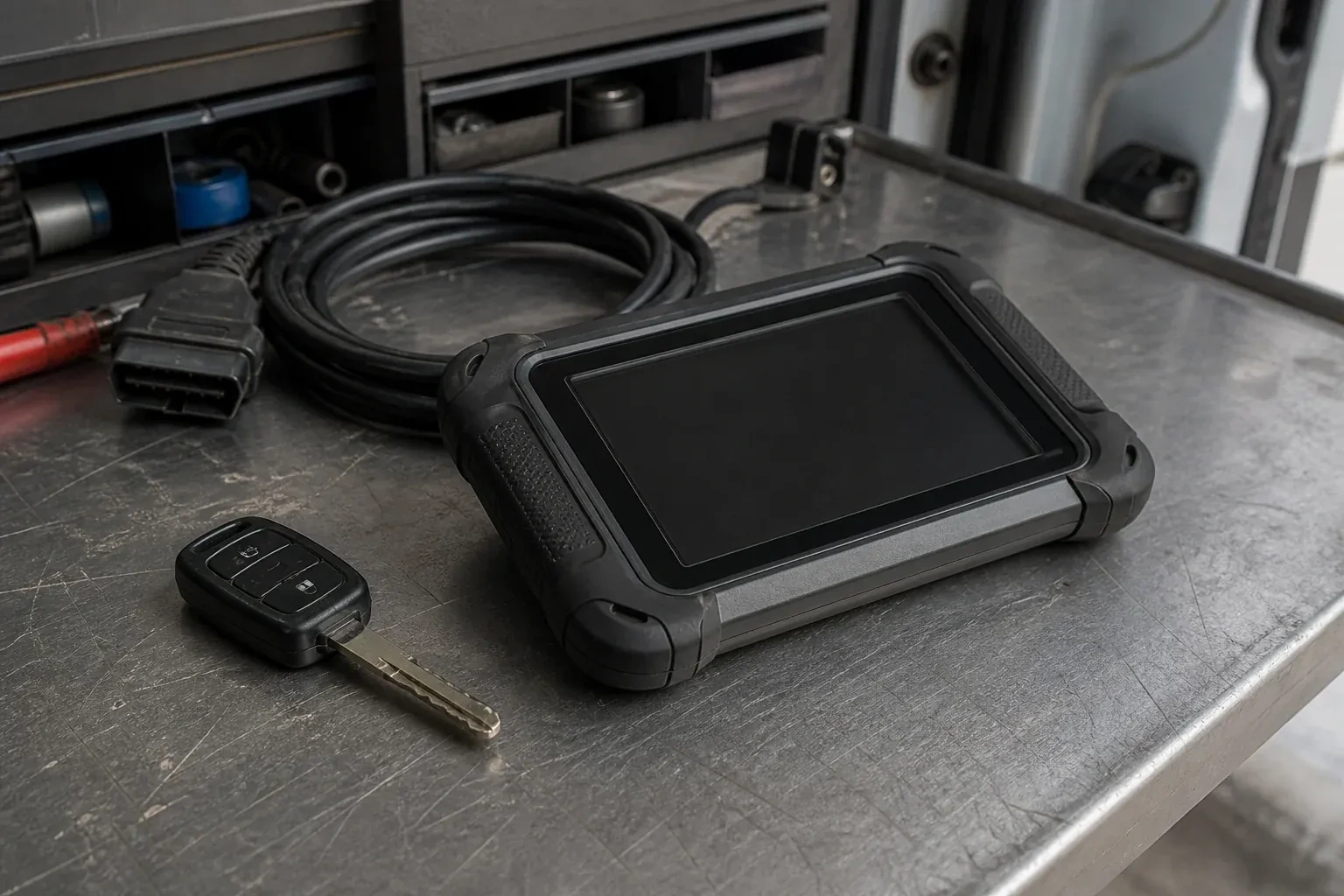
The remote fob has gone silent, the doors won't unlock with a button press, and the little emergency blade tucked inside it has not been used since the day the car was bought.
WhyTransponder-based immobilizers became mandatory equipment on new vehicles sold across the country from September 2007 onward, though many manufacturers had already been fitting them for years before that date.
The car came with a second key that grinds and catches in the rear door, unlike the smooth key you use every day on the front two.
Describe the property, the hardware and what has changed, and the visit starts from what you have seen.
1
2
3
01
A look inside the keyway
We check how deep the fragment sits and whether the cylinder was already worn or dry. That tells us how to draw the piece out without pushing it further.
02
Drawing the piece out
With extraction tools and patience the broken blade comes out whole. We clean and lubricate the cylinder so the next key goes in smoothly.
03
Cutting a fresh key
A key that snapped was usually tired. We cut a new one from the two halves or from the lock itself, test it and suggest retiring any other worn copies.
Good days. Start with a turn.
1/9Home Lockout Service
Someone pushed the privacy button on the bathroom door and pulled it shut behind them, leaving the room locked and empty. The little emergency slot on the outside is stripped, and the tiny release key that came with the handle disappeared years ago.
Every copy of your house key seems to work a little differently. One needs a jiggle, another sticks halfway, and the original wore down years ago. The lock itself is fine; the keys have drifted so far from each other that none fits cleanly.
The pharmacy's drop safe has a keypad that finally lost power for good, and the little override key that was supposed to live behind the counter cannot be found anywhere.
Overnight someone forced the back door, and the cylinder face is scarred, the metal around the strike has pulled loose from the frame, and the latch no longer sits flush.
Your toddler is buckled in the back seat, the doors locked when you shut yours, and your keys are on the front seat beside your phone. It is hot, the child is starting to fuss, and you need help this minute, not a discussion.
One key opens the car, starts the car, and rides in one pocket every day. Nothing backs it up. A dropped storm drain, a torn pocket or a moment of distraction would leave the household without a way to drive anywhere tonight.
The remote fob has gone silent, the doors won't unlock with a button press, and the little emergency blade tucked inside it has not been used since the day the car was bought. Nobody remembers exactly where the metal edge is supposed to go once it's out.
The car came with a second key that grinds and catches in the rear door, unlike the smooth key you use every day on the front two. It eventually turns, but the roughness has been there since the day you brought the car home.
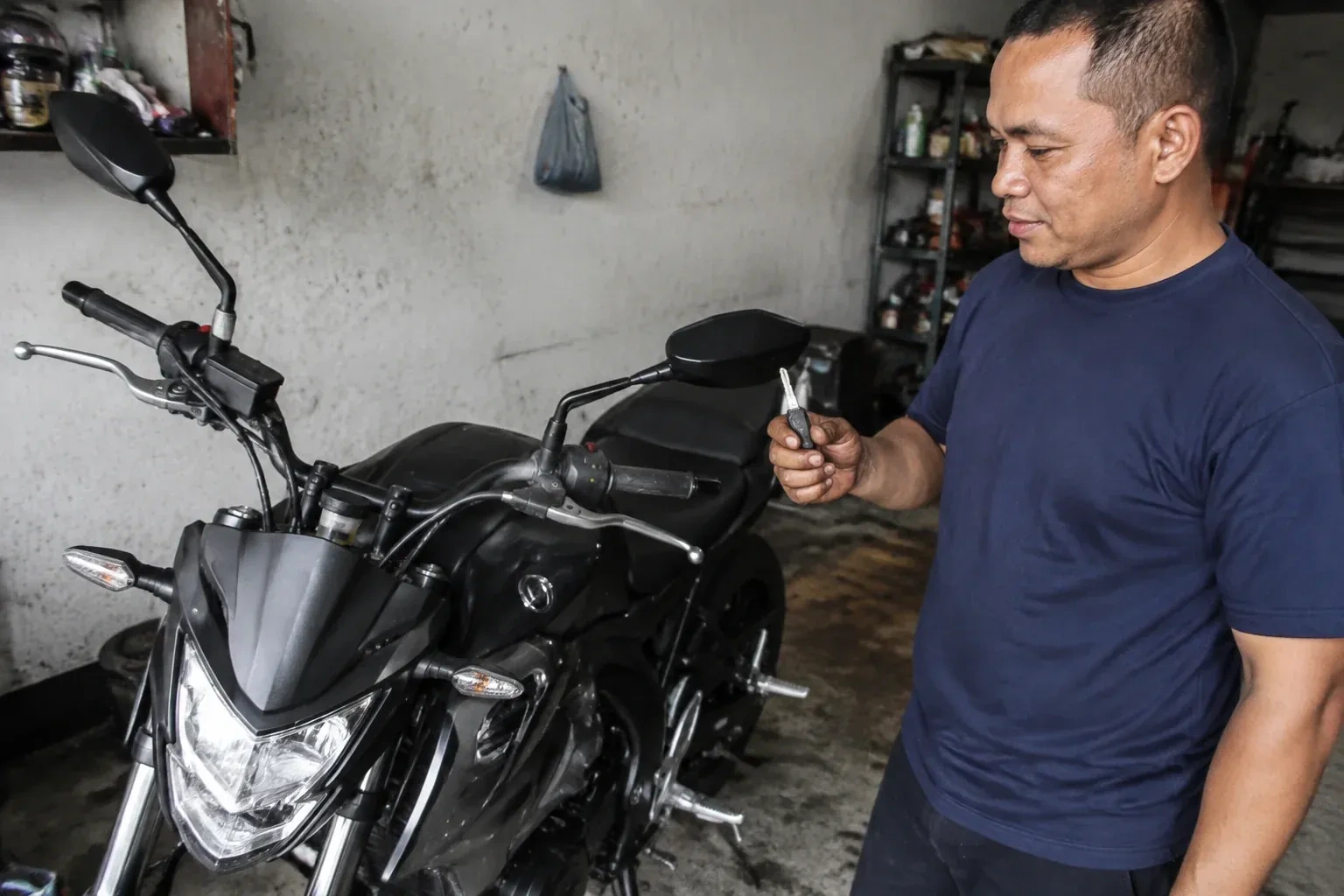
The dash lights come on, the starter cranks, and the engine simply refuses to catch, though the same key has run this bike since it was new. It could be the key and ignition module no longer agreeing, or an ordinary fuel or ignition fault sharing the same symptom.
Can you also open a storm door, garage side door or backyard gate?
Yes. The same skills apply to any residential lock: a storm door that self-latched on the porch, the man-door into the garage, a shed, a gate with a padlock or a keyed latch, and a mailbox or storage locker in a condo building. Tell the locksmith about every opening involved so the right tools are in the van. Several small locks opened in one visit is common, especially after a move when keys were never handed over.
I rent. Can I have my locks rekeyed?
Yes, with your landlord's agreement, which is what the tenancy rules here expect before a tenant changes a lock. Most landlords are glad to consent when a key has gone missing or a former roommate has moved out, and the locksmith will want to hear that the landlord knows and will be holding one of the new keys. The rekey itself runs the same as for an owner, and a short note listing the doors done is handy to pass to the landlord.
I bought the safe secondhand and have no idea of the combination. Can it still be opened?
Yes. A safe with no known history is treated as an unknown from the start: the locksmith identifies the make, model and lock type directly from the hardware and works through the same manipulation, decoding or reset options used on any other safe. Proof of the purchase or transfer establishes your authority to have it opened, and the process afterward does not depend on any prior record existing.
Can you upgrade hardware without re-cutting the door or frame?
In most cases, yes. Replacement hardware is chosen to fit the door's existing mortise pocket, bore pattern or narrow-stile prep, so the visit does not usually involve altering the door itself. Re-cutting only comes up when the business specifically wants to change hardware type, for example moving from a knob-and-deadbolt pair to a single mortise lock body.
It is a rental or a company vehicle. Can you open it for me?
Yes, with the paperwork that fits. For a rental, the agreement in your name plus photo identification does the job; the rental company's roadside line may also want a call, and the locksmith can leave a written note of what was done for the return desk. For a company vehicle, a fleet manager or supervisor who can confirm you are assigned to it settles the question, and the same note keeps the fleet's records straight.
Can one key work for two vehicles?
Sometimes, when both vehicles share a compatible lock family and immobilizer system, most often two vehicles from the same manufacturer and a similar era. Sharing a keyway is not enough on its own: the two locks also need a bitting that satisfies both, or one vehicle's cylinders get rekeyed to match, and the transponder has to be capable of authorization on both immobilizers. Where they do not line up, the practical answer is two separate keys carried together on one ring.
What information should I have ready before this visit?
The vehicle's year, make and model, and its VIN if it is easy to find, let the locksmith arrive with the right blank and chip already in hand. Knowing how many keys currently work, whether any were lost or stolen, and whether the vehicle uses a basic blade or a fob shapes the rest of the visit before a single tool comes out.
How many keys or fobs will I leave with if mine gets replaced?
That depends on what you ask for. Most owners keep the original plus one spare, cut or paired at the same visit and tested in every lock on the vehicle so the household has a working backup from the start.
Can a rusted or gritty lock still be opened and given a new key?
In most cases, yes. The lock is cleaned out, its wafers and springs cleared of grit and corrosion, and the mechanism dressed with whatever lubricant its own maker specifies before a new key is cut or tested. Only a lock that has corroded to the point of cracking or seizing solid tends to need outright replacement rather than cleaning, and that is usually visible once the lock is opened up for inspection.
Request a visit
Households in Inch Park often collect locks from different decades that all take different keys. We rekey them to a single key where the hardware allows, replace the one or two that cannot be matched, and set up a spare that lives somewhere sensible. You leave with a lighter ring and a clear idea of which key does what.