High security · Ryckmans
Safe Opening & Combination Change in Ryckmans
The pharmacy's drop safe has a keypad that finally lost power for good, and the little override key that was supposed to live behind the counter cannot be found anywhere.
In plain words
Two different problems can look identical from outside a locked safe: a combination that genuinely no longer opens it, and a mechanism that is jammed, corroded or blocked while the correct numbers still work perfectly. Sorting out which one is happening comes before any decision about drilling, since a stuck handle or a tripped relocker needs freeing rather than a fresh combination. Getting this diagnosis right the first time keeps the visit focused on the actual cause rather than the symptom in front of you.
How the visit goesA software update reset the clinic's small safe overnight, and the receptionist's usual code now does nothing on a keypad that lights up but goes no further.
Safe Opening & Combination Change
How the visit goes
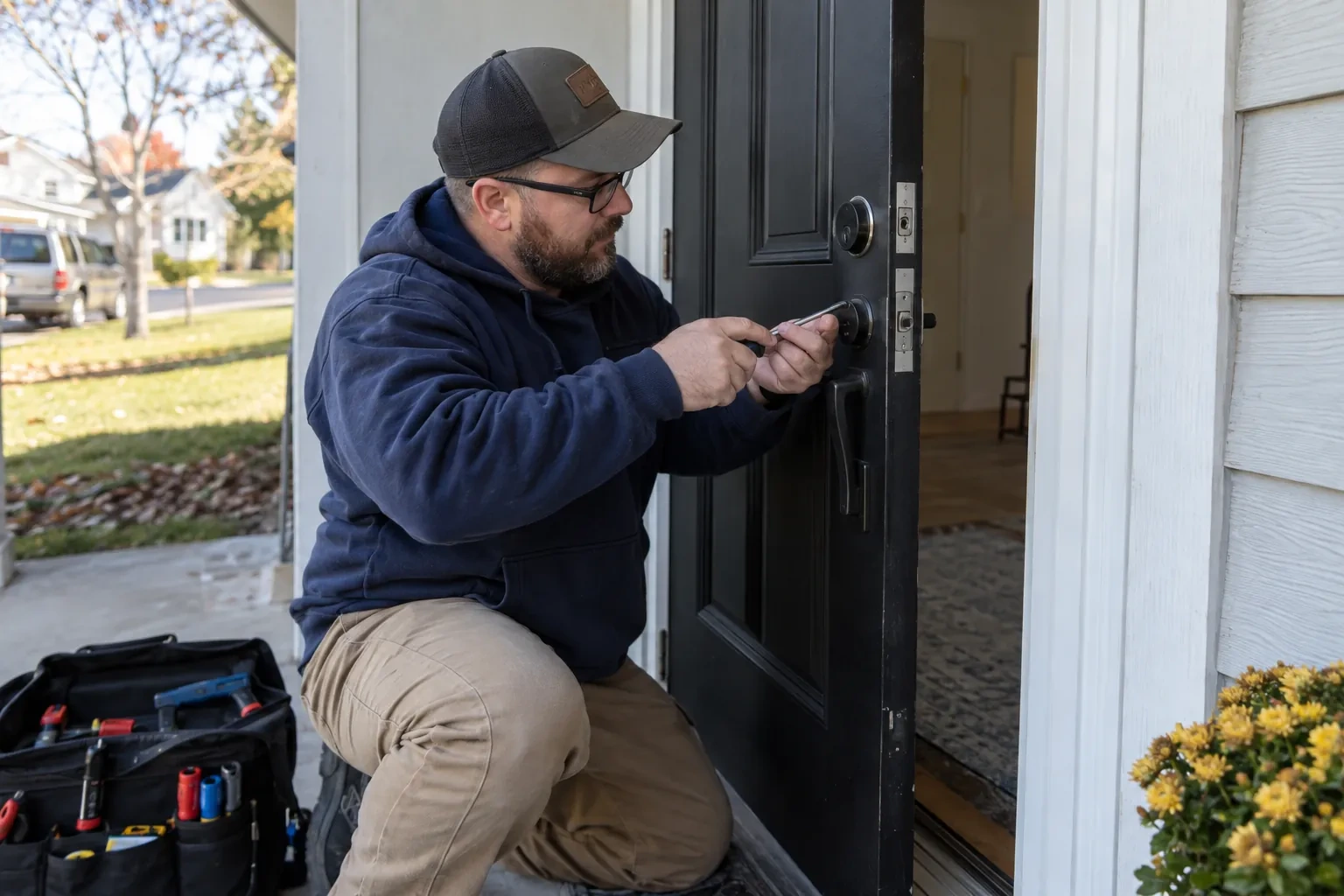
Mechanical dial or electronic keypad?
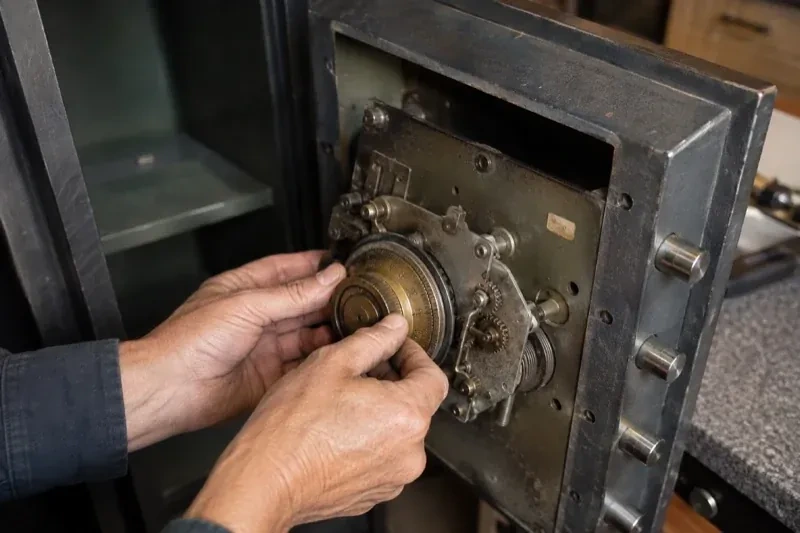
The two lock families are opened in entirely different ways, so telling them apart comes early. A mechanical dial relies on a wheel pack turned into alignment by hand, reading resistance and feel rather than any battery or circuit. An electronic keypad instead depends on a stored code and a power source; some models add a reset or override sequence, though many need that connection made at the lock body inside the container rather than from outside. Some commercial safes carry both, a keypad for daily use with a mechanical dial as a backup, and each half is assessed on its own terms. Confusing the two wastes time trying an approach the lock was never built to respond to.
Drilling through a chosen, repairable point
When manipulation, decoding and the electronic reset path all fail to open the safe, drilling is explained to the owner before it begins, aimed at a specific point the lock manufacturer's own service documentation identifies as both reachable and safe to repair afterward. A borescope is used through the drilled hole to view the lock's internal parts directly and manipulate or bypass them without further damage. The aim is to affect nothing beyond that single hole, patched or plugged as one of the last steps of the visit, though the number of holes needed and any effect on the safe's rated protection level depends on its construction and is addressed with the manufacturer's approved repair method.
A little care keeps the lock reliable
A mechanical dial benefits from being turned through a full combination cycle occasionally even when the safe is not otherwise in use, since a dial left untouched for years is more likely to develop the stiffness that led to this visit. An electronic keypad benefits from a battery change on a set schedule rather than waiting for a low-battery warning to appear, since a dead battery at an inconvenient moment is the more common failure than the lock itself. Wiping the keypad and dial face of dust occasionally, without any liquid cleaner, keeps both types responding the way they should.
Safe Opening & Combination Change
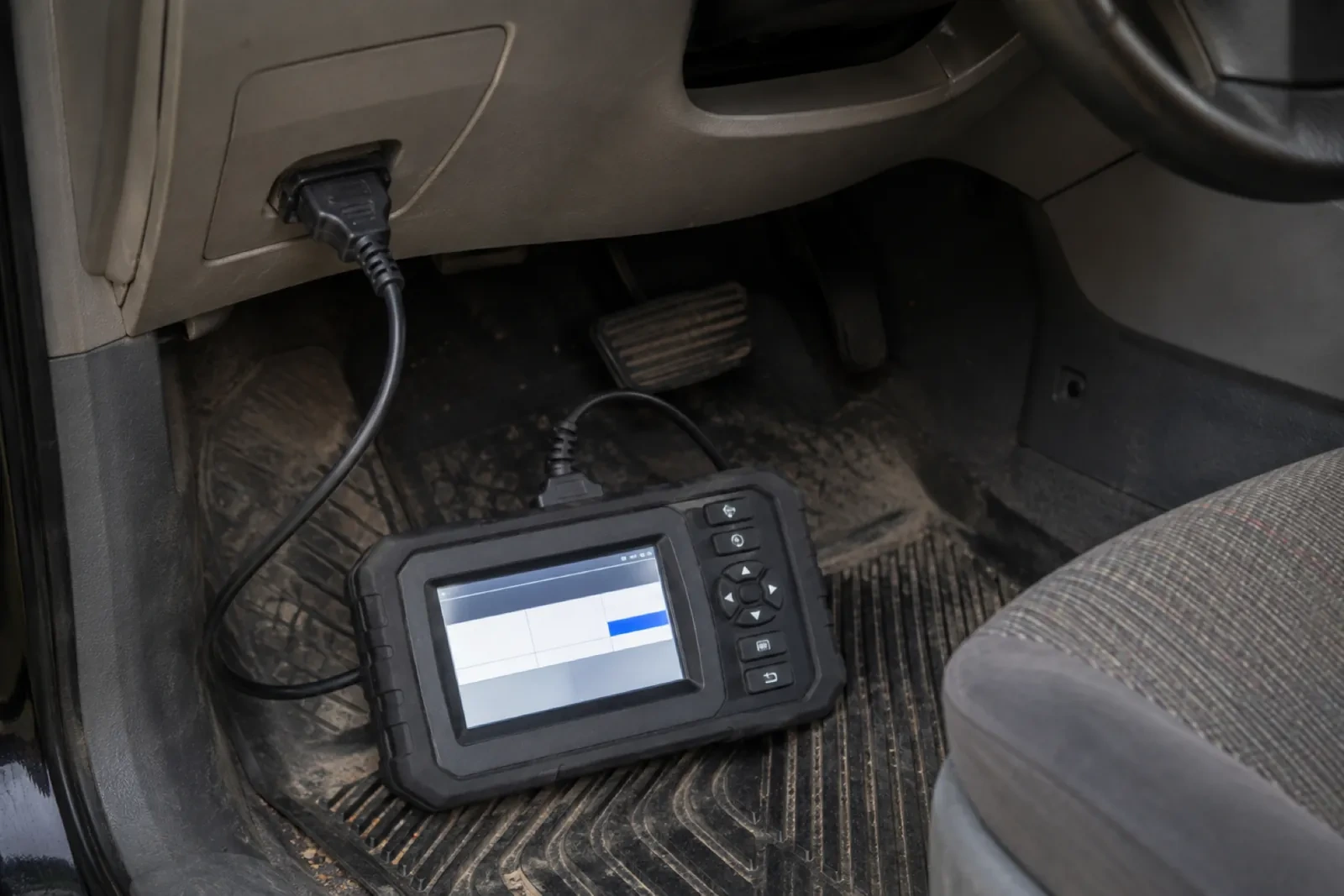
In the van
Replacement wheel pack
Combination change key
Spindle and drive cam
Borescope for internal viewing
Dial decoding instrument
Safe Opening & Combination Change
What affects the quote
Whether drilling turns out to be necessary
Manipulation, decoding and manufacturer reset paths are tried first; drilling, a repair plug and any replacement lock only enter the picture once those routes are exhausted.
Contents that affect how carefully the opening proceeds
Cash, business records, prescription logs or firearms each carry their own handling expectations once the door opens, which can shape how the visit is planned and quoted.
Whether model or service records are available
A visible data plate, a purchase receipt or a manual on hand speeds up identifying the exact lock; a safe with none of that takes a few extra minutes to assess on site.
What to have ready
- Is there a data plate or any paperwork you can find?
- Does the keypad light up or make sounds when pressed?
- What brand and model is the safe, if you know it?
Safe Opening & Combination Change: questions
QuestionsHow is a new combination actually chosen and set?
You choose the numbers yourself, within whatever range and spacing that lock's rules allow, rather than being handed a default sequence. On a mechanical lock the locksmith uses a manufacturer change key to reset the wheel pack to your chosen combination; on an electronic lock the new code is entered directly through the keypad or a connected programming tool. Either way it is tested several times, door open and then closed, before the visit is considered complete.
I bought the safe secondhand and have no idea of the combination. Can it still be opened?
Yes. A safe with no known history is treated as an unknown from the start: the locksmith identifies the make, model and lock type directly from the hardware and works through the same manipulation, decoding or reset options used on any other safe. Proof of the purchase or transfer establishes your authority to have it opened, and the process afterward does not depend on any prior record existing.
Can the same visit both open the safe and service it?
Yes. Once the safe is open, the lock is inspected for wear, corrosion or damage, repaired or replaced if needed, and reset to a new combination in the same visit. Any bolt work or handle issue found along the way is addressed at the same time rather than requiring a separate appointment.