Change or rekey · Hampton Heights
Lock Rekeying in Hampton Heights
Your roommate moved out last weekend.
In plain words
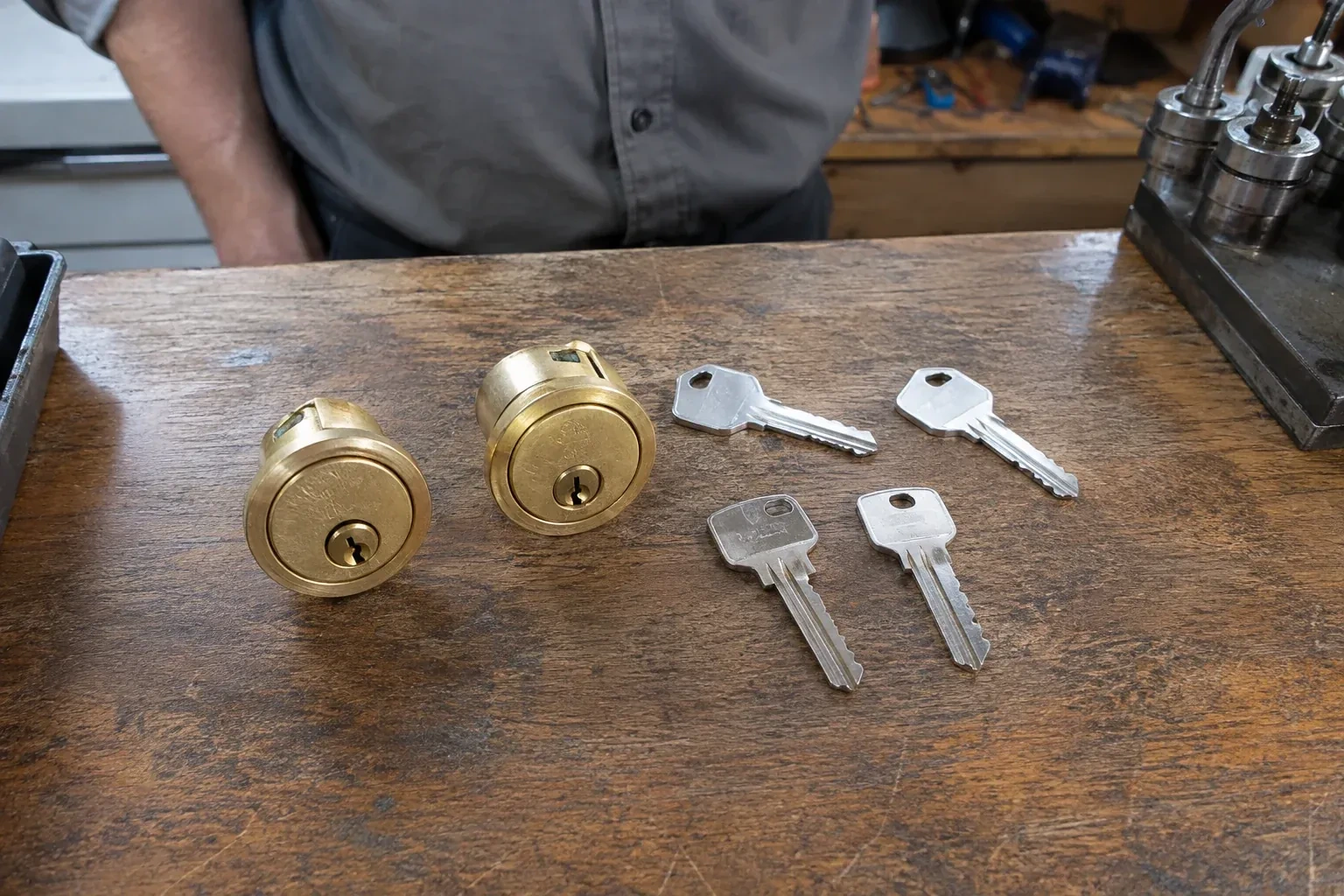
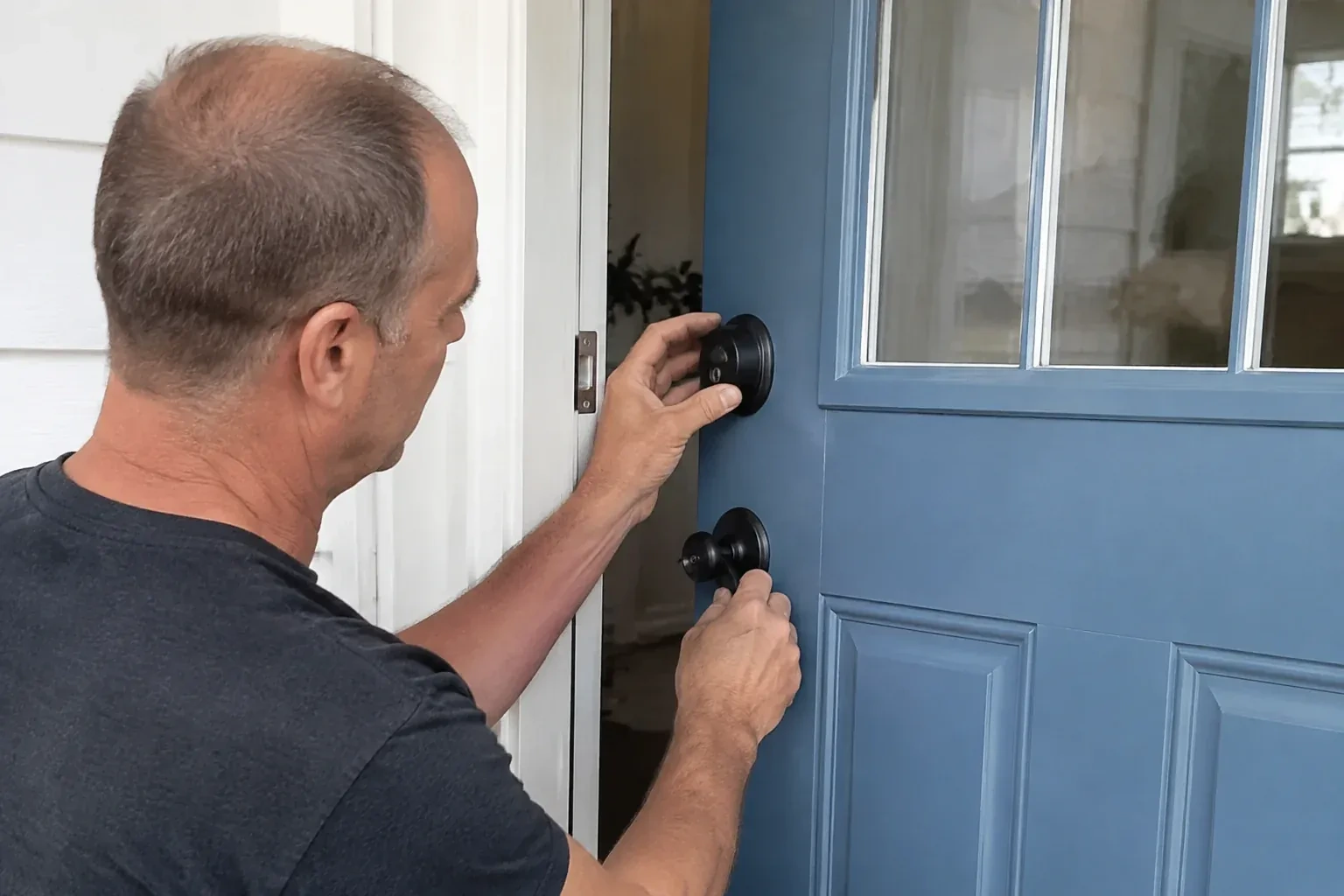
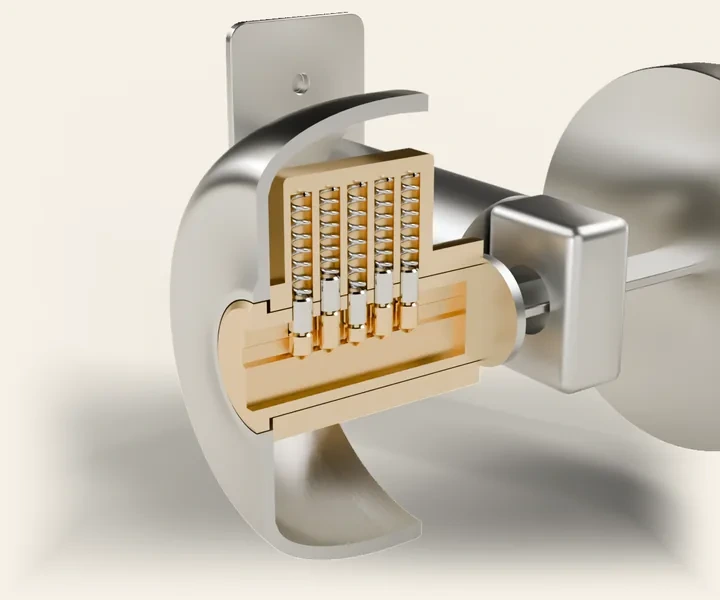
What you keep after rekeying is almost everything. The deadbolt, the handle set, the finish that matches your door hardware, the strike plate and the holes in the door all stay exactly where they are, which matters on an older door where new hardware rarely lines up with old mortises. What changes is a handful of brass pins a few millimetres long inside each cylinder, and the key in your pocket. The work is done on site, one cylinder at a time, so the house is never left with an unsecured door, and worn springs or a sticky plug can be dealt with while the cylinder is already apart.
How the visit goesThe previous owners left a coffee tin of keys on the counter, some labelled, most not. The house is yours now, but you have no idea how many copies were cut over the years or who still has one in a drawer somewhere.
Inside the lock
What a rekey changes
01
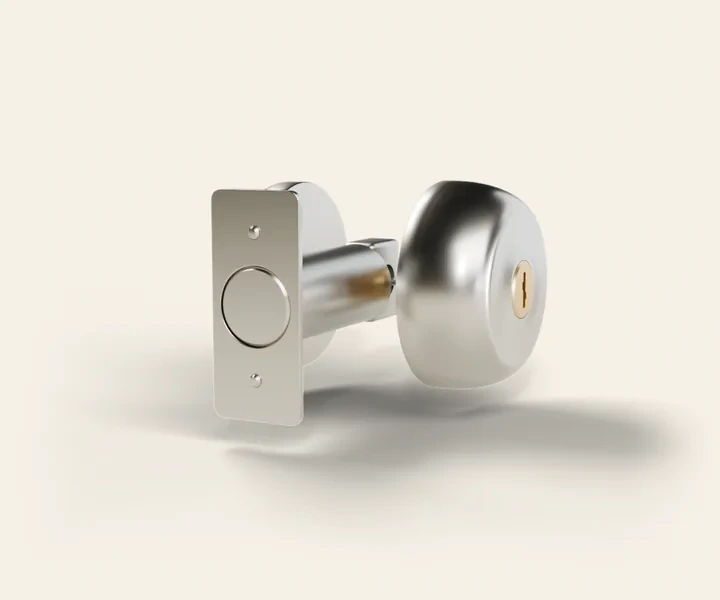
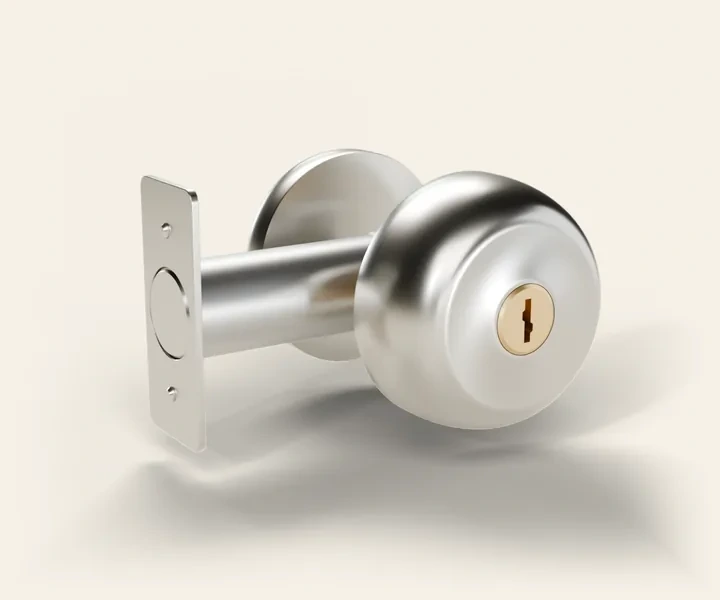
The lock you already have
02
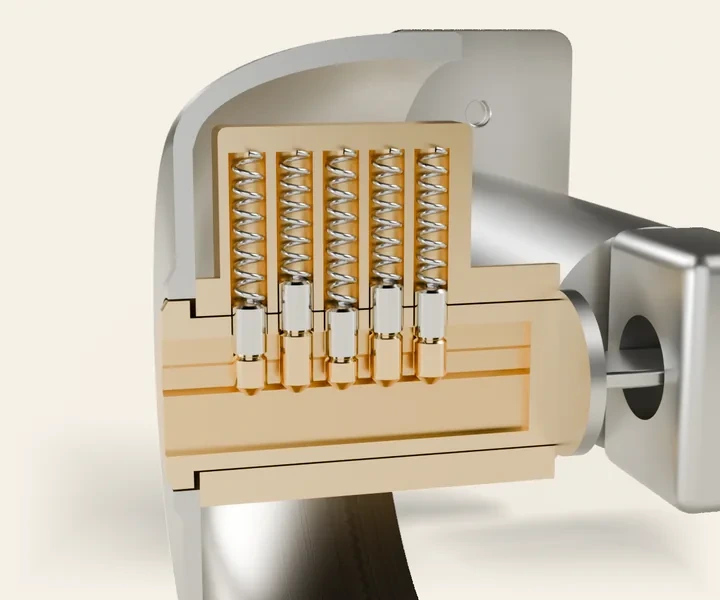
Inside the cylinder
03
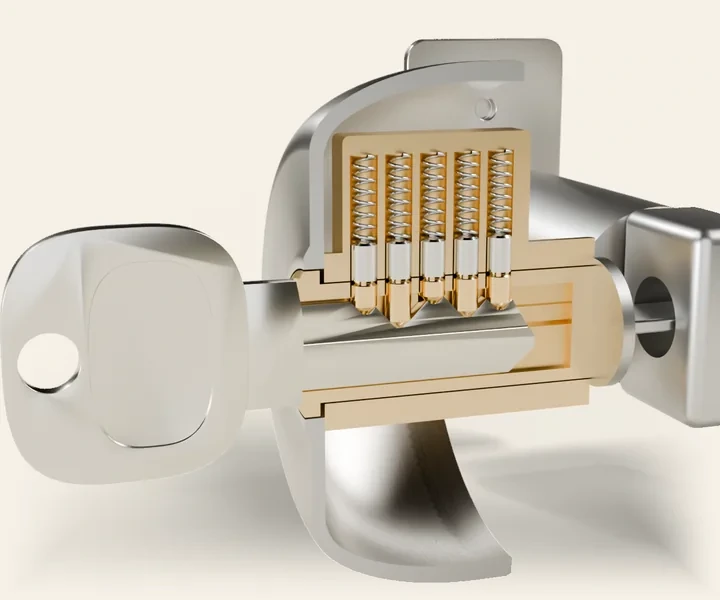
Pins, springs and the shear line
04
A new key, new pins
Lock Rekeying
How the visit goes
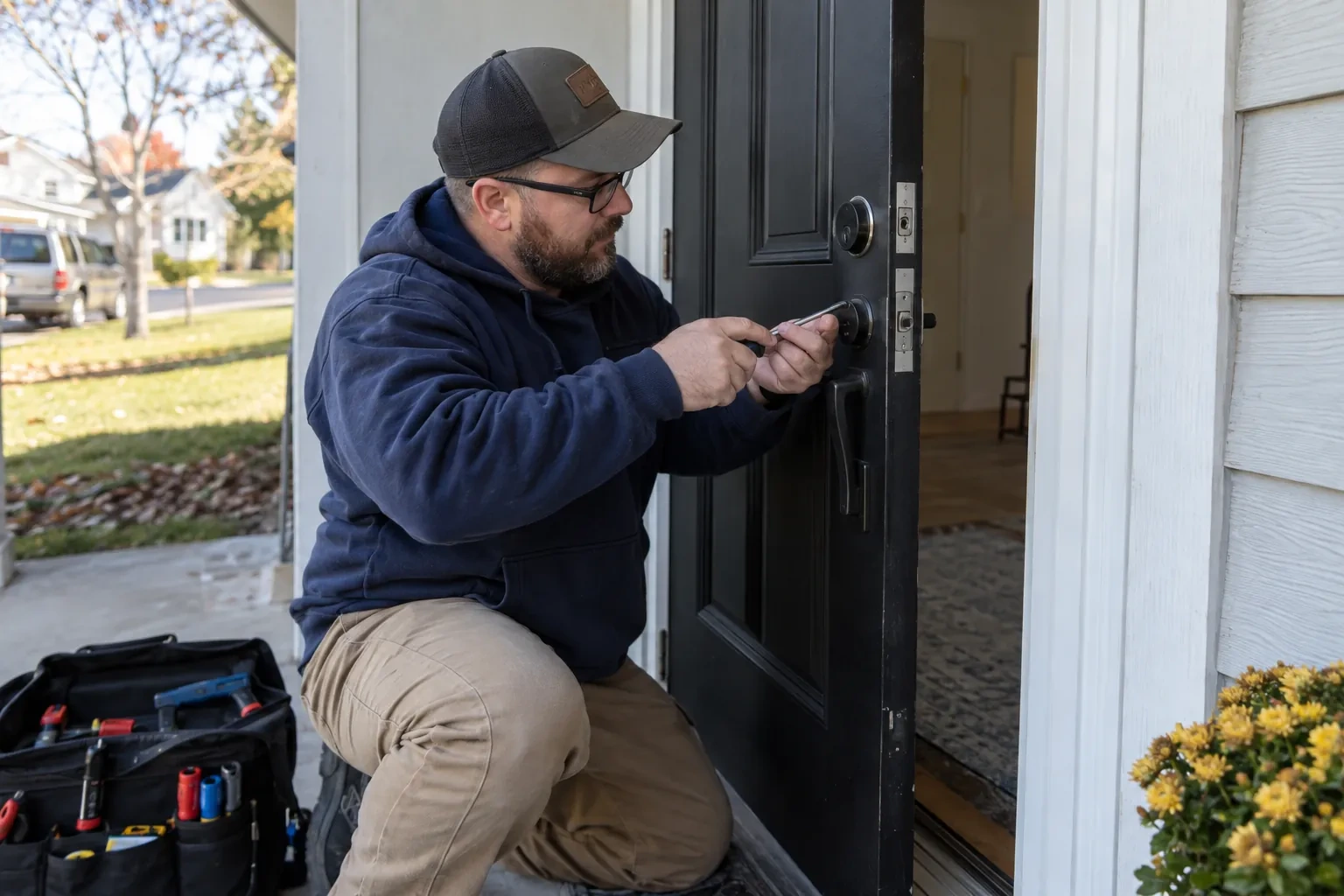
Counting the keys that are already out there
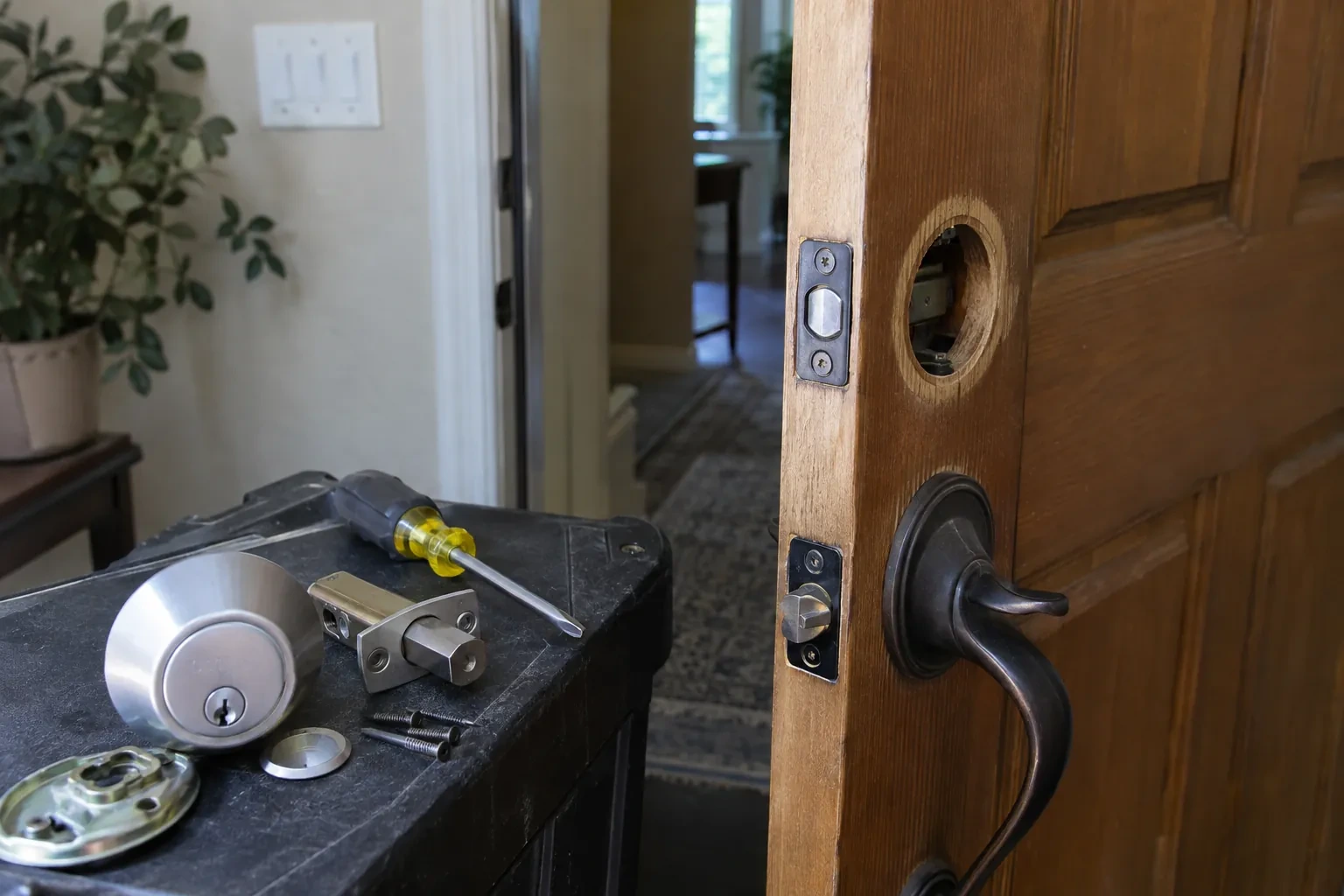
Part of planning a rekey is understanding why it is happening. The locksmith asks how many keys exist as far as you know, who has held one, and whether any went missing with something identifying the address. The answers do not change the pinning, but they shape the advice: whether a padlock or mailbox shares the same risk, whether a garage keypad code should change on the same visit, and how many new keys make sense to cut. It also helps to know whether any key is a restricted or patented type, since those are cut from a record rather than duplicated and may involve the original supplier.
Reassembly and the shear-line test
On a pin-tumbler cylinder, the plug goes back into the housing with the new key in it, pushing the follower out ahead of it, and the cam or tailpiece is refitted with its retainer. Before the cylinder goes anywhere near the door, the locksmith turns the new key and checks that the plug rotates freely with no catch, then removes the key and confirms the plug is locked solid. A pin a fraction too long or too short shows up here as a rough turn and is corrected on the bench. Only a cylinder that passes goes back into its lock, where it is tested again with the door open and then closed.
New keys, counted and tried in every door
You finish the visit holding the only keys that work, and you know exactly how many there are. The locksmith cuts the agreed number from the fresh pinning rather than copying one from another, so each is as true as the first, and tries every one in every door it should open before handing them over. Count them, decide who in the household gets one, and put the spare somewhere you will remember. If a door was left on a separate key on purpose, that key is tagged so it does not get mixed into the house set. The whole set fits comfortably on one ring.
Lock Rekeying
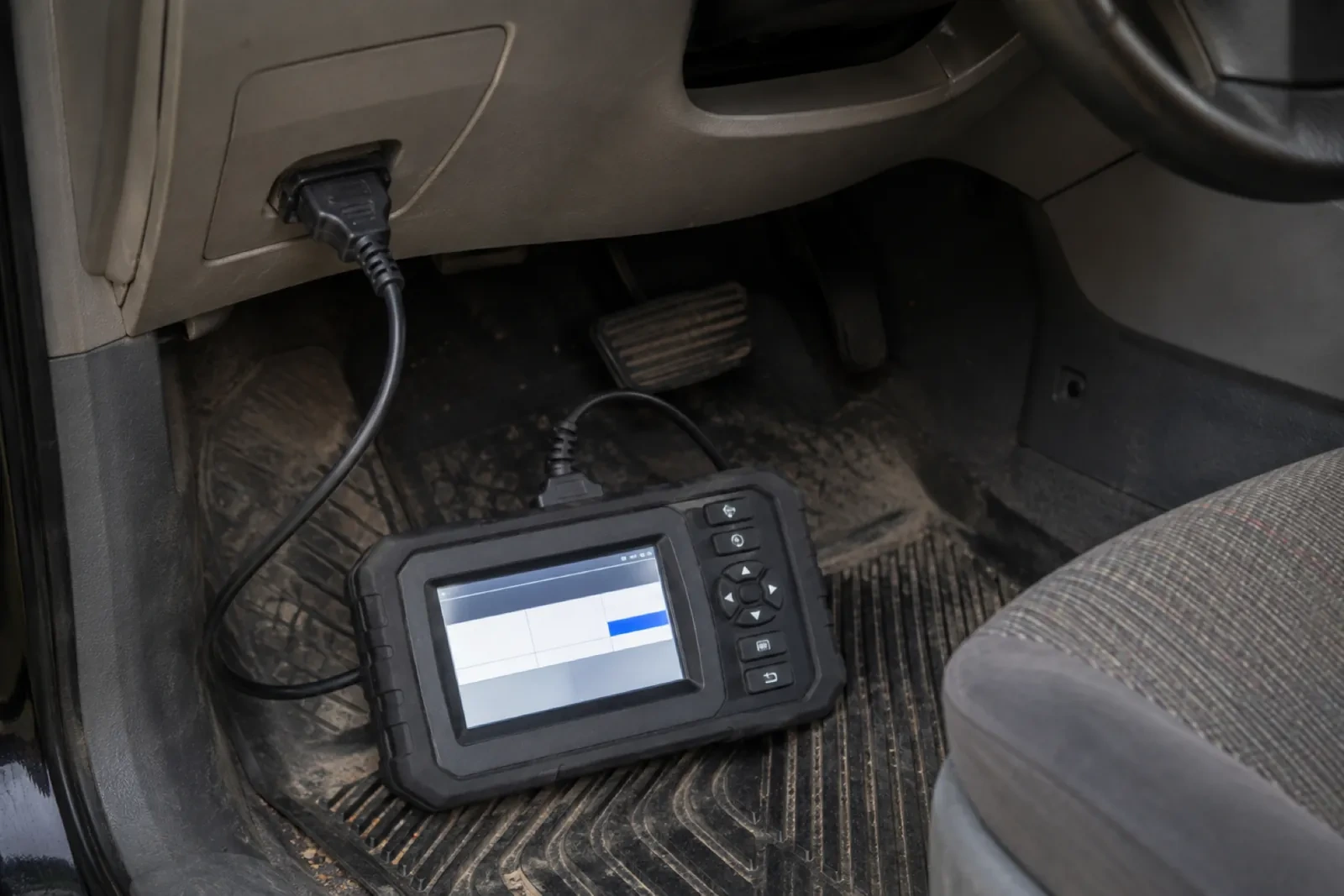
In the van
Graded bottom pin kit
Key gauge
Key blanks
Plug follower
Code cutter or key duplicator
Lock Rekeying
What affects the quote
Mismatched keyways needing a cylinder swap
Where one door's cylinder cannot take the key the other doors share, a compatible replacement cylinder is fitted and pinned to match, and that hardware appears as its own line in the quote.
No working key for a door
When a cylinder must be shimmed, decoded or picked open before it can be repinned because no key exists for it, that extra step is included in the quote for that door.
Travel to the property
Every visit includes the drive. A home across town and a rural property at the end of a long road involve different travel time, and the quote reflects the trip as well as the bench work.
What to have ready
- Has a key gone missing, or is one still held by someone who has moved on?
- How many new keys will your household or your tenants need?
- Which doors do you want rekeyed, and have you counted the door from the garage?
Lock Rekeying: questions
QuestionsWill I need to prove I own or rent the home?
Yes, and it is a welcome part of the job. Rekeying decides who can enter, so the locksmith confirms the person asking has the standing to make that decision. For an owner that means photo identification alongside a document that links them to the property, for instance a property tax notice or the closing statement. A manager brings the owner's written authorization. A tenant mentions that the landlord has agreed and will be given a key, since tenancy rules here expect both to hold one.
I rent. Can I have my locks rekeyed?
Yes, with your landlord's agreement, which is what the tenancy rules here expect before a tenant changes a lock. Most landlords are glad to consent when a key has gone missing or a former roommate has moved out, and the locksmith will want to hear that the landlord knows and will be holding one of the new keys. The rekey itself runs the same as for an owner, and a short note listing the doors done is handy to pass to the landlord.
What happens to my old keys?
They become ordinary pieces of brass. Once the cylinders are pinned to the new combination, the old keys turn nothing on your property, so there is no security reason to keep or hide them. Hand them to the locksmith for disposal or drop them in the metal recycling. If a former roommate or contractor still has one, it no longer matters, which is the whole reason for the visit. Keep only the new set, counted and tagged.
Related services
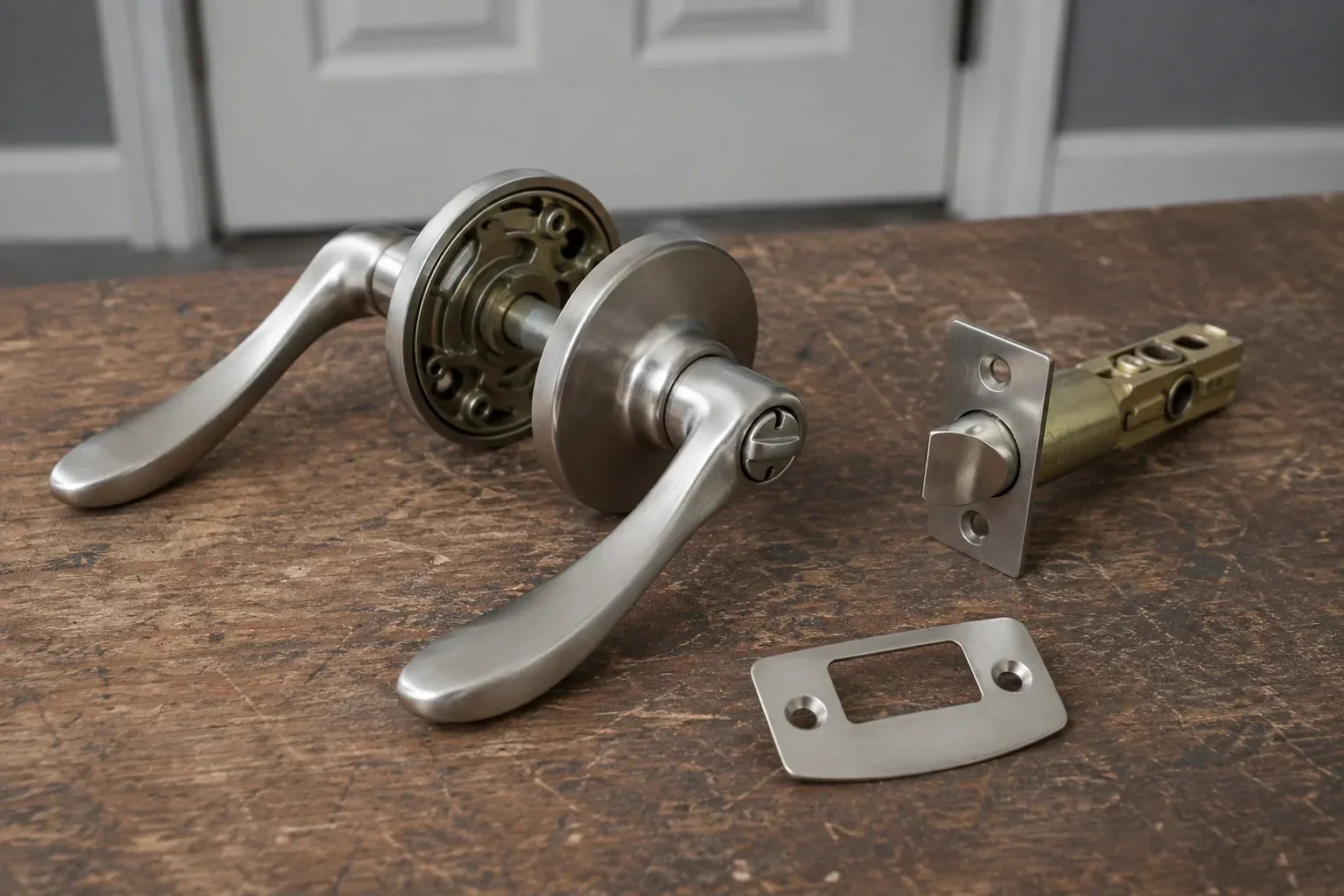
- Lock Replacement & UpgradeThe house is fifteen years old and every exterior door still wears the light hardware the builder fitted: a short bolt, a thin strike held by two small screws, and a knob lock that never suited a street entrance.
- Vintage Mortise Lock ServiceSomeone painted the door years ago without removing the hardware.
- Smart Lock InstallationYou have just taken possession of the house and the previous owners handed over a keypad deadbolt with a code nobody wrote down and an app account you cannot get into.