Change or rekey · Hamilton
Lock Replacement & Upgrade
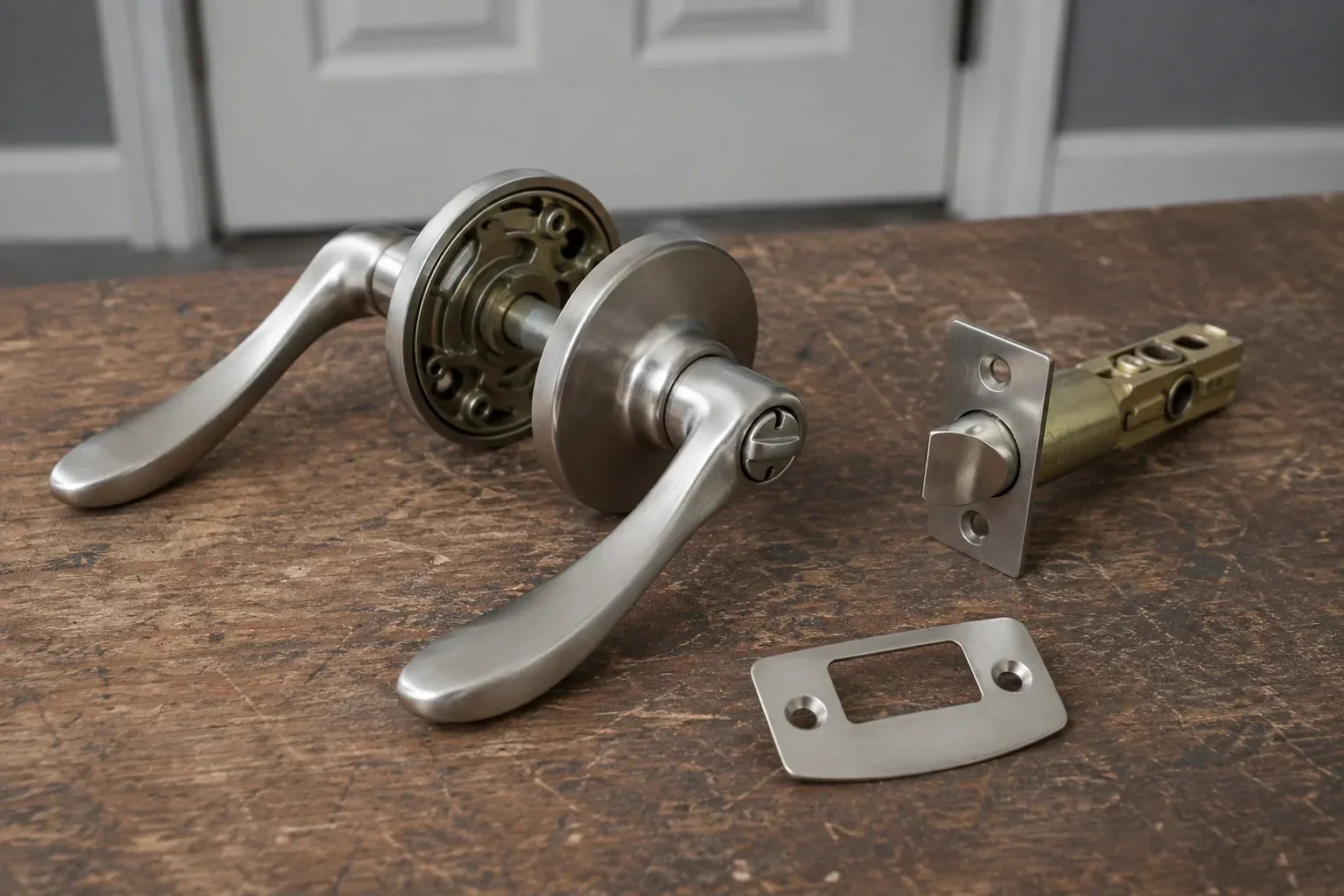
The house is fifteen years old and every exterior door still wears the light hardware the builder fitted: a short bolt, a thin strike held by two small screws, and a knob lock that never suited a street entrance.
In plain words
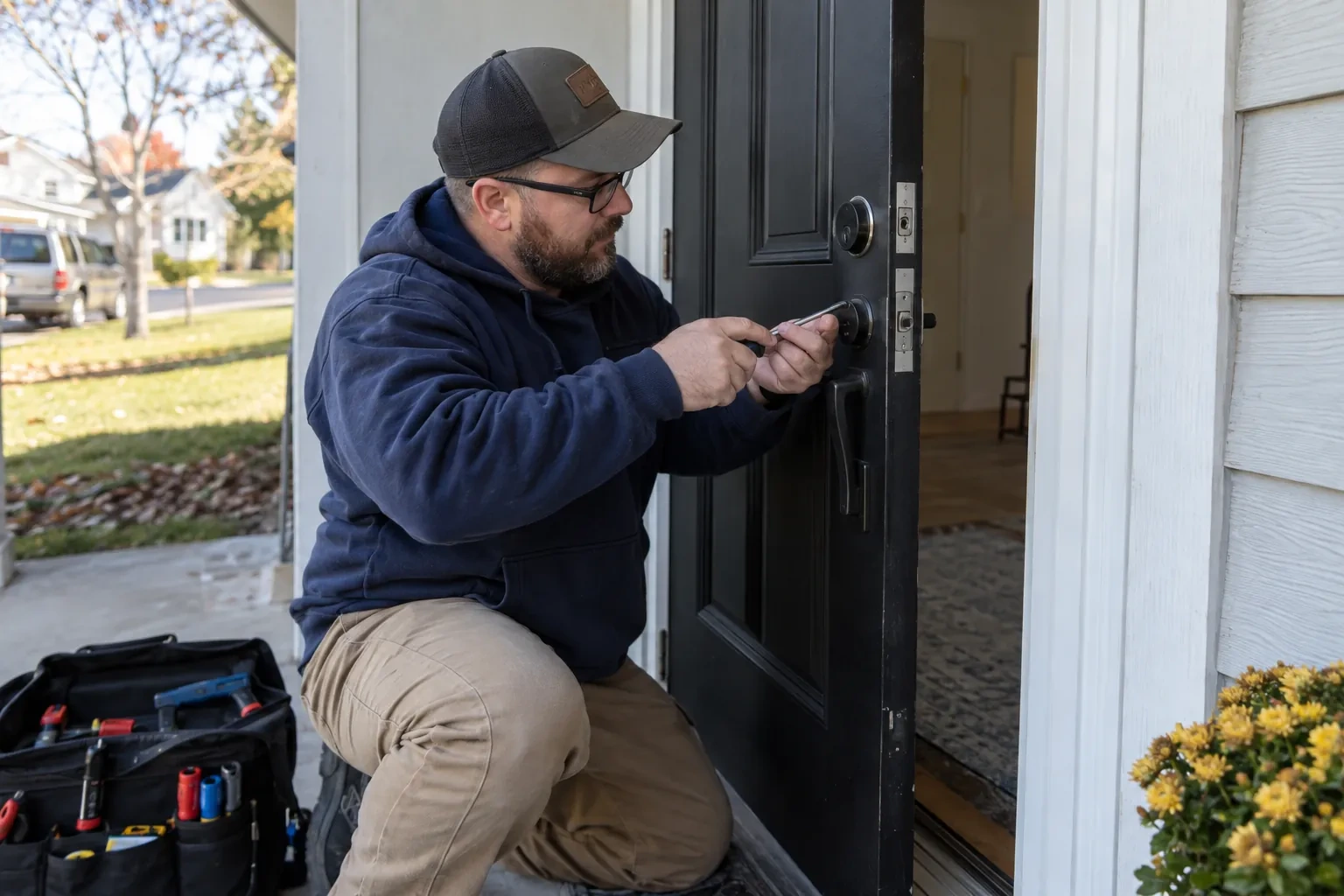
A keypad or smart lock is a lock replacement with a few extra steps, and it suits households where keys circulate widely. The locksmith fits the new deadbolt to the existing bore, checks that the bolt throws freely so the motor is never straining against a misaligned strike, sets up user codes and any phone pairing, and shows you the mechanical override and the battery warning. Because these locks still rely on a bolt and a strike, the same attention goes into the frame as for any deadbolt. You gain convenience without giving up the mechanical basics that make a door hard to force.
How the visit goesThe brass handleset has gone blotchy and green where the winter salt reaches it, and the coating on the deadbolt is lifting in flakes. It still locks, but it looks tired beside the fresh paint on the door.
Lock Replacement & Upgrade
How the visit goes
Who is asking for the change
The first check is about the person, not the door. An owner can change any lock on their home. A tenant who wants new hardware on the unit door needs the landlord's agreement, and a landlord who changes a lock while a tenant lives there hands over new keys. The locksmith asks which situation applies and, where paperwork helps, looks at identification, a deed, a lease or a property-management note. It takes a minute and it means the new lock goes on with everyone who has a stake in the door knowing about it, which is exactly how a lock should start its working life.
Mounting the cylinder and the interior side
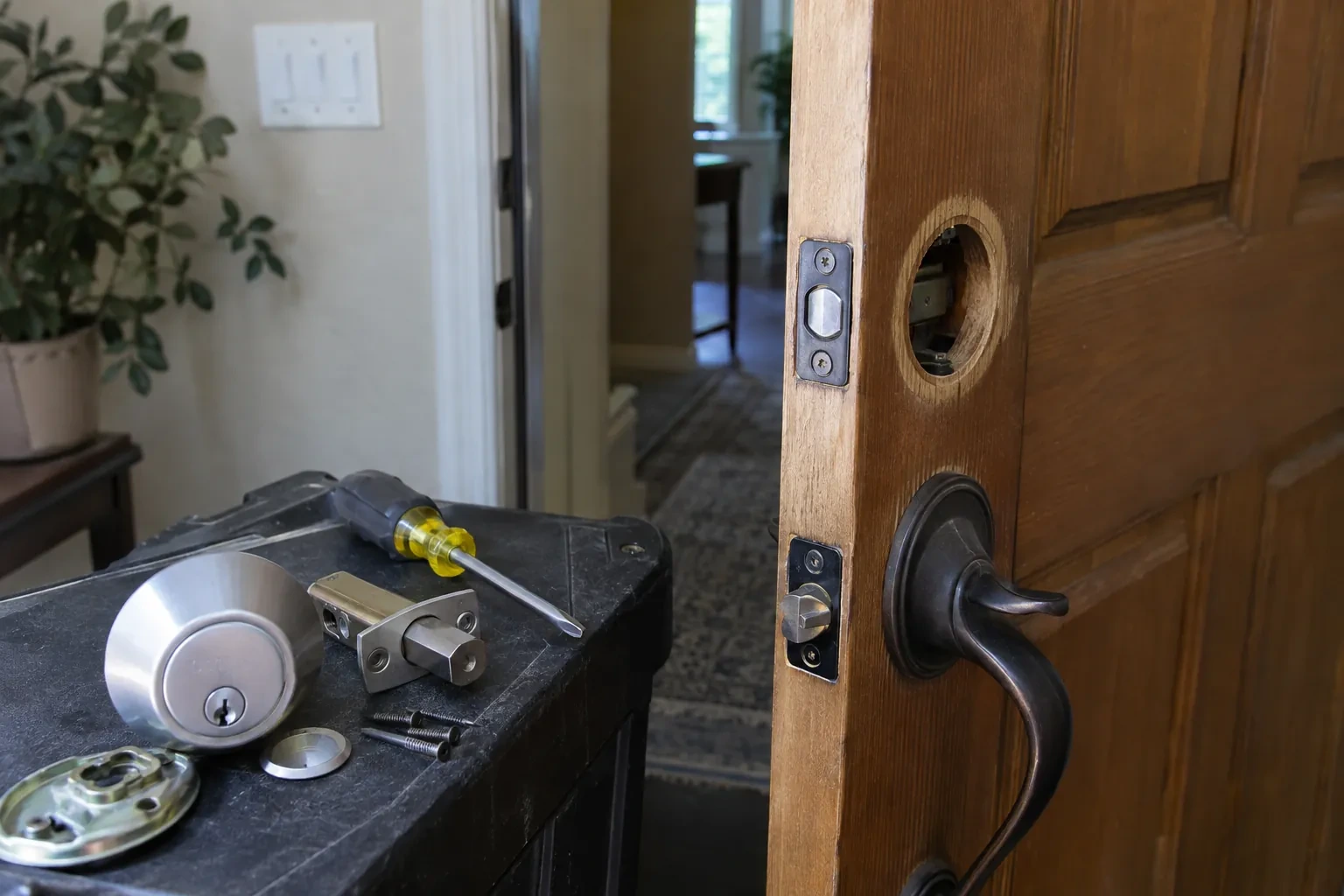
The exterior housing goes on with its tailpiece passing through the slot in the bolt, oriented as the maker specifies so the keyway sits upright. The interior thumb-turn or rose is offered up and the two long mounting screws are drawn down evenly by hand until firm, not crushed; zinc housings distort and threads strip under a drill, and an over-tight rose makes a lever heavy forever. On thick doors, extension kits bring screws and spindle to length. A knob or lever set adds the latch spindle and the spring cage, and the handle is checked to return crisply to level before the trim is snugged.
A smart lock with its backup arranged
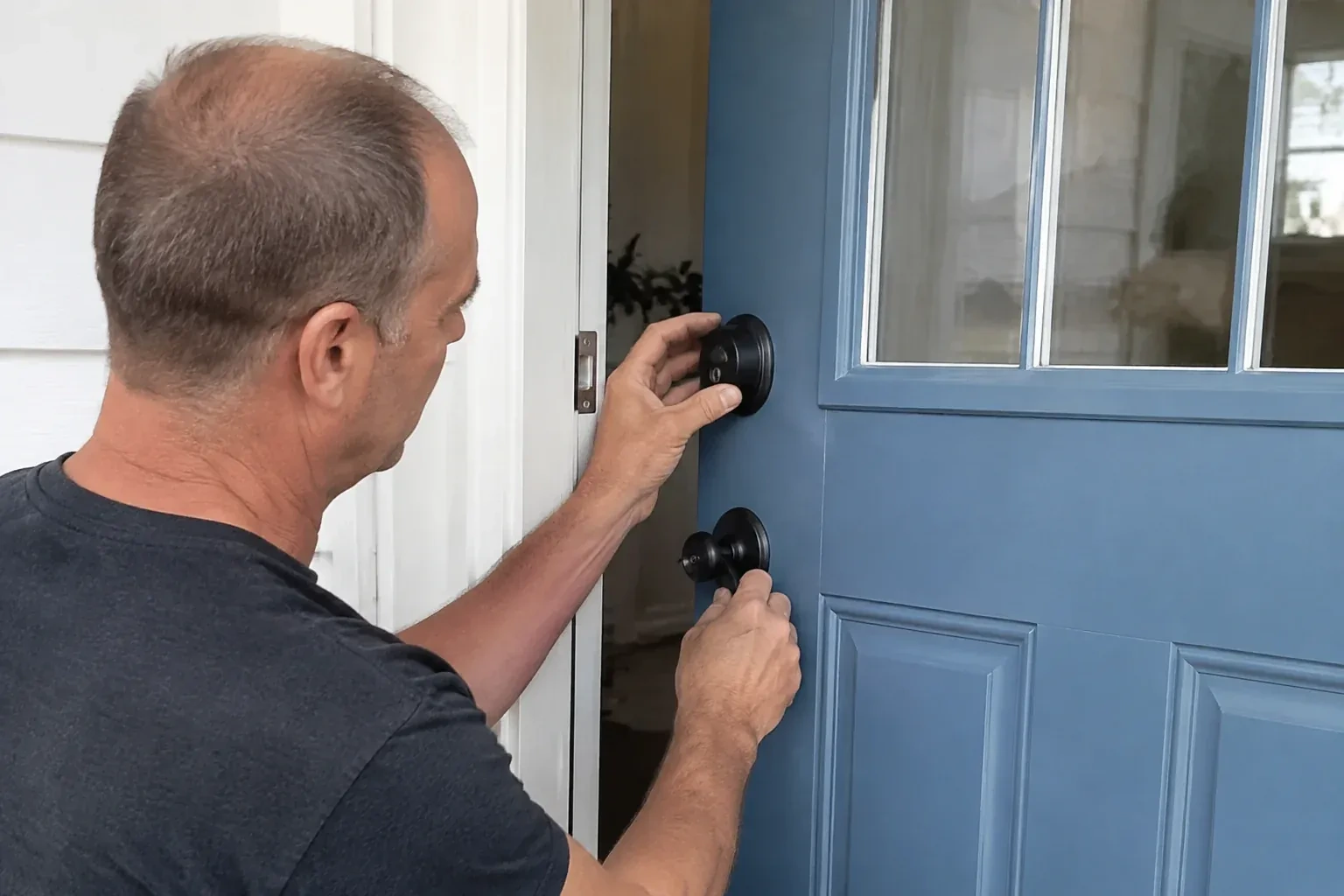
A keypad or smart deadbolt leaves the visit with codes set for each person, auto-lock and alerts configured, and any phone pairing confirmed while the locksmith is there to check it. You are shown the low-battery signal so you recognise it, and the type of battery the maker calls for. The mechanical override key is the piece to look after: keep it on a keyring or with a neighbour rather than inside the home it opens. A second person's code is set up before the locksmith leaves, so a flat phone or a forgotten code is never a reason to stand on the porch.
Lock Replacement & Upgrade
In the van
Chisels, mallet and hand screwdrivers
Graded deadbolt
Key blanks and key cutter
Filler plates and thick-door extension kits
Boring jig and hole saws
Lock Replacement & Upgrade
What affects the quote
Special-order hardware
Most standard locks come from the van. A specific style, an unusual finish or a restricted system may need ordering, which affects scheduling and is noted in the quote rather than discovered on the day.
Restricted keyway system
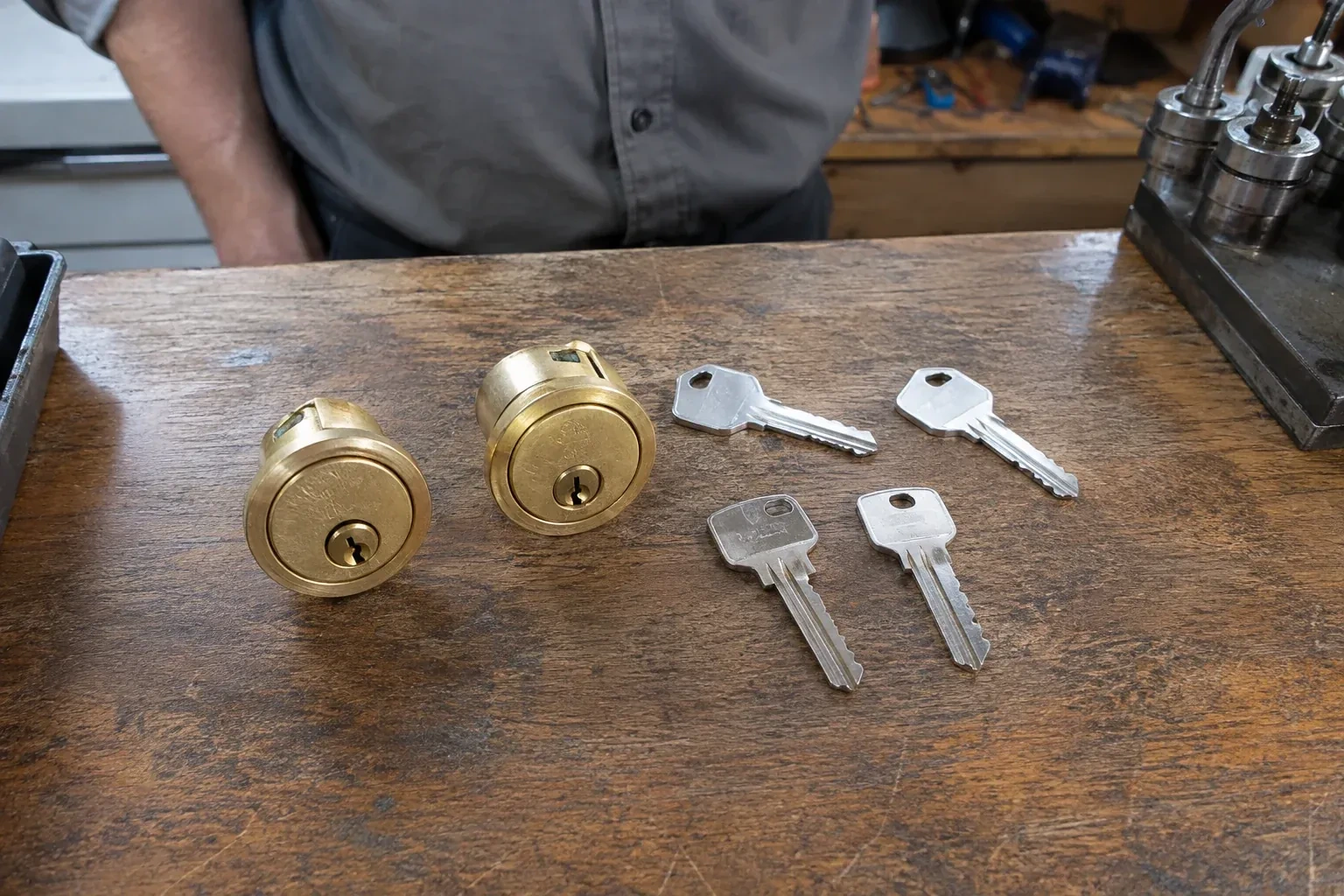
Patented cylinders and controlled key blanks cost more than standard hardware and involve setting up your key records, which is quoted separately from an ordinary replacement.
Keys cut
Each key is counted, and restricted keys cut against a card are a different item from standard blanks. Say how many people need one and the quote lists them.
What to have ready
- Has the door been forced or damaged, or does it need a push to lock?
- Do you want every exterior door to open with one key?
- How many keys does the household need, and should copying be restricted?
Lock Replacement & Upgrade: questions
QuestionsWhat is a reinforced strike, and is it worth adding?
A standard strike is a thin plate held by two short screws in the jamb, and the jamb is what splits when a door is forced. A reinforced strike or strike box is heavier and is fixed with long screws that pass through the jamb into the framing, spreading the load into the structure. It is one of the most effective upgrades on any exterior door and is usually fitted as part of a deadbolt replacement.
Will a new lock fit the holes already in my door?
Usually, yes. Most residential doors are prepared to standard sizes, a 54 millimetre cross bore and a backset of 60 or 70 millimetres, and most modern hardware adjusts between those backsets. The locksmith measures before choosing, so the new lock is matched to the door rather than the other way around. Where an older mortise lock or an unusual bore is found, filler plates, extension kits or a carefully jigged new bore bring the door to standard.
Is a smart lock a good upgrade, and what happens when the batteries run out?
For a household with many people coming and going, codes that can be added and removed are a real convenience. Behind the keypad it is still a deadbolt, so grade and strike matter as much as ever. Batteries typically last months and the lock warns you as they fade; depending on the model, a dead battery is handled with a mechanical override key or with external contacts for a temporary power source, so it is worth confirming which one your lock uses.
Related services
- Deadbolt InstallationSomeone tried the door last winter.
- Vintage Mortise Lock ServiceSomeone painted the door years ago without removing the hardware.
- Smart Lock InstallationYou have just taken possession of the house and the previous owners handed over a keypad deadbolt with a code nobody wrote down and an app account you cannot get into.