Car keys · Bartonville
Ignition Lock Repair in Bartonville
A scrape sits beside the ignition slot, left by whoever tried the vehicle overnight in the driveway.
In plain words
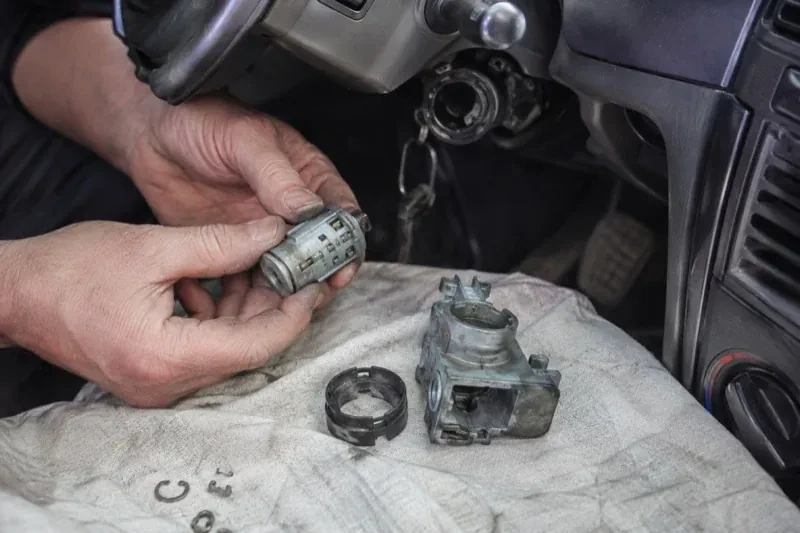
Whether the key won't insert, won't turn, turns without engaging anything, or is stuck and refuses to come back out, each version of the symptom points toward a different part of the mechanism. A key that spins loosely usually means something has disconnected inside; a key that won't insert usually means the barrel or the key itself is the obstacle. Naming the exact behaviour on the phone lets the locksmith bring the right tools before ever touching the vehicle.
How the visit goesTurning the key used to take one smooth motion. Lately it grinds partway through, sometimes needing a second attempt, and yesterday it stopped reaching start altogether. The key itself looks the same as always; something inside the ignition has changed instead.
Ignition Lock Repair
How the visit goes
Mechanical fault or electronic fault
A cylinder that turns cleanly but leaves the vehicle silent makes a mechanical keyway fault less likely, though the cause can still be the immobilizer, the transponder chip, the wiring behind the switch, or an unrelated starting fault such as the battery, starter or park/neutral circuit. The locksmith checks whether the barrel physically moves through accessory, on and start, whether the steering lock disengages, and whether dash lights respond at each position. Where the mechanical side checks out cleanly, the remaining question is named and set aside as separate, dealer-level work rather than folded into the same repair.
Testing every position before calling it finished
A repaired or replaced cylinder is cycled through every stop, off, accessory, on and start, with the key the owner will actually use afterward. The steering lock is engaged and released several times, the dash is watched for the expected response at each position, and the engine is started and shut off to confirm the whole sequence holds up in practice rather than just on the workbench.
A cylinder and key with a clean history behind them
Where the ignition showed signs of an earlier forced attempt, the replacement hardware carries none of that history forward: new pins, a new key, and a housing that has not been tampered with. You are shown the old part before it is handed over or taken away, so the vehicle's ignition starts its next chapter with hardware nobody has already tried once to defeat.
Ignition Lock Repair
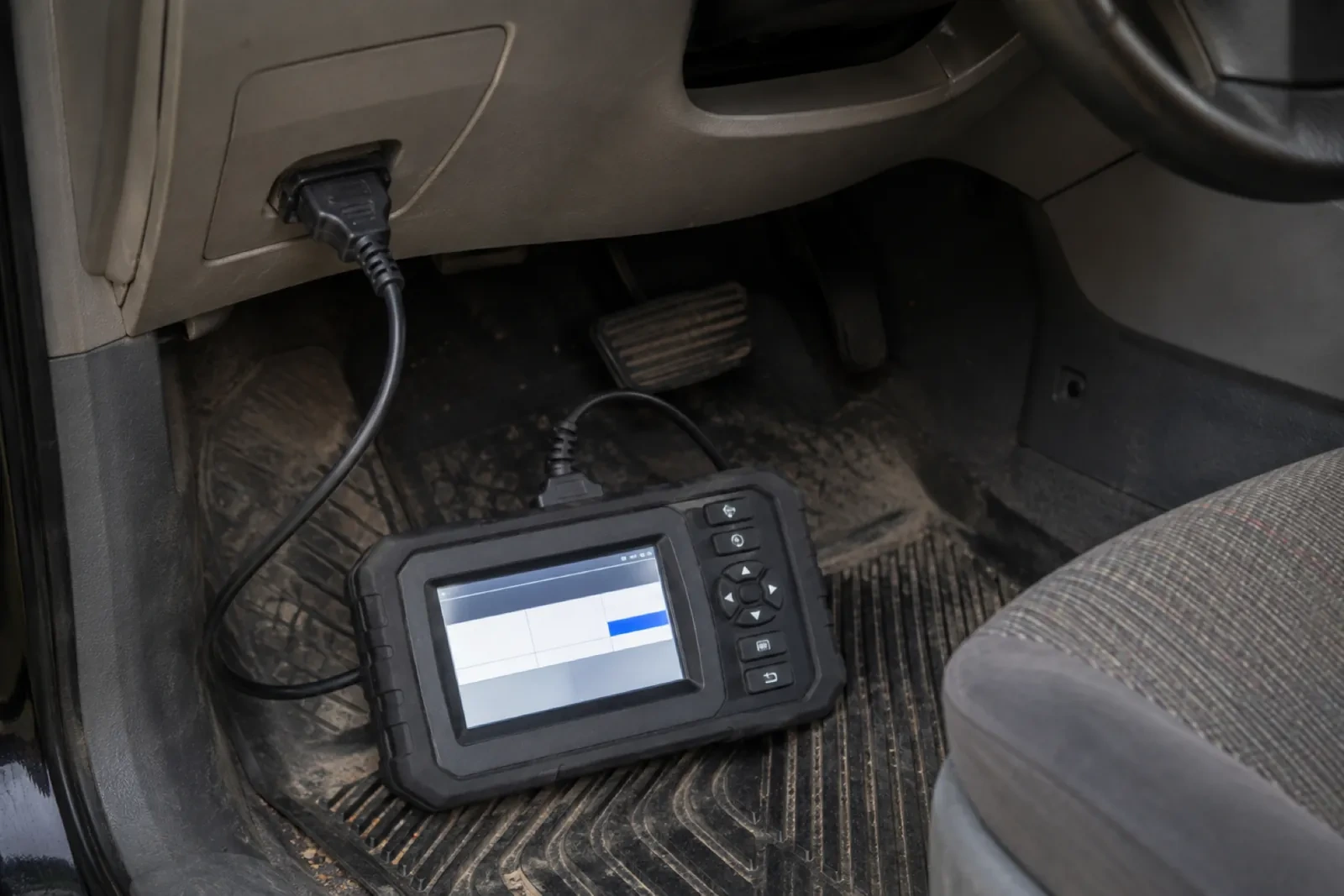
In the van
Ignition lock cylinder
Steering column trim tools
Key code reader
Key blanks and cutting machine
Cylinder decoder
Ignition Lock Repair
What affects the quote
Age and history of the vehicle
An older vehicle may have hardware that is harder to source, or wear built up over many years of daily use, while a vehicle with a known repair history gives the locksmith a clearer starting point.
Whether an electronic diagnosis is also needed
When the mechanical repair alone does not account for everything the vehicle is doing, checking the immobilizer or transponder side becomes a separate task, priced and scoped apart from the lock cylinder itself.
Service in place versus full replacement
Cleaning, freeing and lubricating an existing cylinder is a lighter job than removing a barrel that is cracked, seized or too worn to trust, pinning a new one, and refitting everything around it afterward.
What to have ready
- What is the vehicle's year, make and model?
- Do you have a spare or second key available?
- Would you like extra keys cut during the same visit?
Ignition Lock Repair: questions
QuestionsWhat if the key won't go into the slot at all?
That points toward the barrel itself, debris packed into the keyway, or a key that has bent or worn out of shape rather than a deeper electronic problem. The keyway is checked and cleared first, the key is compared against a spare if one exists, and the barrel is serviced or replaced depending on what that first check turns up.
Can a key that snapped off inside the ignition be removed without damaging anything?
In most cases, yes. Hooked and spiral extraction tools reach in and draw the broken piece out along the path it entered, rather than pushing it further in. Once it is clear, the cylinder is checked for the wear that likely caused the break in the first place, and a fresh key is cut to replace both broken pieces before the vehicle is handed back to you.
How do you tell the cylinder apart from the switch behind it?
The cylinder is the part the key physically touches and turns; the switch is the electrical component behind it that responds to each position. The locksmith checks whether the barrel itself moves cleanly through every stop and whether the dash and starter respond at the right moments. When the barrel turns properly but the response is missing, the switch or wiring is a likely cause, though the battery, starter and park/neutral circuit are checked too before settling on it.
Related services
- Car Key ReplacementThe key snapped at the head while you were turning it in a stiff, frosty door lock.
- Spare Car Key DuplicationThe blade on the everyday key has gone shiny and thin along one edge, and lately it needs a wiggle before the ignition catches.
- Key Fob ProgrammingA new driver has joined the household, and the one existing fob is the only key anyone has ever had cut for this vehicle.