Change or rekey · Bartonville
Vintage Mortise Lock Service in Bartonville
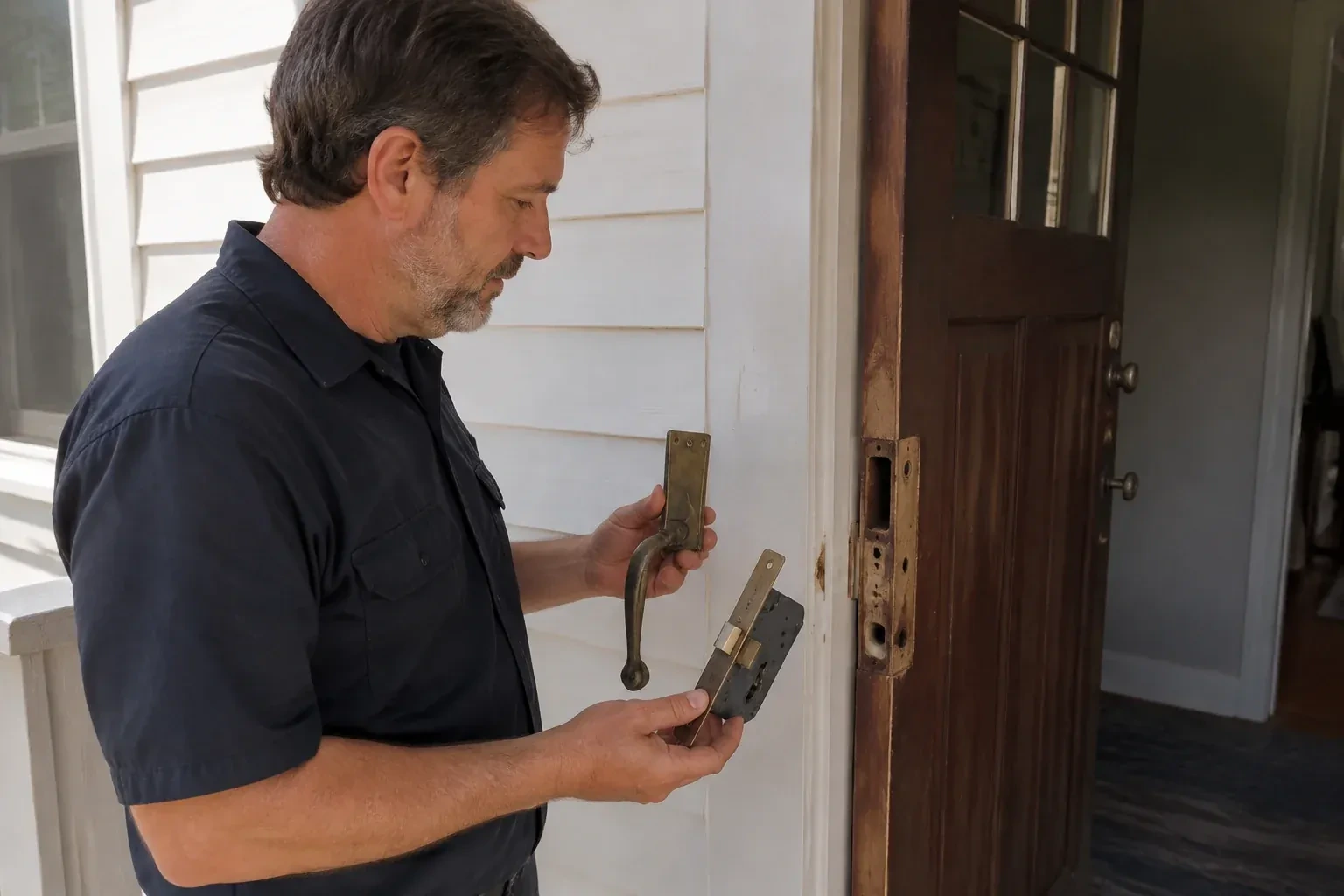
Someone painted the door years ago without removing the hardware.
In plain words
Interior doors are as much a part of this work as the entry. Bedroom, bathroom and closet doors in an older home usually carry a lighter mortise latch with a privacy turn button, and after decades without lubrication they stop catching or the turn button seizes. These small cases are short jobs on the bench: a clean, a spring, a new turn button spindle where the old one has sheared. Sets of interior locks are often serviced in one visit, and a bit key can be cut that operates all of them, which is how they were originally supplied when the house was built.
How the visit goesSomeone painted the door years ago without removing the hardware. The faceplate, the strike and the little thumb-turn are all under several coats, the deadbolt scrapes when it moves, and the knob is stiff enough to leave marks on your hand.
Vintage Mortise Lock Service
How the visit goes
Reading the faceplate
Standing at the open door, the locksmith looks at the narrow brass or steel plate in the door edge. Its height, the spacing of its screws, any maker's stamp, and whether it shows one bolt or two tell a good deal about what is inside: a latch-only case for an interior door, a latch and deadbolt case for an entry, or a privacy function with a turn button. The distance from the door edge to the centre of the knob, the backset, is measured, along with the spindle size. These figures decide which springs, followers and, if it comes to that, which replacement case will fit, so they are written down before the lock is disturbed.
Reassembly and setting the trim
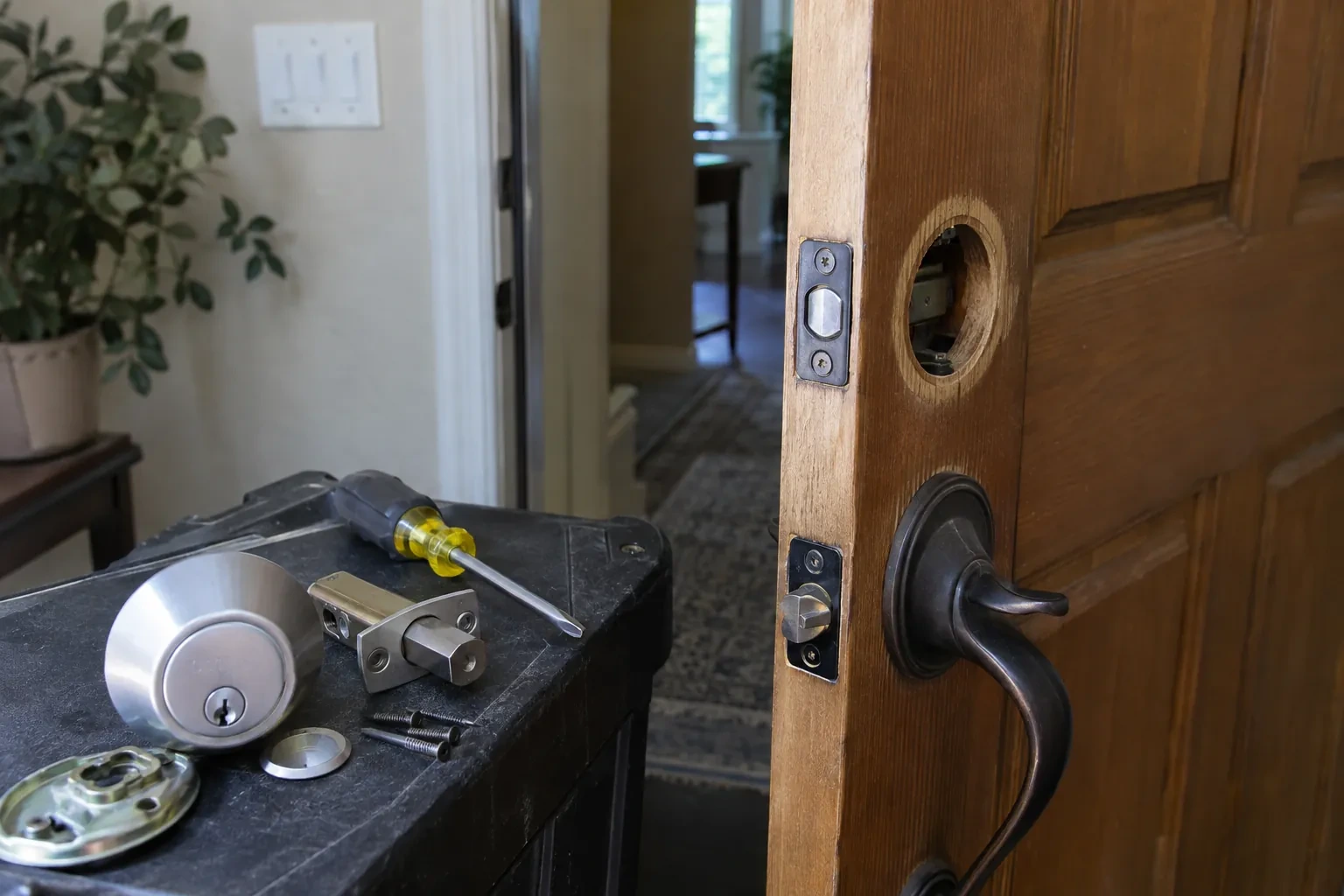
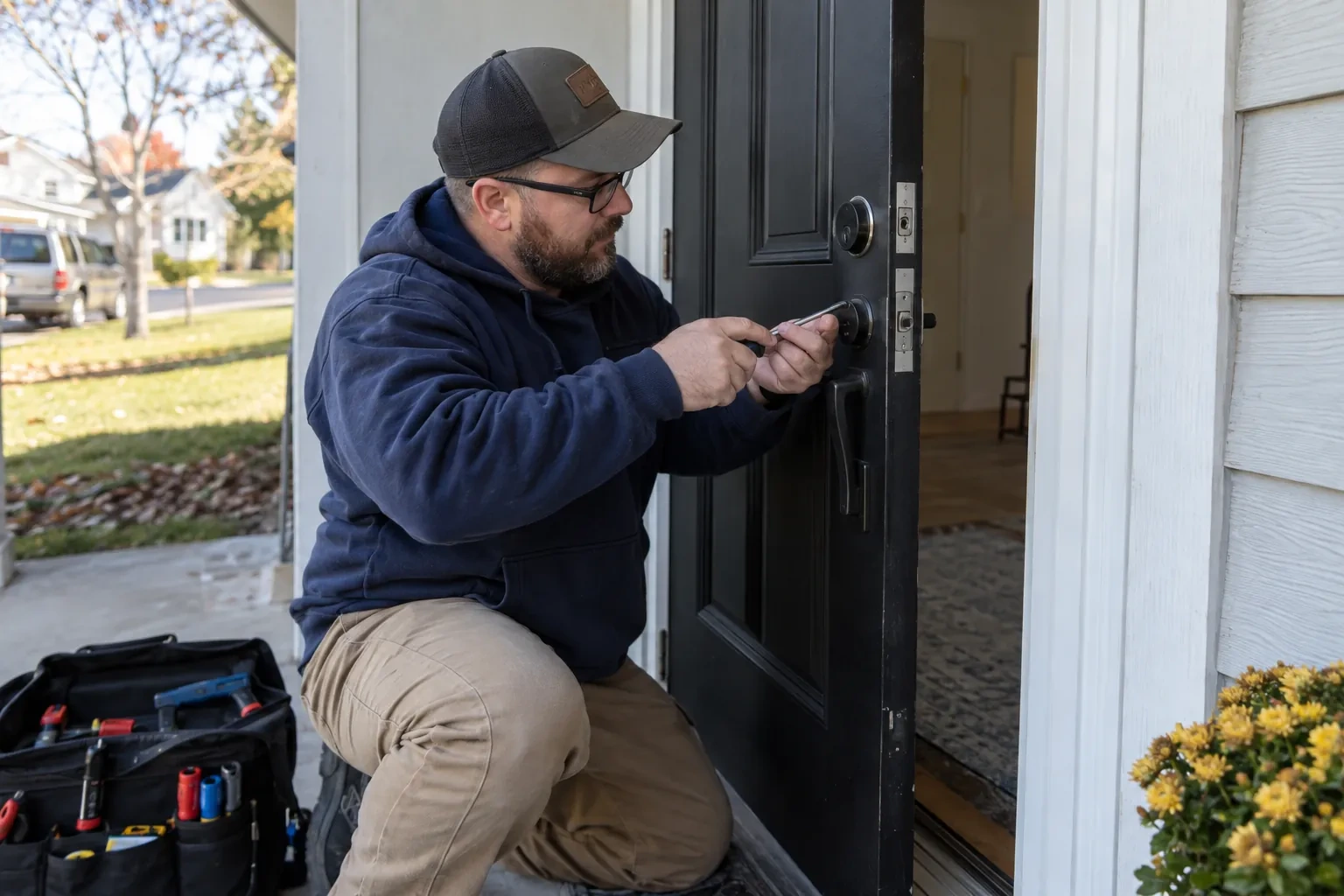
The case slides home and is screwed off, then the cylinder or keyhole escutcheon goes on, followed by the spindle, knobs and rosettes. The spindle is trimmed to length so the knobs sit against the door without pinching, and the set screws are tightened so there is no free play before the latch moves. The thumb-turn is aligned with the deadbolt tail so it throws with a light touch. Paint is cleared from the faceplate and strike edges where it was catching. Then the door is closed and the whole lock is worked from both faces with the key, the knobs and the turn, several times, listening for the latch to seat.
How to lubricate it, and how not to
A serviced mortise case wants very little. Once a year, a single drop of light lock oil into the latch and the bolt from the door edge, with the faceplate screws briefly backed off if needed, keeps the levers gliding. If the lock has a pin-tumbler cylinder, that cylinder gets dry graphite or a PTFE lubricant in the keyway instead, because oil in a cylinder gathers grit and stiffens the pins. General-purpose spray lubricants belong nowhere on this hardware; they flush out the little oil that should stay and leave a film that dust settles into. The locksmith will show you where the drop goes so you are not guessing.
Vintage Mortise Lock Service
In the van
Hub followers and lever packs
Warding files
Reproduction mortise case
Hardwood dowel and wood glue
Light lock oil
Vintage Mortise Lock Service
What affects the quote
Strike and hinge work
Where the door has dropped or swelled, adjusting or moving the strike and tightening or packing hinges is part of the fix. It is small work but it is listed, so you see what was done to the door.
Condition of the wood
Stripped screw holes, a loosened pocket or a split at the door edge need dowelling, shimming or gluing before the case can be trusted. That woodwork is quoted once the locksmith has seen the pocket empty.
Missing or mismatched trim
Sourcing a knob, escutcheon or thumb-turn to match the survivors, from salvage or reproduction stock, is quoted as parts plus the search. Reusing your own trim from another door avoids that line.
What to have ready
- How many doors need attention, and are any of them interior doors?
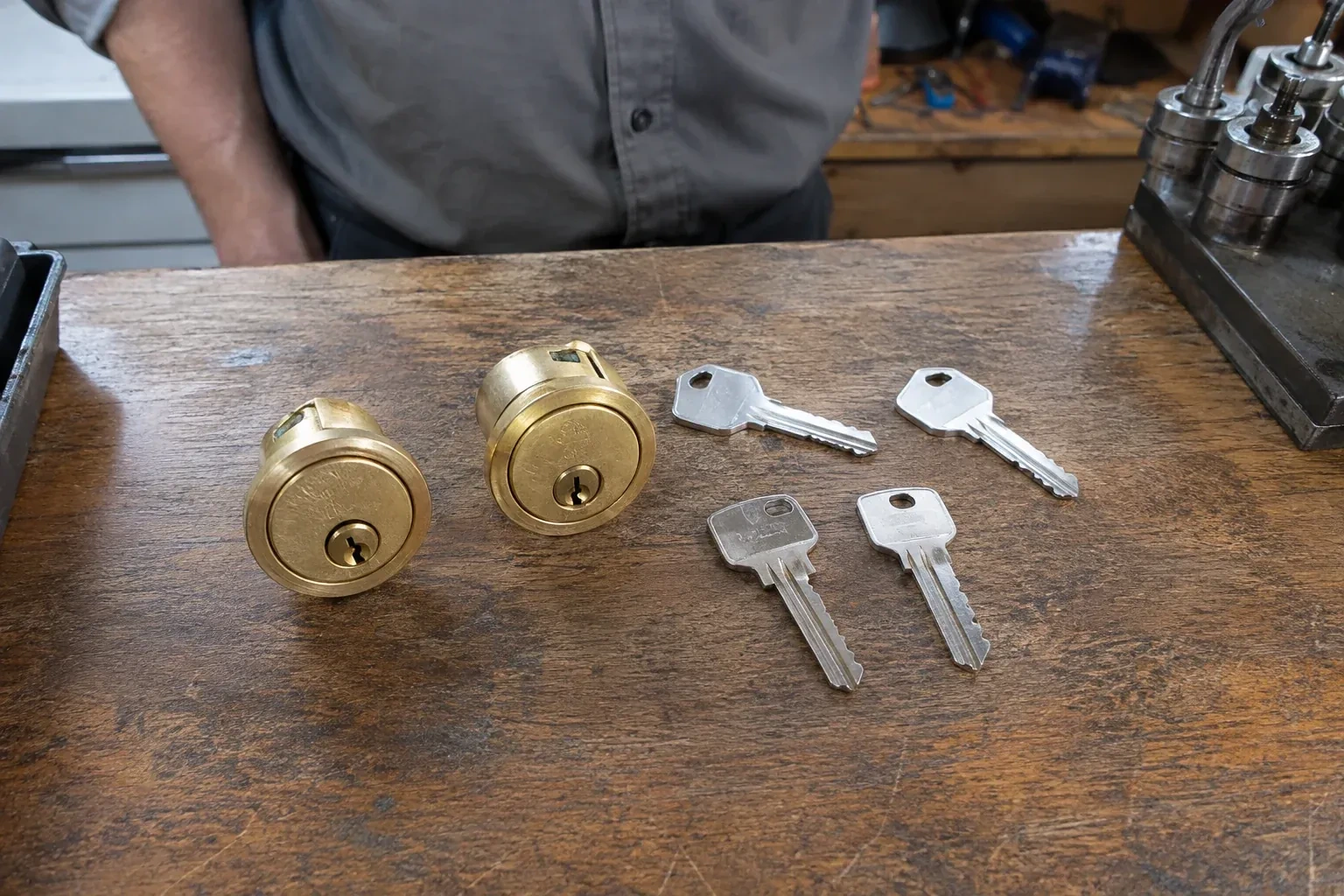
- How many keys do you have, and do any of them work?
- Do you own the home or rent it, and who should receive the keys?
Vintage Mortise Lock Service: questions
QuestionsHow should I look after the lock once it is serviced?
A drop of the right lock oil into the latch and bolt once a year is plenty. If the lock has a pin-tumbler cylinder, use whatever lubricant that cylinder's maker specifies, since some take a dry graphite or PTFE product and others a specified liquid one. Try the latch and deadbolt each spring and fall; if the bolt starts to scrape, the strike wants a small adjustment before anything is strained. Keep bit keys out of a pocket where they bend.
Can the work be done with the lock left in the door?
Rarely, and it is not the better route. Almost everything that fails is inside the case, and the case only opens once it is out of the pocket, which takes a few minutes and leaves no mark. Working through the keyhole with an unapproved or over-applied spray tends to wash out what little lubricant should stay and gums the levers later. Removing the case, cleaning it properly and refitting it is the repair that lasts.
Why does the deadbolt scrape or need a shove to throw?
Two causes cover most cases. Either paint has built up on the faceplate, the bolt or the strike so the bolt drags across it, or the door has dropped so the bolt is entering the strike pocket at an angle and rubbing its edge. Occasionally a bent deadbolt lever inside the case adds friction. Cleaning the paint back, adjusting the strike and checking the lever all happen as part of the service.
Related services
- Deadbolt InstallationSomeone tried the door last winter.
- Lock Replacement & UpgradeThe house is fifteen years old and every exterior door still wears the light hardware the builder fitted: a short bolt, a thin strike held by two small screws, and a knob lock that never suited a street entrance.
- Smart Lock InstallationYou have just taken possession of the house and the previous owners handed over a keypad deadbolt with a code nobody wrote down and an app account you cannot get into.