Lockouts · Binbrook
Business Lockout Service in Binbrook
A cook stepped into the alley with the recycling and the rear door swung shut behind him.
In plain words
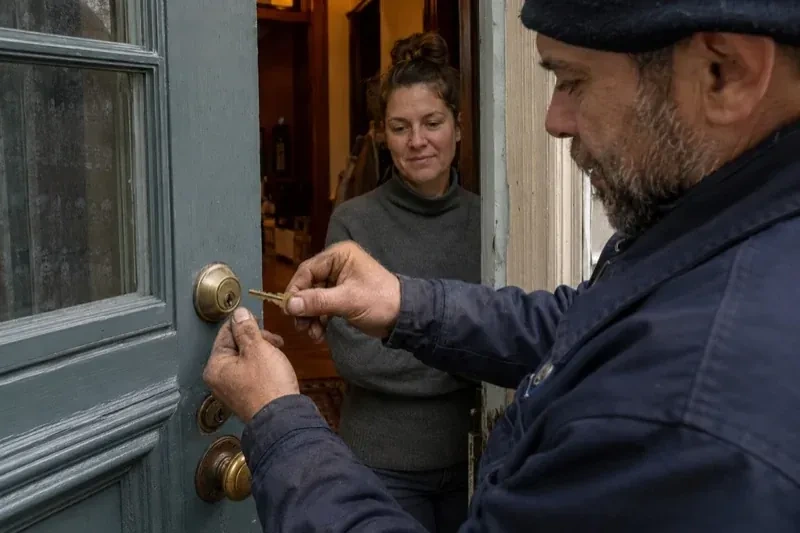
Authority for a business is a question about the company, not just the individual at the door. An owner shows identification and something connecting them to the premises, such as the lease or the business registration. A manager or employee adds a call to the owner or head office, or a property manager who can vouch for them. A commercial landlord brings the lease terms or written instruction that supports the request. Good locksmiths treat this as the opening step of every business lockout and help find the right document rather than guessing, because the same care protects the business the next time a stranger claims to work there.
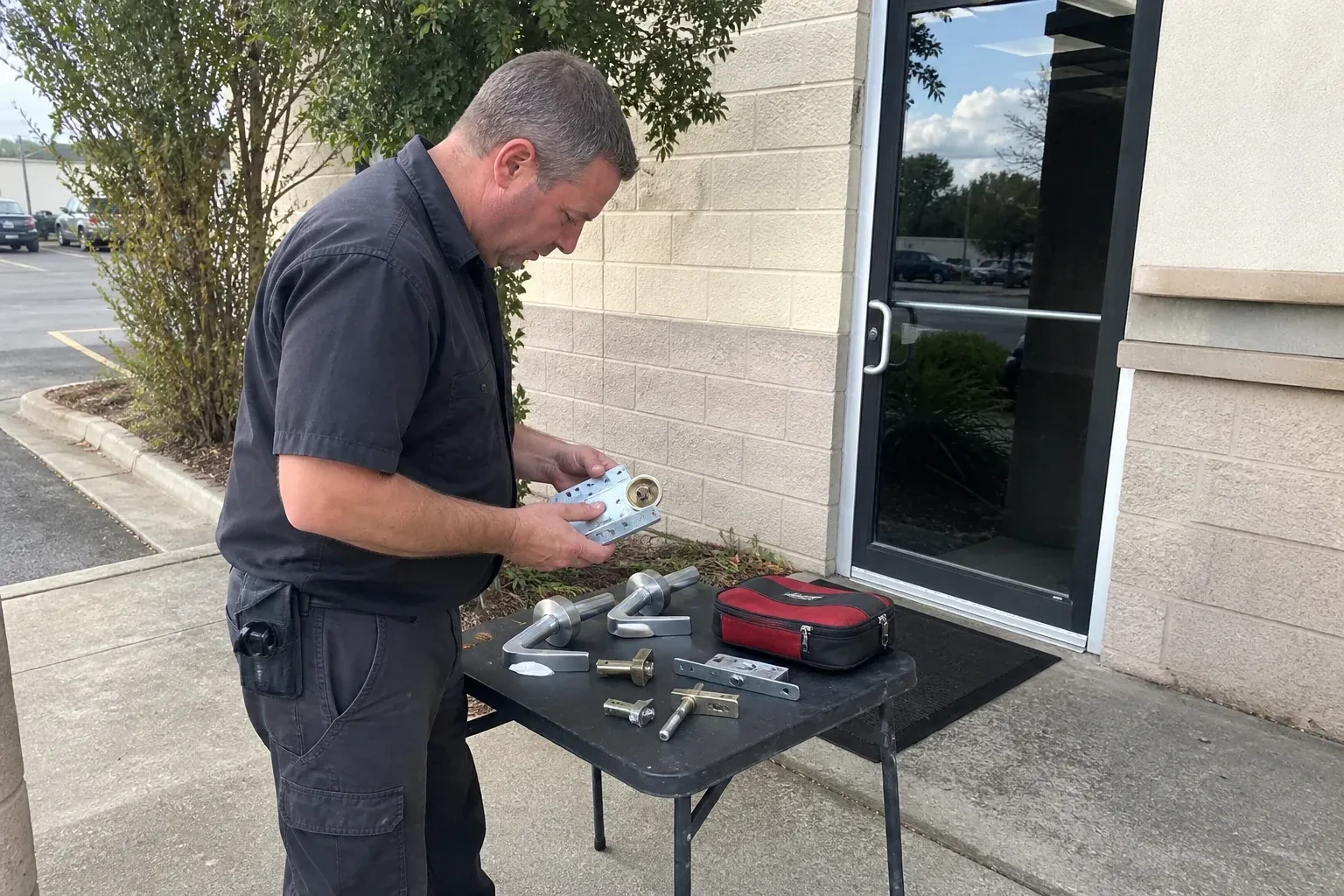
How the visit goesAfter last night's power flicker the card reader beside the clinic door shows nothing. Fobs do nothing, the electric strike stays locked, and the small brass override key that came with the system is in a desk drawer on the far side of the door.
Business Lockout Service
How the visit goes
What happened to the key
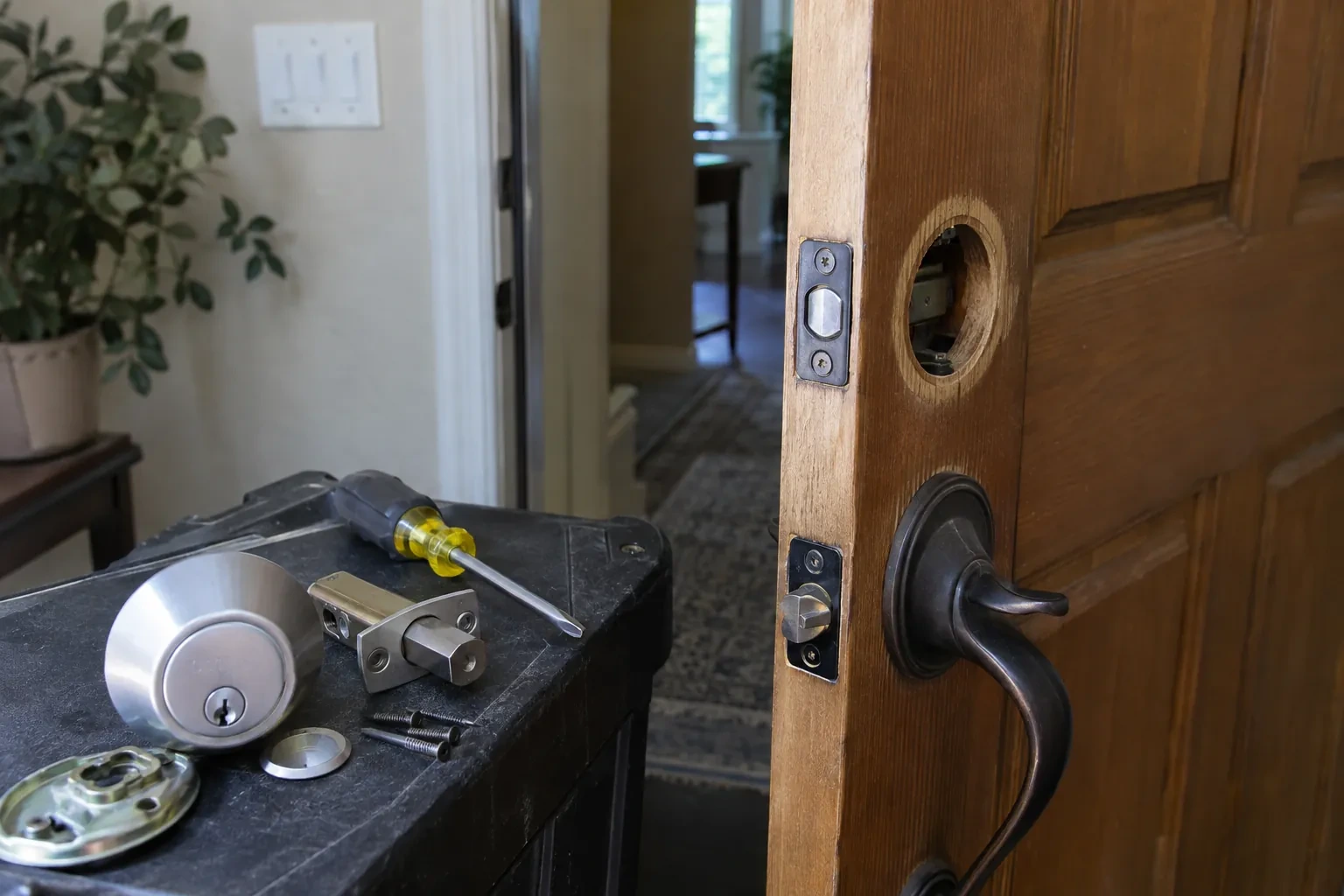
The story of the key shapes everything after the door opens. A key sitting in an absent manager's pocket means the lock is sound and only entry is needed. A key that was lost on transit or never returned by a former employee is still out there, and the visit should end with that key made useless. A key that turned without result points to a worn cam or a failed deadlatch spring, and a key that snapped calls for careful extraction before any opening. A lock that worked at closing and refuses at opening suggests cold, grit or a dropped door rather than a cylinder fault. A minute on this saves a repeat call.
Doors with a push bar inside
A rear door fitted with an exit device is opened from outside through its trim: a keyed lever, a pull with a cylinder, or a bare cylinder in a nightlatch function. Depending on that trim, picking or decoding the cylinder either retracts the latch directly, the way a nightlatch trim does, or unlocks a lever, knob or thumbpiece that then has to be turned to let the latch go. The device itself, including any vertical rods and the dogging mechanism, is left exactly as installed, because it is the way out in an emergency. Afterwards the bar is pressed from inside to confirm the latch releases with one push, and the outside trim is checked for a loose cylinder.
Exit doors that still let everyone out
Whatever was replaced, a door on the way out of the building still opens from inside with a single motion and no key while people are in it. That standard is why a storefront gets a thumb-turn or paddle inside, a rear door keeps its push bar, and a double-cylinder deadbolt does not go on an exit route. The locksmith checks each door for this before leaving and points out any older hardware, such as a chain or a keyed-inside bolt on a back door, that the business may want to bring into line.
Business Lockout Service
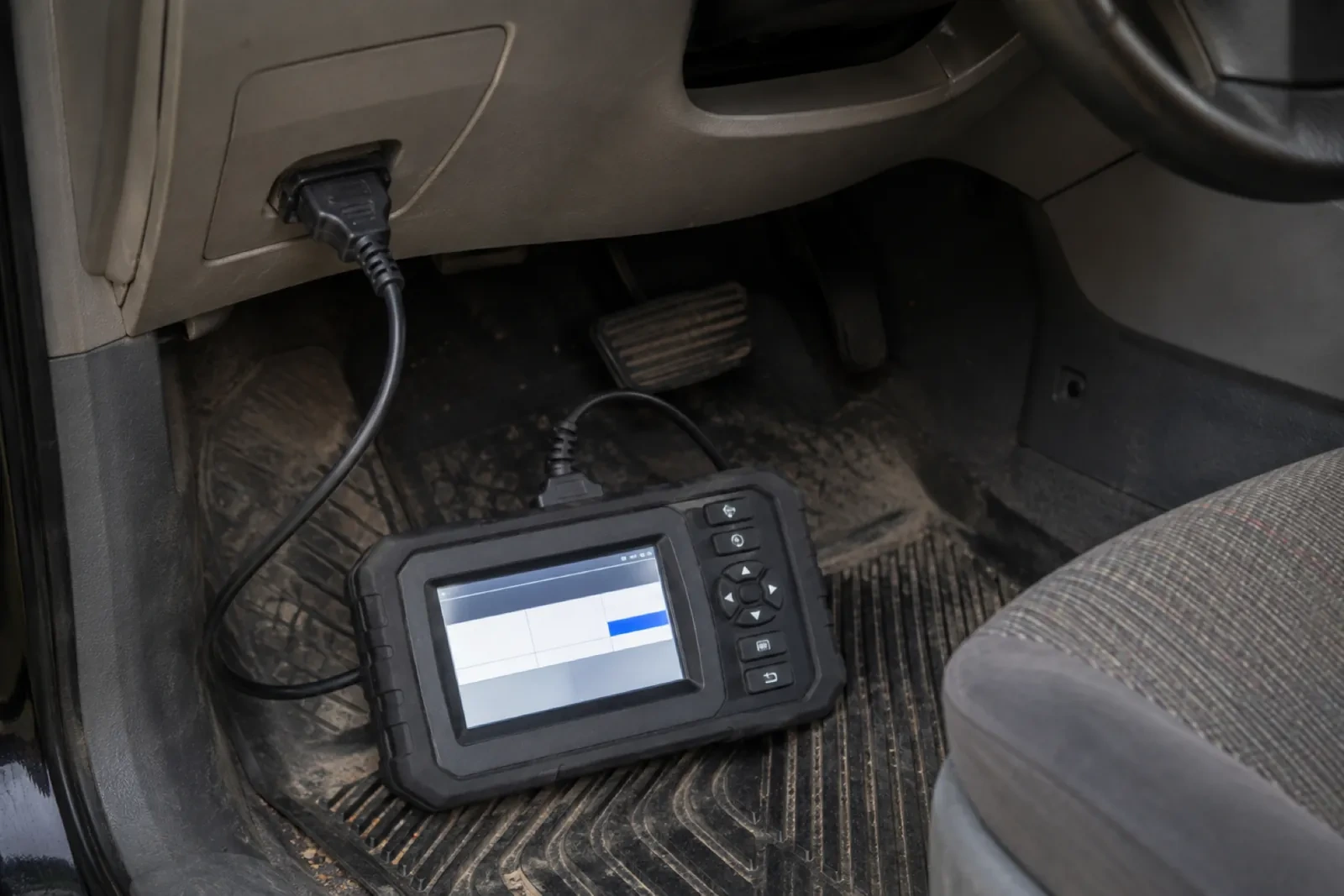
In the van
Replacement mortise and rim cylinders
Lock de-icer and dry PTFE lubricant
Strikes, pivot shims and closer adjustment tools
Broken key extractors
Storefront deadlock and deadlatch bodies
Business Lockout Service
What affects the quote
Rekeying or swapping cores afterwards
Making a lost or unreturned key useless is separate work, priced per cylinder or per core, and the count of doors sharing that key decides how much of it there is.
Upgrades you choose while the locksmith is there
Some businesses use the visit to move to a heavier storefront deadlock, a restricted keyway, interchangeable cores, a lockbox for keyholders or a reinforced strike. None of it is needed to get you open; each is priced as its own option.
Master key system changes
Where the door belongs to a building-wide master key system, changing it means planning with the property manager and pinning cylinders so both your key and the building key still work, which is more careful work than a single rekey.
What to have ready
- Has anyone already tried to force or pry the door?
- Can you send a photo of the lock face and the edge of the door?
- Are there other doors, a roll-up shutter, a gate or a padlock you also need opened?
Business Lockout Service: questions
QuestionsThe key snapped off inside the lock. What happens now?
The broken blade is removed with extractors that grip it and draw it out toward the face, then the cylinder is opened normally. Keys rarely break in a healthy lock, so the cylinder is cleaned, the cam behind it checked for stiffness, and a dry lubricant applied. A new key is cut from the code or from the two pieces rather than from a worn spare, since a tired copy is usually what broke.
How many keys should a business have, and who should hold them?
Fewer than most businesses think, and every one of them named. Two people who can open, one of whom can be reached on a day off, cover the door. Cleaners and contractors get a key only if they need one and hand it back when the arrangement ends. Write down who has what, collect keys when people leave, and rekey when one does not come back. Interior keys for the cash office or stockroom follow the same rule on a shorter list.
Can you also deal with the back door, the roll-up shutter and the gate?
Yes. A business lockout covers every opening the premises relies on: the rear service door with its exit device, a roll-up shutter and its padlock, the compound gate, a mailbox in the lobby and interior doors such as the cash office or server closet. Mention each one when you call so the right padlock shackles, cores and cylinders are in the van, and so cylinders that should share a key are handled together.
Related services
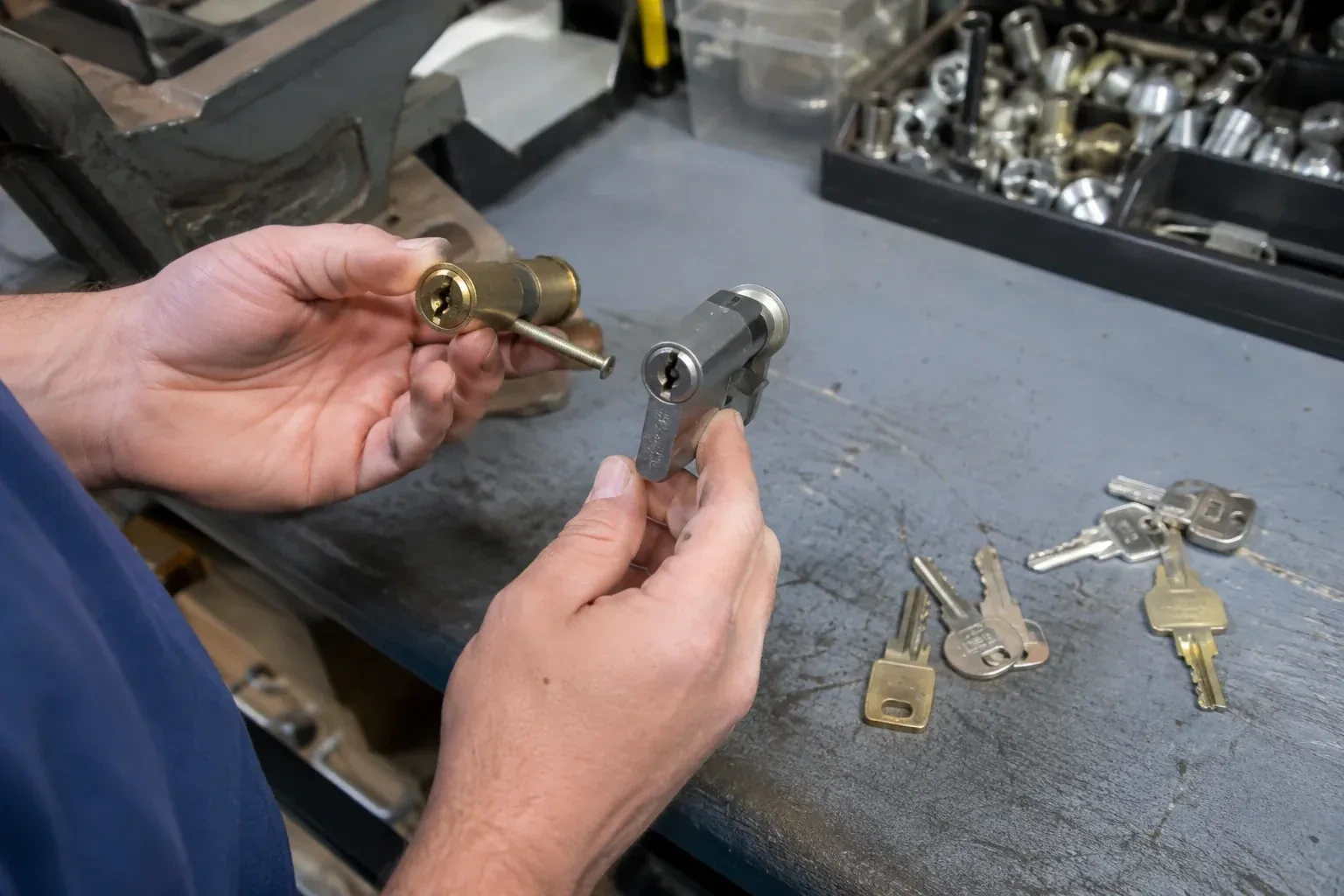
- Broken Key ExtractionYou were locking up on the way out when the key broke in the lock.
- Break-In Damage Lock RepairPolice have come and gone, the occurrence number is on a sticky note, and you are standing in a cold hallway looking at a splintered frame, wondering how the house gets locked before everyone tries to sleep.
- Seized & Jammed Lock OpeningThe key slides all the way in, exactly as it has for years, and then refuses to turn in either direction.