Car keys · Hamilton
Transponder Key Programming in Hamilton
The car came with a single key when the sale went through, and that key is the only thing standing between the household and being stranded.
In plain words
There are really two separate keys hiding inside one piece of metal and plastic: the cut, which is entirely mechanical and opens doors and turns cylinders, and the code, which is electronic and tells the immobilizer to allow the engine to run. A key can be perfectly cut and still leave a car cranking without starting if the code was never written. Programming is the part of the job that handles the code, using equipment built to read and write the exact system fitted to that vehicle.
How the visit goesSince the remote starter was installed last month, the original key has started acting strangely, the car catches on the first turn some mornings and refuses outright on others. Nothing about the key itself changed, but whatever the installer touched under the dash seems to be arguing with it.
Transponder Key Programming
How the visit goes
Looking at the key itself
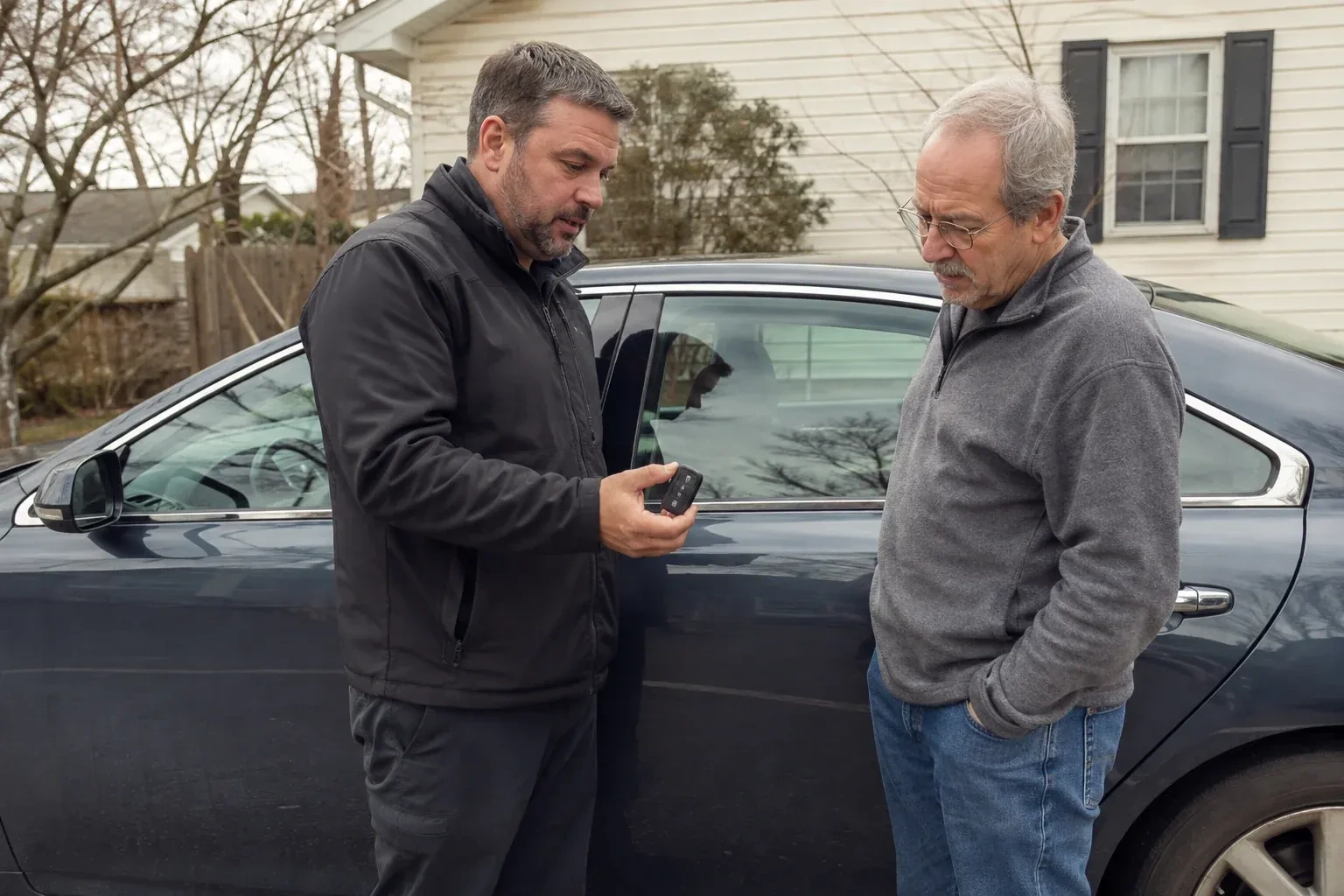
The physical key gets its own inspection. A blade is checked against the lock for wear, a remote-head or proximity fob is opened to check its battery and contacts, and any chip visible in the key head is checked for cracks or separation from the blade. A key that was cut at a counter kiosk but never programmed is common enough to check for specifically: the metal fits the lock perfectly, and the confusion is understandable when the same piece of plastic looks complete either way.
Bringing the fob back to life
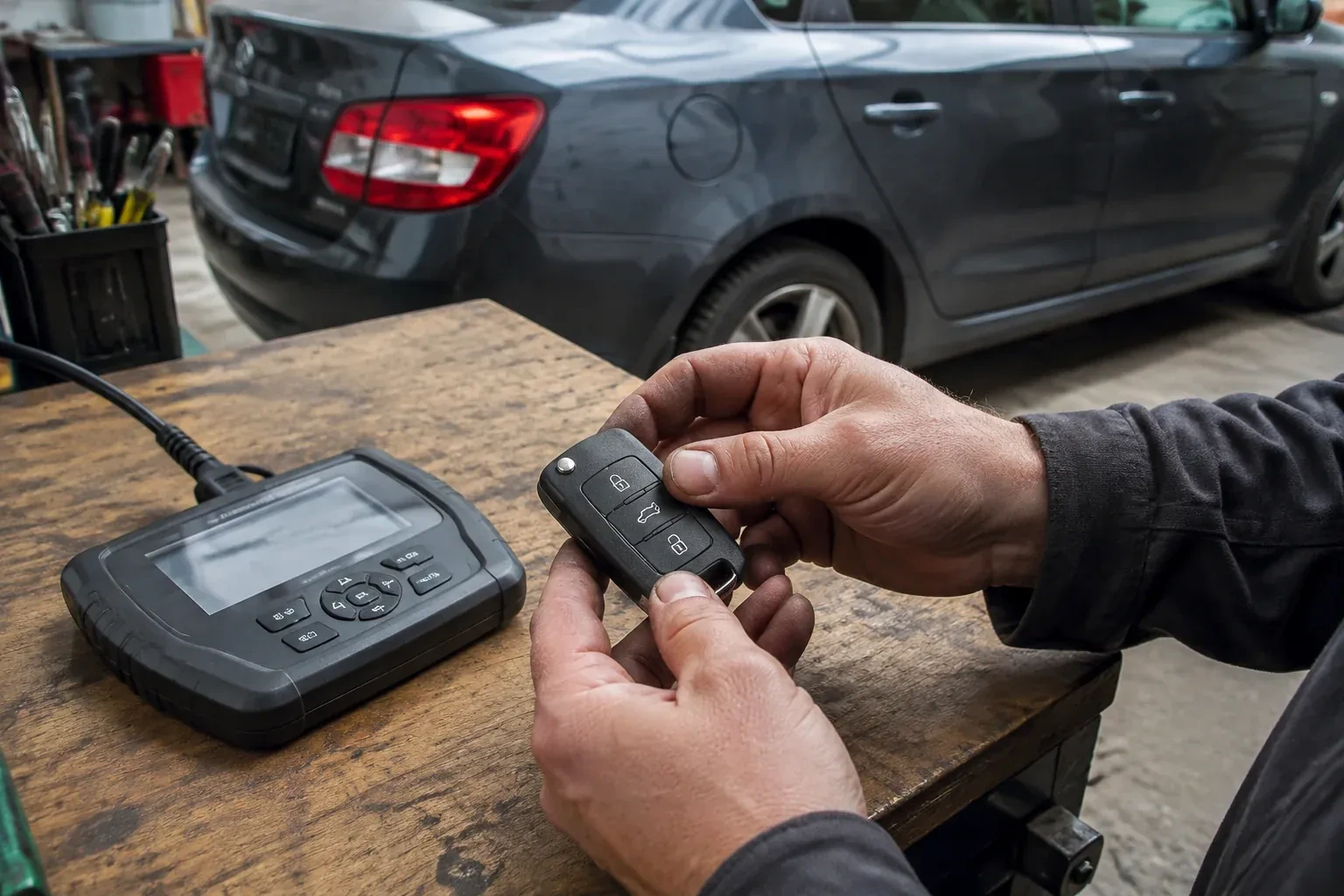
When the vehicle uses a remote-head or proximity fob, the visit includes more than the chip: a fresh battery goes into the fob itself, the remote-entry and any push-button start functions are paired, and the small metal emergency insert is checked and demonstrated if the fob carries one. None of this is separate from the programming; a fob that starts the car but cannot lock the doors, or unlocks the car but leaves the driver stranded when the battery dies, has not finished the job.
Looking after the chip
The chip inside a key head has no moving parts and asks for very little, but it does not tolerate being separated from the blade by force. A key that gets bent, snapped, or pried at with tools meant for a different job can lose its chip along with its shape, and a chip cut in half no longer answers anything. Carrying the key on a ring rather than loose in a pocket, and keeping it away from repeated hard impacts, is most of what looking after it involves.
Transponder Key Programming
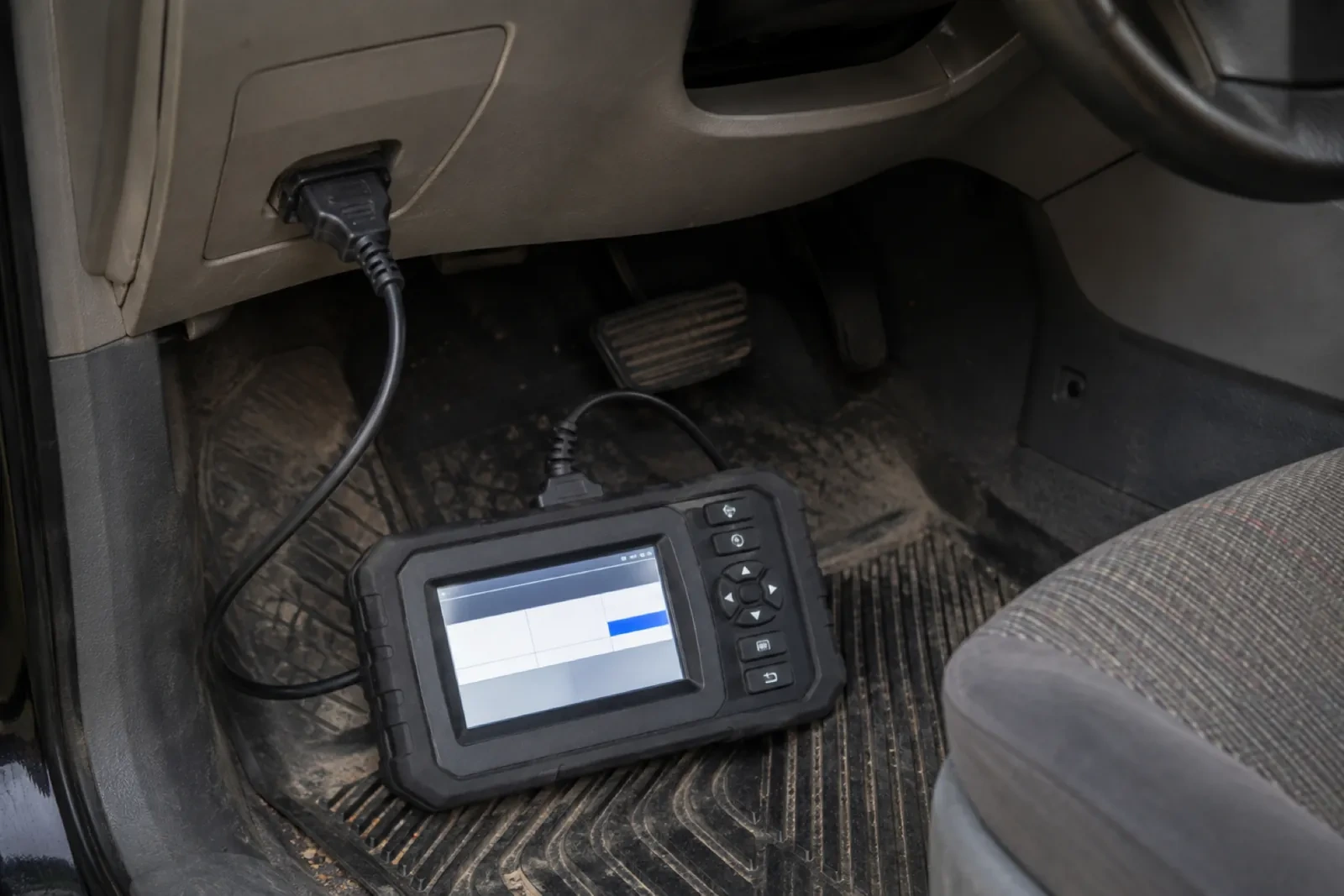
In the van
Security-access module
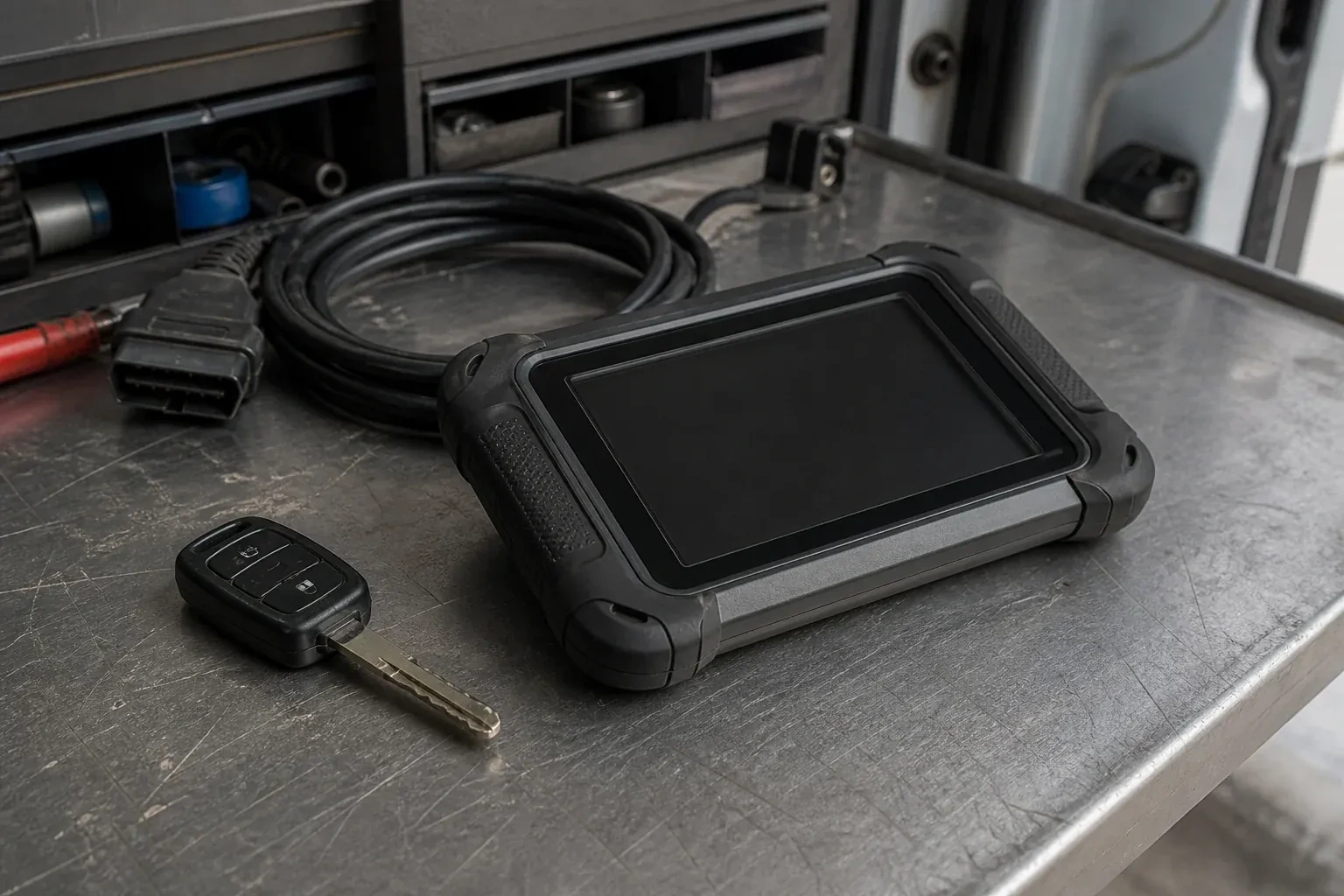
Diagnostic laptop or tablet
Proximity smart key
Bench programming adapter
Emergency insert blade
Transponder Key Programming
What affects the quote
Type of key: blade, remote-head or proximity
A basic transponder blade, a remote-head key with buttons, and a push-button proximity key each involve a different amount of pairing beyond the immobilizer chip itself, which affects both the parts involved and the time the visit takes.
Vehicle make, model and year
The chip family, the immobilizer generation, and how reachable the vehicle's key list is all follow from the exact vehicle, so identifying it precisely early on shapes both the blank needed and how much of the visit is straightforward programming versus a more involved security session.
Trim or dash removal some models need for access
A small number of vehicles place the antenna ring or module somewhere that needs a panel or trim piece moved for a clear connection, which adds a step beyond the programming itself on those specific models.
What to have ready
- What is the year, make and model of the vehicle?
- How many working keys would you like when this is finished?
- Is the vehicle owned, financed, leased or company-registered?
Transponder Key Programming: questions
QuestionsCould an aftermarket remote starter interfere with programming a key?
It can, mainly because a remote starter is often wired into the same ignition and immobilizer circuits a new key needs to talk to. The locksmith asks about any aftermarket installation before starting, and if it is involved, checks how it was wired in rather than assuming the factory system is untouched underneath it.
What information should I have ready before this visit?
The vehicle's year, make and model, and its VIN if it is easy to find, let the locksmith arrive with the right blank and chip already in hand. Knowing how many keys currently work, whether any were lost or stolen, and whether the vehicle uses a basic blade or a fob shapes the rest of the visit before a single tool comes out.
Do I need paperwork from the dealer, or a code from them?
Not usually. Programming equipment reads and writes the vehicle's key list directly in most cases, without needing anything from the dealer. Many recent vehicles gate that access behind a manufacturer-level security session instead, which the locksmith handles as part of the visit rather than asking the owner to obtain anything in advance.
Related services
- Car Key ReplacementThe key snapped at the head while you were turning it in a stiff, frosty door lock.
- Spare Car Key DuplicationThe blade on the everyday key has gone shiny and thin along one edge, and lately it needs a wiggle before the ignition catches.
- Key Fob ProgrammingA new driver has joined the household, and the one existing fob is the only key anyone has ever had cut for this vehicle.