Commercial · Mount Hope
Commercial-Grade Lock Replacement in Mount Hope
An inspection report flagged the rear exit as needing hardware that opens with one motion and no key, and that door currently has an ordinary keyed knob on the inside.
In plain words
Businesses often reach this service after something specific happens: a break-in, a departing employee holding a working key, a lease turnover, or an inspector's note about the rear exit. Whatever the trigger, the work itself follows the same order. The locksmith assesses the door and its current hardware, agrees with an authorized contact on the keying the new lock should follow, fits hardware rated for the opening's construction and use, and connects it to anything else already wired into that door, such as an alarm contact or an access-control reader, before testing and handing the keys over.
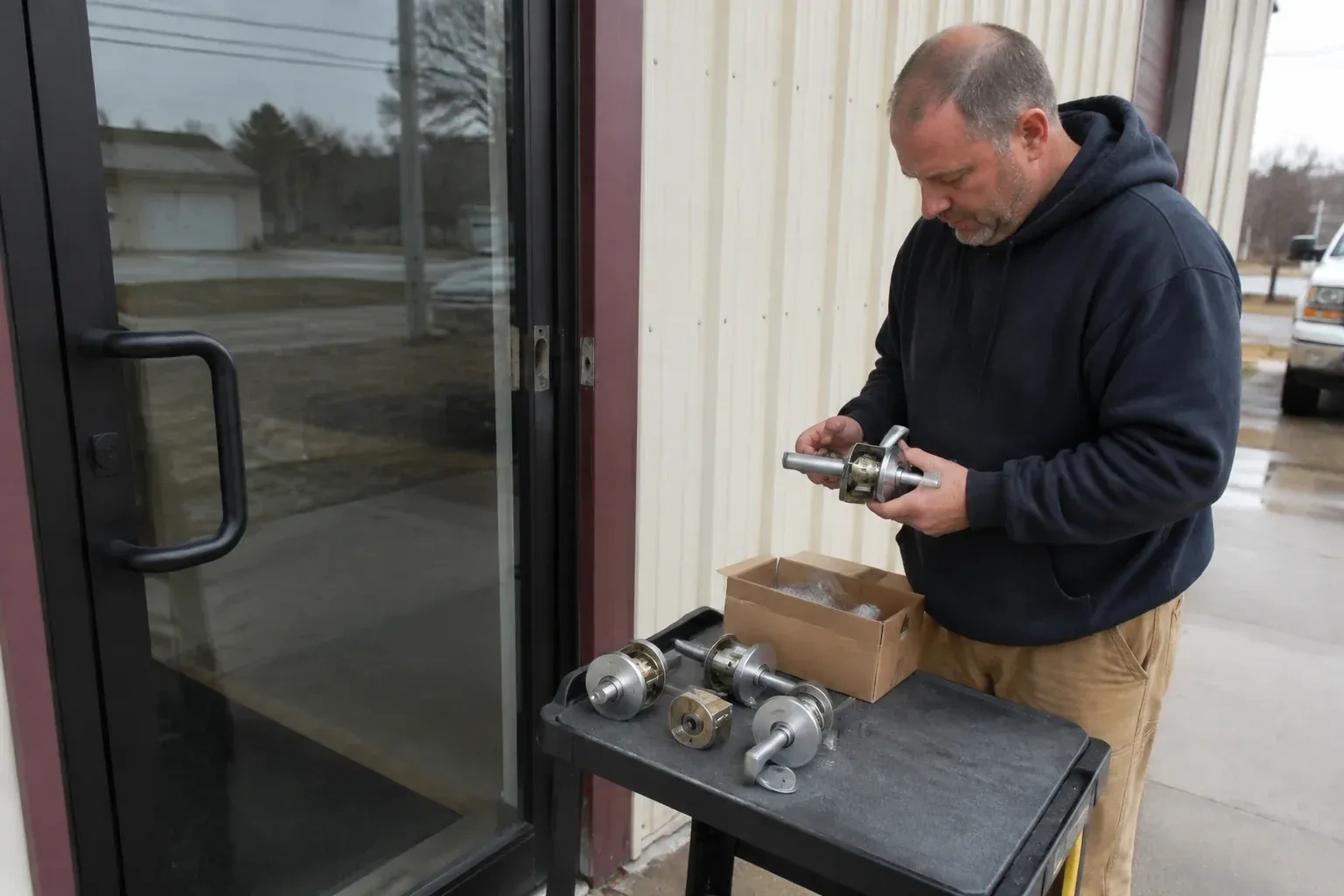
How the visit goesAt closing time the hookbolt on the storefront door catches the keeper only on the second or third try, and one employee has started giving the door a shoulder to force it home.
Commercial-Grade Lock Replacement
How the visit goes
Weighing what the new hardware needs to do long term
The last part of the assessment looks past today's problem to how the business expects to manage this door going forward: does staff turnover happen often enough that an interchangeable core, which lets a key holder change the combination without pulling the whole cylinder, would pay for itself in convenience? Does the business want a restricted keyway so blanks cannot be cut at an ordinary hardware counter? These questions shape the specific hardware ordered as much as the door's physical construction does.
Selecting hardware built for this opening
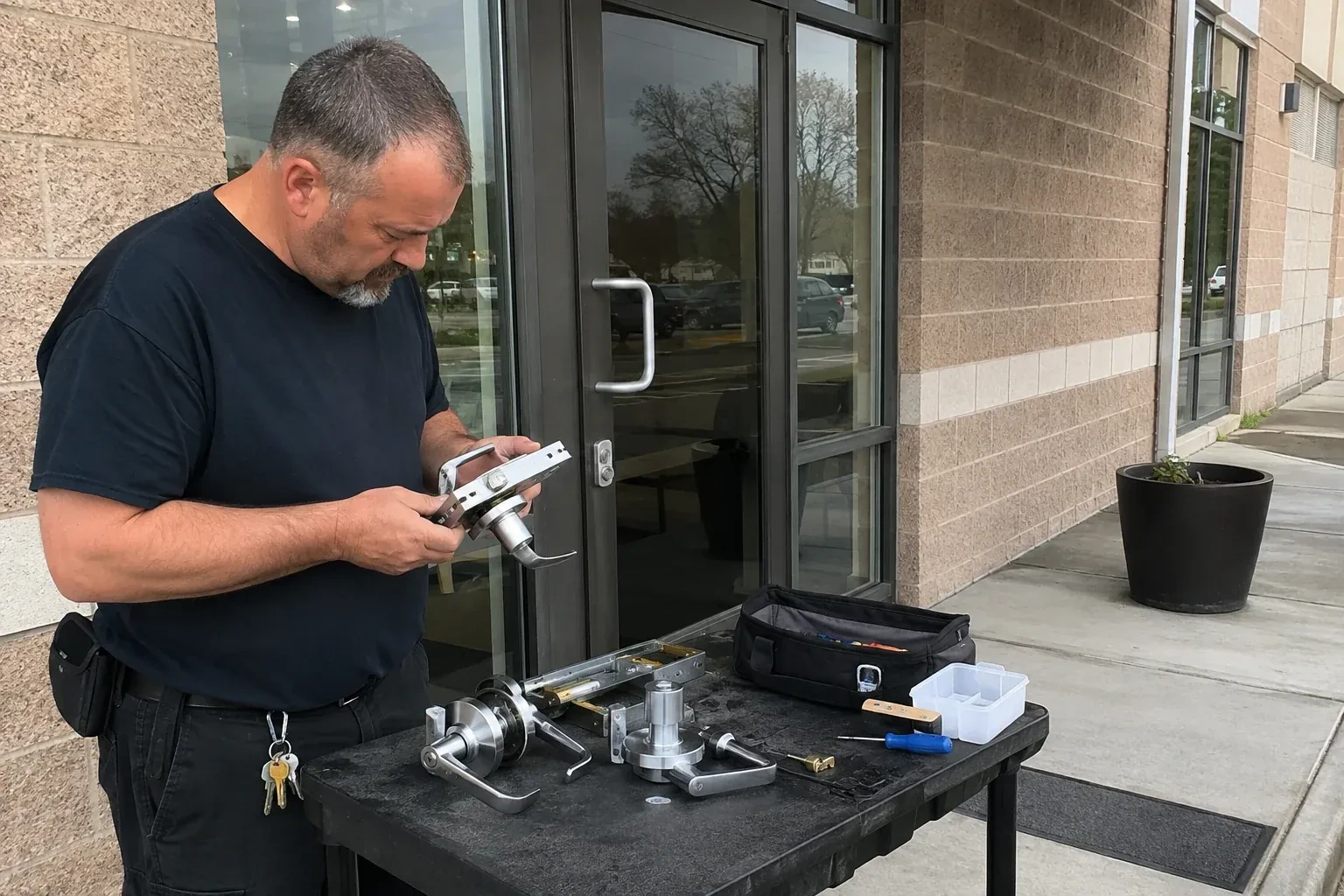
With the assessment complete, the locksmith orders hardware to match: a mortise lock body for a mortise-prepped door, a heavy cylindrical lockset for a standard bored door, or a narrow-stile lock or hookbolt for an aluminum storefront. Where the door is part of a fire separation or a required exit, the hardware chosen is listed for that rating and function rather than a general-purpose substitute. Grade and finish are matched to the traffic the door takes, so a heavily used delivery door gets hardware built for that duty rather than the lightest option available.
Fire and exit requirements satisfied, not just noted
Where the door forms part of a fire separation or a required exit route, the new hardware is listed for that use and the door has been tested to confirm it still closes and latches on its own. Any push-type release hardware installed to meet an occupant-load threshold has been checked across the whole route it serves, not just at the one door where the call started. The business leaves with an opening that satisfies the condition that triggered the work, rather than a lock that merely looks similar to what was there before.
Commercial-Grade Lock Replacement
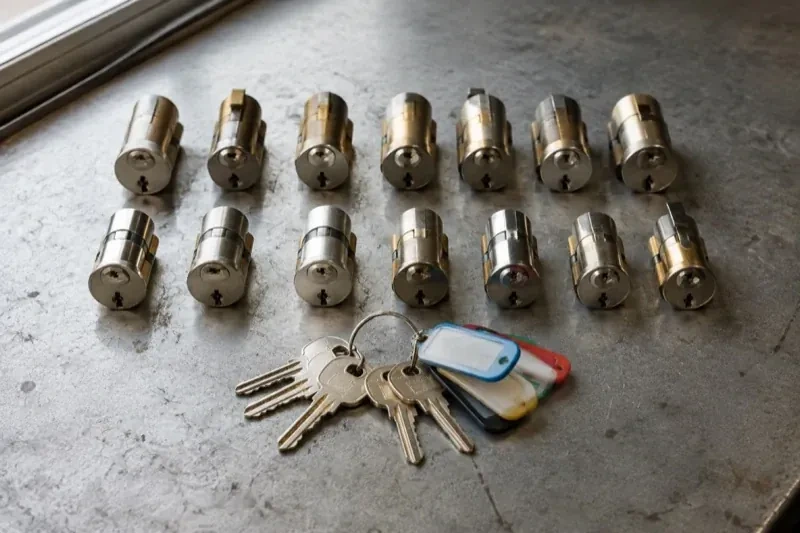
In the van
Narrow-stile storefront lock
Listed panic or exit hardware
Interchangeable-core cylinder
Restricted keyway cylinder
Key-control log and tags
Commercial-Grade Lock Replacement
What affects the quote
Panic or exit hardware
Listed exit devices cost more than a standard lockset and are quoted per opening, since a route requiring this hardware often needs it consistently across more than one door along that path.
Coordination with other trades or systems
Where a door closer, an alarm panel or a building-wide access-control platform is involved, coordinating the lock replacement with whoever manages those systems can add planning time that the quote reflects.
Condition of the existing door and frame
A door and frame in good condition accept new hardware into the existing prep with little extra work. Damage from a break-in, a cracked frame or a previously mis-cut mortise pocket adds repair time the quote accounts for separately.
What to have ready
- Do other doors on the property share a key with this one?
- Is the door part of a fire separation or a marked exit route?
- Has the door recently been forced, damaged, or shown signs of a break-in?
Commercial-Grade Lock Replacement: questions
QuestionsDo you handle interchangeable-core (IC) cylinders?
Yes. An interchangeable-core cylinder lets an authorized key holder pull the core and swap in a new one when a key needs retiring, without removing the whole lock from the door. Businesses with regular staff turnover often move to this system because it turns a rekey into a short in-house task rather than a full service call every time.
Can you upgrade hardware without re-cutting the door or frame?
In most cases, yes. Replacement hardware is chosen to fit the door's existing mortise pocket, bore pattern or narrow-stile prep, so the visit does not usually involve altering the door itself. Re-cutting only comes up when the business specifically wants to change hardware type, for example moving from a knob-and-deadbolt pair to a single mortise lock body.
Do you replace hardware after an attempted break-in even if the door still locks?
Yes, and it is worth having it checked even when the door still appears to function. A cylinder that was drilled at, pried or struck can be weakened internally without showing it externally, and a bent strike or a cracked frame around the lock can let a door appear locked while offering far less resistance than it should.
Related services
- Master Key System DesignAfter a busy shift the manager counts the keys coming back in and loses track of who still has one.
- Access Control InstallationThe back door of the shop runs on one key, and by now it lives on six different rings: yours, two managers, a cleaner, a supplier who restocks early, and a keyholder nobody quite remembers approving.
- Panic & Exit HardwareThe fire inspector's note is blunt: the banquet hall's second exit still turns on a deadbolt, and the crowd it is rated to hold needs a door that opens under one motion, no key involved.